If the perfect beach book (1) offers a likeable heroine (2) tells stories about problems you don’t have, (3) is smart but not taxing, and (4) contains enough sex to make up for the fact you can’t have any since you a sharing a motel room with your kids – then CharlaineHarris’ vampire novels, including the recently published Dead Ever After, are pretty good choices.
Certainly, Ms. Harris has earned her success with the character of Sookie Stackhouse, a telepathic barmaid living among vampires, werewolves, witches, fairies, and just-folks humans in the small Northern Louisiana town of Bon Temps.
Much of Sookie’s appeal comes from the fact that she is a normal person. Every day, she gets up and works an unglamorous job. She shops for food, buys gas, cleans her house, and watches TV. At night, she says her prayers. On Sunday mornings, she goes to the local Methodist church. Sookie tries to look after her hard-working but sexually reckless brother. Most of the time, she wonders if she’s done right or not.
Sookie is also appealing because her strength comes from her character, not her paranormal abilities. In almost every fight with a supernatural being – and with many normal humans – Sookie is overmatched, but she will fight all the same if forced, rather than surrender. Sookie also has great courage. She will put herself in danger to help a friend or a person to whom she feels obligated. She will act on principle when it’s against her own self-interest. And she can make hard decisions when her good sense tells her she has to make them.
Another quality of CharlaineHarris’ vampire novels is their social commentary. The books are occupied with how society treats people who are different, and you don’t have to look hard to see the parallels between the vampires in Harris’ novel and homosexuals (and others outside sexual, gender, and lifestyle norms) in our own.
The supernatural can also be seen as the outward manifestation of interior psychology in the novels. Sookie dates vampires and werewolves, which is another way of saying she goes out with no-good men who are blood-suckers and animals, while ignoring the romantic possibilities with her dependable boss Sam, a shape shifter who likes to take the form of a collie.
Sookie’s mind-reading power functions in a similar way. Her telepathy is really the magical extension of her natural intelligence and perceptiveness, qualities that can make a woman living in a small town “different” or “odd” to many of the people around her.
None of these parallels should be taken too far. Harris does not invest every character or story with a deeper meaning. Or put another way, with a nod toward Freud’s famous observation, sometimes a vampire is just a vampire in the Sookie Stackhouse books.
Charlaine Harris is not a great prose stylist, but her writing demonstrates craft, and Harris conveys the sound of Sookie’s voice – and particularly her sense of humor – very effectively.
Her plot architecture is another matter, however. Many of the books are constructed around a series of loosely related incidents, rather than a unified story that has an arc and momentum. The mystery elements of her stories are often thin and feel perfunctory. Her plots seldom twist. And as the series has stretched on, it has become more and more of a soap opera.
This is not such a bad thing for beach books, however, and it means that you can read the series in any order. So try a couple if you discover you just can’t read Woolf’s The Waves while the ocean crashes and the seagulls cry and your neighbors the next umbrella over are blasting Bon Jovi. I couldn’t.
When a federal judge ruled that Apple was guilty of conspiring to fix the price of eBooks last week, the lamentations began.
Commentators declared this would lead to the destruction of the traditional publishers and the ascendance of Amazon as a monopolistic hegemon, which would use its vast market powers to homogenize and commoditize our reading culture. Also, frogs would rain down from the sky.
But I don’t think any such thing will happen. (Well, the frogs might.) Here’s why.
The Traditional Publishing Model Is Not Essential to Reading Culture
The traditional publishers think they are essential to reading culture because they were essential in the past and because (I’m quite sure) they are sincerely devoted to their craft.
But the only two actors who are essential to reading culture are writers and readers. Publishers are … or were … a necessary intermediary between the writer and reader, back when printing books and getting them into the hands of readers were complicated, expensive operations.
Now these tasks aren’t necessarily complicated or expensive. There are plenty of new ways, many more than before, for writers and readers to connect. And as long as you have writers and readers, you’ll have a reading culture. Before I discuss why, however, let me make a semi-related point.
Good Books Have Always Been Bad Business
This is not to say you can’t make money from serious books or serious literature. You can. The problem is you can’t make enough money consistently to turn the proposition into a sustainable business.
This leaves publishers with two choices. The first is you have a huge company in which the blockbusters in popular genres subsidize the “serious” books. For publically traded companies, this is the only option because they will be punished by the markets if they lose money.
The second is you have a small company, privately held, in which the owners see themselves as patrons of and missionaries for writers as much as they see themselves as business people, and their financial goals don’t extend too much beyond avoiding bankruptcy.
The recent obituary for Arthur Rosenthal of Basic Books described this dynamic nicely when it said he “let his taste in nonfiction and his quasi indifference to profit margins guide him as a publisher”.
Now Amazon is making the lives of people who work within the huge company model a living hell. But it is making the small company model so easy that anyone with a computer and internet access can become a publisher.
Writers of Serious Books Are Adapting. Amazon Is Helping Them Do It
One of the assumptions in much of the recent wailing over Amazon’s victory is that only serious books are real books and only serious publishers are real publishers.
No one was fretting that the Dan Browns of the world would disappear because they knew they wouldn’t. A hegemon Amazon would still publish Dan Brown because he makes a lot of money.
The commentators did worry that a hegemon Amazon would ignore the serious, unprofitable books. Well, maybe. But maybe not. Amazon has demonstrated an almost pathological indifference to earning a profit over the years. This would make them a perfect publisher for the Virginia Woolfs of the world. And perhaps they would like the prestige of a having such writers under their imprint?
But if not, Amazon has given writers the tools to directly publish and promote their own books. Amazon’s print-on-demand model allows small publishing companies to produce print books with very low overhead costs. Kindle Direct allows people to publish eBooks at basically no cost.
Everyone has a chance. Including the serious writers and important voices who are getting overlooked right now by those old gatekeepers of the reading culture, the traditional publishers.
The Government Doesn’t Just Punish Price Fixing. It Also Punishes Monopolies
Finally, remember that it is not only illegal to fix prices. It’s also illegal — not to become a monopoly, as it turns out talking to my FTC lawyer friend — but to use monopoly power to stifle competition. And the government departments that are aiding Amazon by ruling against Apple, so some people claim, are the same departments that would force Amazon to change its business practices or break up if it did.
We can’t risk that harm, you say? Well, under the legal system of the United States, you generally can’t punish companies because you think they will break the law. You have to wait until they actually do.
In the meantime, I encourage everyone to seize the new opportunities. They’re good fun. And you might make some art, or some cash, too.
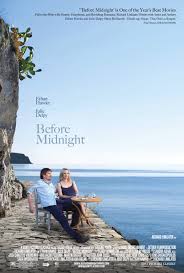
In the movie Before Midnight, the team of director Richard Linklater and actors Julie Delpy and Ethan Hawke set themselves the monumental task of portraying a single day in the life of a privileged Franco-American couple, while summarizing the last nine years of their relationship, and fall just short of creating a masterpiece.
Before Midnight is the third installment of a series that began with Before Sunrise (1995) and continued with Before Sunset (2004).
Each film portrays less than twenty-four hours in the lives of two characters, the French environmental activist Celine (Deply) and the American writer Jesse (Hawke), entirely through conversations.
All of the films are deeply committed to a realism that emphasizes the flow and rhythm of actual talk. So the movies allow Celine and Jesse’ words to jump wildly from point to point, and expose their characters’ thoughts and emotions in ways that are raw, immediate, sometimes uncensored, and sometimes painfully unflattering.
Which means the experience of the Before movies is much closer to the experience of living our lives than watching a typical movie, in which a controlling intelligence works hard to clean up the dialogue, make the characters look good (or chooses exactly how and how much they will look bad), and impose a structure on events that gives them an implicit sense of purpose and meaning.
These choices are particularly effective in Before Midnight because you no longer have the pleasure of watching Delpy and Hawke meeting or re-meeting cute, with an unknown happy future in front of them, but rather seeing them living the reality of that future in which their romance, their jobs, and the work of raising their children have become highly specific and in many ways, unsolvable problems.
Before Midnight is also powerful because the movies gets so deeply into the characters of Celine and Jesse that whether we as the audience like them or don’t like them, or whether Linklater-Delpy-Hawke care if we like them or not, is irrelevant.
The questions are whether Celine and Jesse can like themselves, or each other, or find a way to preserve the mystery of the love between them – now that the persuasion of its first blossoming is long past – or find happiness from lives in which it seems clear no transcendence will emerge.
Both Hawke and Delpy should get medals for acting courage in Before Midnight, but Deply in particular deserves praise. Her Celine is in a state of greater crisis than Jesse, and she holds nothing back. She looks and feels her age in a way women in movies rarely look or feel.
My only quibble is a technical one. Because Before Midnight has nine years to cover in the life of Celine and Jesse, it sometimes feels over-packed and over-busy.
For example, during a long argument in a hotel room, Celine brings up a whole basketful of problems she’s had with their relationship, and the realism of the conversation slips into the feeling that Linklater-Delpy-Hawke are trying to shove a summary of their last nine years into a single take.
An even bigger problem here is that they are asking us to believe that Celine kept many of these problems to herself all this time, and Celine is a character who the films have conclusively demonstrated keeps NOTHING to herself.
But these are small flaws compared to what the movie achieves. Few films hold a mirror up to its audience as relentlessly and unflinchingly and persuasively as Before Midnight. Go see it.
Other Massey Movie Reviews – kinda random as selections go, but what the hey
What’s the difference between an innovation and a gimmick in literature? An innovation expands the author’s vision while a gimmick tries to hide his lack of one. You’ll find excellent examples of both in George Saunders’ recent short story collection, Tenth of December.
When Saunders is good in this volume, he is very good indeed, and the elements he uses frequently throughout Tenth of December work well together to create resonant stories. These elements include …
language that is faulty or inadequate, usually because the narrative voice belongs to a person with whom Saunders has not shared his gifts as a writer.
characters who are teetering on the edge of economic / social / psychological / personal failure confronting other characters who enjoy extraordinary success (no one seems to occupy the middle ground).
the motif of fictional pharmaceuticals that can regulate every human characteristic.
strong satiric impulses balanced by great empathy for his characters.
One of the best stories in Tenth of December is “Escape from Spiderhead” in which Saunders slowly reveals to us that the narrator is being used as an unwilling test subject for powerful drugs because he has been convicted of murder. Here words are deformed by bureaucrats and scientists, who use technical language to obscure the horror of their actions, and Saunders deploys his innovative premise to deliver a knock-out meditation on free will, regret, and redemption.
Another excellent story is “Victory Lap” which tells the anxiety-provoking tale of a high school girl, the middle-aged man who attempts to kidnap her, and a high school boy who intervenes. Saunders nails the voices of all three characters. The kidnapper narrates the pathetic execution of his pathetic fantasy to perfection, but it is the teenagers who really shine. Their words grasp at ideas and emotions without quite seizing hold of them, and you get the sense in the end that Saunders intends the triteness of their language to be a deliberate defense against the fear they experienced.
In these examples, the innovations – the science-fiction premise of “Spiderhead”, the conspicuously stylized narration of “Victory Lap” – work with the other elements to create stories that capture your mind, your heart, and your gut. But that’s not the case for every story in Tenth of December.
For example, “Exhortation” is a staff memo composed of inept motivational business-speak wrapped around the message that the department will all be fired unless performance measures improve. “My Chivalric Fiasco” is mostly about what happens when a worker at a Renaissance-Fair business takes a drug that makes him a highly articulate speaker of ersatz medieval dialect.
Other than admiring Saunders prose, or nodding in automatic agreement at the obvious lessons (offices are insane places in “Exhortation” and sexual harassment is bad in “Fiasco”), there is little for the reader to do. The gimmick of the style doesn’t hide the thinness of the story.
The longest piece in this collection, and I think the weakest, is “The Semplica Girl Diaries”. The story is told through the diary of a man who plunges his family from serious money problems to desperate money problems by making an expensive, impulsive, and useless purchase.
This purchase happens to be (as is eventually revealed to us) four young girls from poor countries who hire themselves out as living lawn ornaments.
As a big honking obvious metaphor for the exploitation of third-world labor by Americans, you would be hard pressed to find a metaphor bigger or more honking or more obvious. Once Saunders shows the metaphor to you, however, there is not much left. You can enjoy the gyrations of the story. I didn’t. You can admire his prose style. I did. But virtuosity alone is never enough to satisfy me. It has to be in the service of something other than itself.
Don’t let this stop you from reading Tenth of December. The rewards outweigh the frustrations, and your effort will be entirely redeemed by its best and shortest story, “Sticks,” in which a man tries to connect with his family by decorating a metal pole in their yard with clothes and words. Here Saunders does more in two pages than many writers can do in one hundred. And that’s neither innovation or gimmick. That’s talent.
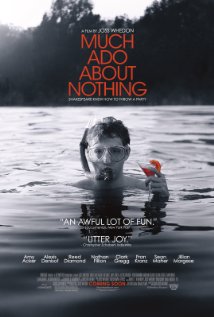
In his new film adaptation of Shakespeare’s Much Ado About Nothing, director Joss Whedon has made a movie which is both funny and affecting – but funnily enough, more affecting than funny.
A great deal of Whedon’s success comes from solid performances by most of the cast and his choice to have his actors read their lines “naturalistically” – i.e. as normal conversation rather than as the impossibly articulate prose or the poetry it actually is.
The result is that the dramatic elements in Much Ado About Nothing, which I usually find thin and forced, work pretty well in this movie.
Hero and Claudio, the young lovers who can easily come across as pretty blanks, are brought to moderately complex life and real pain by Jillian Morgese and Fran Kranz, enough that I was wiping away a tear or two during Act V and hoping my wife in the next seat didn’t notice.
Clark Gregg as Leonato and especially Reed Diamond as Don Pedro both express the easy humor and hard anger of men used to power. Sean Maher finds a convincing seam of quiet malevolence in the two-dimensional villain Don John. And let me give an enthusiastic shout out to the comic constable Dogberry, who is underplayed by Nathan Fillion to a perfection of sublime silliness.
The major problem in this Much Ado About Nothing comes exactly where the play is – and where I expected Whedon to be – strongest: the brilliant and beloved sparring between Beatrice and Benedick in the first two acts.
This is a result, in part, of the naturalistic line readings that I thought served the weaker elements of the text well. The difficulty is that these passages are performances by Beatrice and Benedict, for the people around them, for each other, and for themselves. Turn them into conversation and you leave the audience crying, “Where’s the sparkle? Where’s the snap?”
Some of the fault lies with the actors, however. Neither Amy Acker as Beatrice or Alexis Denisof as Benedick seem to have clicked with their roles in the early parts of Much Ado About Nothing. The good news is that Acker plays Beatrice transformed by love very well, and is strong during the rest of the film.
On the other hand, Denisof never does much better than muddle through. The idea behind his Benedick appears to be that the character has been made awkward and embarrassed by love. But I could never suppress the impression that it was Denisof playing Benedick awkwardly rather than playing Benedick as awkward.
Don’t let this dissuade you from seeing the movie, however. Overall, I think you’ll be pleased. Whedon filmed this Much Ado About Nothing in a luminous black and white that pleases the eyes. His smooth jazz soundtrack is somewhere between innocuous and fine. And the de rigueur celebration scene and kiss right before the credits will leave you smiling as you exit the theater.
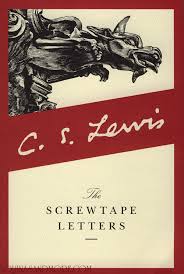
C.S. Lewis’ The Screwtape Letters – which consists of epistolary advice from the senior demon Screwtape to a junior demon Wormwood on the damnation of a human soul – is frequently described as a satire. But I don’t see any satire at all in The Screwtape Letters.
What I do see is a brilliant and generous exploration of human nature, a miniature portrait of Britain as the Phoney War comes to an end, and some of the most perfect prose you are going to find in English.
Satire uses exaggeration and intensification to criticize a person, idea, institution, or social convention that has power by making it look ridiculous. Satirizing demons is difficult because if you don’t believe in them as metaphysical beings (ie, you don’t believe they exist), then there is nothing to criticize.
If you do believe in devils, then you are likely to regard Lewis’ Screwtape as utterly convincing rather than ridiculous. Metaphysical evil is self-exaggerating and self-intensifying after all. And Screwtape’s bureaucracy and banality, twenty years before Arendt’s Eichmann in Jerusalem, offers readers who reached the age reason before the close of the twentieth century, a highly plausible picture of hell.
But The Screwtape Letters offers much more than an original demonic voice, satirized or not. Its greatest achievement – and I think, real purpose – is its comprehensive depiction of the human character in all aspects.
Screwtape is, of course, interested in exploiting human vice, vanity, and pettiness to achieve his goals, so these get full treatment. But he is also interested in neutralizing human virtues because these are weapons that counter the work of demons.
The emphasis is on religion and the work of religious devotion throughout, but Lewis’ insights are so universal they are likely to please readers of any religion or no religion at all – except for those diehards who are dissatisfied with any book that does not exactly confirm their particular convictions; and for such folks I recommend reading very few books or none at all. At best, you’ll be wasting ninety-five percent of your time. Why bother?
Screwtape considers the sources of domestic harmony and disharmony; sexuality, love, and married life; the foibles of social interactions in all its forms; the hybrid animal and spiritual nature of humans (under the theory of “undulation”); the character of Christianity and other trends of thought; the temptations of the world; and more.
Perhaps my favorite letter is on the nature of human laughter and joy because many good things in life, many pleasures, are gifts Lewis believes God wants us to embrace. In a few pages, Lewis explores, “Joy, Fun, the Joke Proper, and Flippancy” with an economy and incisiveness that should provoke jealousy in any writer except that admiration overwhelms envy.
Lewis’ Screwtape associates Joy with Music and says “something like it occurs in Heaven – a meaningless acceleration in the rhythm of celestial experience” which he as a demon detests. Joy and laughter are “a direct insult to the realism, dignity, and austerity of Hell” according to Screwtape.
Toward the end of the book, World War II, which has always been hovering at the edges of The Screwtape Letters, comes to the forefront as the German bombing campaign of Britain begins and the unnamed young man who is the focus of Wormwood’s intentions joins the war effort. Here it was impossible for me to think Lewis’ wasn’t speaking from his own experiences fighting in the First World War, and he does a masterful job making us feel the quality of that time in England.
Finally, there is Lewis’ writing. I could praise it, but I will simply give you an example of Screwtape at his most caustic, and let you decide. Screwtape discovers that Wormwood has allowed his young man to fall in love with a Christian girl, and this is Screwtape’s reaction:
I have looked up this girl’s dossier and am horrified at what I find. Not only a Christian but such a Christian – a vile, sneaking, simpering, demure, monosyllabic, mouse-like, watery, insignificant, virginal, bread-and-butter miss. The little brute. She makes me vomit. She stinks and scalds through the very pages of the dossier. It drives me mad, the way the world has worsened. We’d have had her to the arena in the old days. That’s what her sort is made for. Not that she’d do much good there, either. A two-faced little cheat (I know the sort) who looks as if she’d faint at the sight of blood and then dies with a smile. A cheat every way. Looks as if butter wouldn’t melt in her mouth and yet has a satirical wit. The sort of creature who’d find ME funny!
I don’t have a dog in the fight between Amazon and big publishers over eBooks – I’m just an irrelevant bystander — but I do think I can tell when someone is trying to sell me a bill of goods.
At least that’s how I felt about parts of “The Seven Deadly Myths of Digital Publishing” by Bill McCoy, which appeared on the Publishers Weekly website today. However, I agreed with other points in Bill’s argument and overall found the article well worth reading. Here are my notes:
Tablets and Large Screen Smartphones Are Transforming Digital Publishing
McCoy says that new devices along with new universal coding standards will allow electronic publishing to offer “highly-designed illustrated and enhanced digital books” as well as greater reader interaction and social engagement. He also believes that the differences between reading content on an eReader, a mobile phone app, or a website will be reduced, where as currently they are distinct formats. All of this will allow the eBook’s success to expand beyond their current domains in “novels and linear non-fiction”.
All this is interesting and cool and thanks to Bill for sharing. My problem is that his article implies that Amazon (the monster elephant in the room he doesn’t name) is vulnerable because they are reliant on a proprietary and outdated E Ink platform: that is the Kindle.
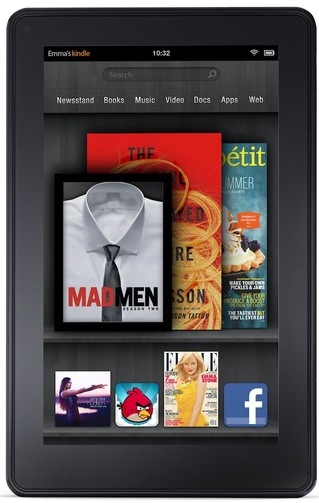
Which would be true if Amazon hadn’t launched the Kindle Fire in September of 2011, and wasn’t continuing to roll out enhanced versions at a fraction of the cost of an iPad ever since.
Plus, considering Amazon has a pretty decent on-demand video streaming service already live, I’d say they are thinking about how to deliver content through their own website.
Now this doesn’t mean that Amazon will be more successful seizing the opportunities of the future than big publishers; but I do think it shows that Amazon sees those opportunities as clearly as Bill does. And Amazon sure doesn’t look like it’s behind the curve.
Authors Still Need Publishers
On this one, I’d say Bill is on thin ice. If not swimming in open water. Anyhow, he makes several points. That writers will need publishers for their expertise in editing, cover design, typography, and marketing. That publishers can evolve into new roles as multi-media / multi-platform “producers” of content in collaboration with writers. And that publishers can find a role organizing communities around authors and readers interested in the same topics.
Well. Expertise is editing, cover design, typography, and marketing is not limited to publishers and there are an enormous number of experienced freelancers out there (many of whom used to work for the publishers’ until they were outsourced). Literary agents have marketing skills and are at least as well positioned, maybe better positioned, to be creative collaborators with writers, not mention their business managers. And none of these folks are going to demand 90% of a book’s net revenue as compensation.
As for community creation, is a publisher going to want create a community around a topic in which they aren’t the dominant publisher? And if they are the dominant publisher, are people going to believe that community ISN’T a form of advertising run by a big company for which they are working as unpaid copywriters?
I ain’t sure.
Now Bill is right that authors still need publishers. But the authors who need publishers most are the unknown ones – ie, the ones least likely to make them money. Will Stephen King still need a major imprint in five years? Maybe not.
And Let’s Not Forget About Amazon’s Huge Sales Pipe
Last summer, Forrester research stated that 30% of all online shoppers begin with Amazon to research products. Not Google. Not Bing-Yahoo. Amazon. Yikes.
Why? Well, people know they can find a lot of stuff they want to buy, at reasonable prices, with convenient shipping on Amazon. Getting them to change their habits and say, buy eBooks direct from a publisher platform, is going to take some major heavy lifting – most especially, offering some new product or service of such compelling value the people have a good selfish reason to switch.
Otherwise, publishers can innovate eBooks all they want. But they are still going to need to sell a lot of them through Amazon, because that’s where readers want to buy them right now.
And Let’s Not Forget About 70% Royalties and the Power of Social Media to Bypass All the Old Gatekeepers
And while I’m walloping away at Bill – who is doubtless a nice man and doesn’t deserve it – let’s not forget about 70% net royalties from eBooks published through Amazon versus 10% give or take from publishers for print books. With those numbers, authors could sell fewer total units of just eBooks at a lower cost through Amazon and still make more money. Ouch.
Plus, social media can be a highly effective way to market books, but publishers really can’t do it for authors. Who would you rather follow on Twitter? Dan Brown or the marketing assistant assigned to tweet about Dan Brown books at Doubleday?
So Pete, You’d Never Sign a Contract with a Traditional Publisher Then, Right?
Are you kidding? In a second. I am one of the unknowns in desperate need of their help. I love you, Doubleday, you big beautiful handsome company you. Call me!
Which are Nabokov’s best books? And which should you consider reading? Any ranking is subjective but the reasons behind a “best of” rank can help you decide. So here is my personal list of the eight “best” Nabokov books, which include six novels, one memoir, and one collection of interviews. Also see the Nabokov FAQs below these reviews.
1. Lolita (1955)
Lolita is Nabokov’s best novel because it is the book that best synthesizes all his major characteristics as a writer:
(1) A love of language
(2) Delight in word play, patterns, puzzles, and games
(3) A highly intelligent, narcissistic-sociopath narrator
(4) A resilient victim who is the center of Nabokov’s sympathy
(5) A preoccupation with perception, consciousness, time, and memory
(6) A belief in fate and the existence of a great design behind what seem to be the random and irrelevant facts of ordinary life
(7) The conviction that art is a refuge from the assault of death
In addition, Lolita is the disturbing story of a successful child rapist. It features brilliant miniature portraits of postwar America – almost Vermeer-like in their lucidity – as well as a phantasmagorical climax that takes place in a fairytale nightmare land. Lolita is funny, harrowing, heartbreaking, and transcendent. It caused a scandal, was a critical and then a popular success, and made Nabokov a mint of money. As art and cultural phenomenon, Lolita excels
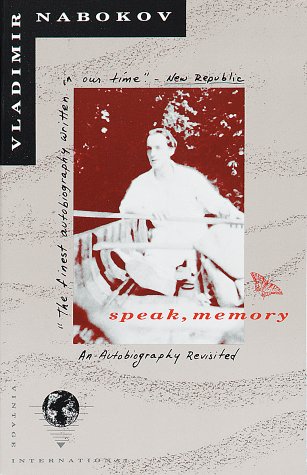
2. Speak, Memory (1966)
Not a novel, but a memoir of Nabokov’s life from childhood to the moment he escapes France weeks before the 1940 German invasion – Speak, Memory is a classic of autobiography that leaves most of Nabokov’s story untold.
Instead, it focuses on Nabokov’s most cherished memories of his family and friends; his youth in Russia and his young adulthood in Western European exile; on the natural world and butterfly hunting; on a recital of the Nabokov family’s august history and their liberal politics; on stories of Vladimir’s education and tutors and governesses, including the famous “Mademoiselle O”; on poetry; and more.
Through it all permeates the great Nabokovian pre-occupation and conviction that there is more than darkness before the beginning and after the end of life; that our living persists and this persistence is wonderful; and that the people we love won’t disappear into nothingness after death. You find this theme frequently in Nabokov, but its purest distillation is here in this great book.
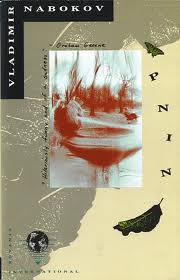
3. Pnin (1957)
Professor Timofey Pnin is Nabokov’s most deeply comic and deeply human character, and his response to the incessant comic cruelty Cervantes inflicts on Don Quixote. The structure of the novel is slight and episodic (Pnin began life as serial pieces published in The New Yorker) and lacks the dazzling pyrotechnics of books like Lolita, Pale Fire, and Ada. What Pnin offers instead is hilarity, enormous tenderness for the agonies of an ordinary life, and the danger of laughing at rather than laughing with Timofey; which is complicated by the fact that the arrogant narrator of this novel is not a Humbert Humbert or a Charles Kinbote, but Vladimir Nabokov himself.
4. Pale Fire (1962)
In terms of structure, technique, and pure virtuosity – and as a landmark of post-modern fiction – Pale Fire is Nabokov’s masterpiece. But it is a cold masterpiece.
The novel is constructed from a 999-line poem in rhyming couplets composed by one of the book’s characters (the Robert-Frost-like John Shade), with a forward, commentary, and index written by another (the extravagantly delusional Charles Kinbote).
The major conceit of Pale Fire is that Kinbote’s commentary has nothing to do with Shade’s poem, which creates a WTF experience for the unwarned first-time reader rivaled in English-language novels of the 20th century only by the “Benny” section of Faulkner’s The Sound and The Fury.
Nabokov’s prose in Pale Fire is brilliant; there is no better example of “the novel as chess problem” in his work; and Charles Kinbote is the craziest if not the most dangerous of Nabokov’s narrators (although it is difficult to tell what is “real” and what is imagination in his novels).
However, the human tenderness in Pale Fire – frequently buried in Nabokov’s major works – is particularly difficult to find here. It exists in Shade’s poem, which tells the story of his unhappy daughter’s suicide, and the long grief of Shade and his wife over their loss. But this is overwhelmed by Kinbote’s monumental self-absorption and the intricate innovation of Nabokov’s design. Nabokov’s supreme novel for the mind.
5. The Gift (1937)
The last and best of the novels Nabokov wrote in Russian, The Gift is a portrait of a young Russian writer, Fyodor Konstantinovich Godunov-Cherdyntsev, finding his way as an artist and falling in love with the woman who would become his wife.
Nabokov transforms this commonplace premise into a novel which is dense with detail, filled with examples of Godunov-Cherdyntsev’s writing, and convinced that fate is working secretly to assure the young writer’s happiness.
Nabokov’s powers of observation and description come to the forefront in The Gift, particularly since the novel, like many lives, is short on plot. This will please fans of modernism but there are metafictional touches as well.
The novel features a 90-page chapter entirely devoted to a book by Fyodor called The Life of Chernyshevski as well as a generous sample of hostile reviews of it. Most especially, at the end, you see Fyodor coming up with the idea to write a book that will become The Gift itself.
6. Ada (1969)
Ada is Nabokov’s Finnegan’s Wake. Meaning that you can see Ada as either the summation of Nabokov’s artistic vision which pushes to their limits his genius as an author, the form of the novel, and the abilities of the audience. Or you can see Ada as a deeply self-indulgent, over-intricate and deliberately obscure, reader-hostile mess.
I’m inclined to the former view, although I think Ada is a good example of the axiom that more is not always better, and even Nabokov fans will need to endure a fair amount of confusion, re-read the novel several times, or rely on expert help (such as Brian Boyd’s Nabokov’s Ada or the chapters in his biography of Vladimir).
Ada is occupied with the 80+ year love affair between Van and Ada Veen who are, as it turns out, brother and sister and which takes place on a parallel / alternative Earth sometimes called Anti Terra and sometimes Demonia. All seven of the Nabokov qualities are in evidence, plus a fair amount of literary parody as well as a few science fiction touches and other assorted material that will keep readers so inclined to puzzle out Ada happily at work. Matthew Hodgart’s 1969 review of “Ada” gets it right and is a hoot to read too.
7. Bend Sinister (1947)
Nabokov always insisted he was indifferent to politics, but Bend Sinister suggests he wasn’t indifferent to the cruelty governments inflict on individuals.
The novel takes place in the nightmare city of Padukgrad, run by the dictator Paduk and his “Party of the Average Man”. Paduk wants Adam Krug, a renowned philosopher, to give a speech in support of his government. When Krug refuses, Paduk threatens his son, and the bungling brutality of Paduk’s thugs leads to tragedy.
In Bend Sinister, Nabokov focuses on Adam Krug’s love for his son and his cheerful contempt for the dictator Paduk, a childhood acquaintance. Although the novel takes place in a fictitious country, and feels like other Nabokovian worlds, Bend Sinister is an accurate portrait of the dynamics of the total state. What is fantasy, and what gives the novel its final punch, is when Nabokov reaches into the novel and mercifully saves a character from the suffering that state inflicts. (For a longer discussion of Nabokov and totalitarianism, see my post Tyrants Destroyed: Politics in the Novels of Vladimir Nabokov.)
8. Strong Opinions (1973)
Readers of this collection of interviews, edited to the last comma by Nabokov himself, could be forgiven for concluding Vladimir was even more arrogant and imperious than his reputation.
Nabokov does spank the hell out of just about everyone in Strong Opinions: Freud; a long list of “second rate” writers including Balzac, Dostoevski, Lawrence, Camus, Sartre, and Faulkner; consumers of “poshlost” or cheap, vulgar sometimes popular and sometimes exalted culture; Westerners duped by Soviet propaganda; members of any literary, social, or political group; fans of “general ideas” and “everyday reality” and “social interest” and “moral messages” in novels; Edmund Wilson and his grasp of Russian. The spanking goes on.
Nabokov does condemn cruelty and brutality in all its forms. He expresses a great sunny and personal happiness. And he provides useful facts, such as the pronunciation of his last name (see my note below). As complete a portrait of the public Nabokov as Speak Memory is a portrait of the private.
Frequently Asked Questions about Vladimir Nabokov
What kinds of books did Nabokov write?
Nabokov wrote novels, poems, short stories, plays, and works of literary criticism in English and Russian. His novels in Russian include Mary (1926). King, Queen, Knave (1928). The Luzhin Defense or The Defense (1930). The Eye (1930). Glory (1932). Camera Obscura (1933). Laughter in the Dark (1938). Despair (1934). Invitation to a Beheading (1936). The Gift (1938). His novels in English include The Real Life of Sebastian Knight (1941). Bend Sinister (1947). Lolita (1955) Pnin (1957) Pale Fire (1962) Ada or Ardor: A Family Chronicle (1969) Transparent Things (1972) Look at the Harlequins! (1974) The Original of Laura (fragment, 2009).
Nabokov’s wife Véra was his inspiration, first reader, business manager, and much more. All his novels were dedicated to her. Nabokov’s and Véra’s only child, Dmitri Vladimirovich Nabokov, helped translate many of his father’s books and oversaw his literary estate after his mother died in 1991. Dmitri had a career as a professional opera singer. For a few years in the 1960s, he raced cars professionally as well.
Did Nabokov study butterflies?
Nabokov was also famous for both his love of butterflies and his scientific study of them. Since Nabokov was a self-taught zoologist, most of the scientific community considered him a dilettante. As it turns out, one of Nabokov’s biggest theories about butterflies was correct.
Was Nabokov a Russian author or an American author?
This question is a perennial source of disagreement. Those who wish to go spelunking in Plato’s cave and come up with elaborate theories, aesthetic or otherwise, about the essence of the words “Russian” and “American” are free to do so. And doubtless you will too. For my part, I think the right way to answer the question is to ask Nabokov. And his answer goes like this. Nabokov is an American author because Nabokov chose to become an American citizen.
Nabokov was born in Russia, fled the revolution in 1917, and never returned. He went to university in England but did not become an English citizen. He lived in Germany but fled to France when Hitler rose to power. (Véra was a Jewish.) He fled France ahead of the German invasion in 1940. Nabokov lived in America for twenty years and became a citizen. In the early 1960s, he and Véra moved to Switzerland to be near Dmitri. Yet Nabokov always maintained his US citizenship, paying a great deal of American taxes for the privilege as he liked to point out. The Paris Review asked Nabokov in 1967 “Do you consider yourself an American?” This is how he answered:
Yes, I do. I am as American as April in Arizona…. I feel a suffusion of warm, lighthearted pride when I show my green USA passport at European frontiers. Crude criticism of American affairs offends and distresses me. In home politics, I am strongly anti-segregationist. In foreign affairs, I am definitely on the government’s side. And when in doubt, I always follow the simple method of choosing that line of conduct which may be the most displeasing to the Reds and the Russells.
I might also say there is something quintessentially American about Pnin and Lolita and Ada and Van Veen, but saying that I realize I’ve fallen back into Plato’s cave.
Those inclined toward reasoned compromise might gently suggest Nabokov is a “Russian-American” author but neither reason nor compromise exists these days so y’all gonna have to pick a tribe.
How do you pronounce Vladimir Nabokov’s name?
How to pronounce Nabokov’s name is another source of perennial disagreement. This is what Nabokov himself said in a 1965 interview with TV-13 in New York and even he doesn’t firmly answer the question:
As to pronunciation, Frenchmen of course say Nabokoff, with the accent on the last syllable. Englishmen say Nabokov, accent on the first, and Italians say Nabokov, accent in the middle, as Russians also do. Na-bo-kov. A heavy open “o” as in “Knickerbocker”. My New England ear is not offended by the long elegant middle “o” of Nabokov as delivered in American academies. The awful “Na-bah-kov” is a despicable gutterism. Well, you can make your choice now. Incidentally, the first name is pronounced Vladeemer — rhyming with “redeemer.”
Have movies been made of Lolita?
The most famous Nabokov movies are the two Lolita films: the 1962 version directed by Stanley Kubrick (Nabokov wrote the screenplay) and the 1997 version directed by Adrian Lyne. Lyne’s film is not a success aside from the opening credit sequence, featuring music by Ennio Morricone, which achieves a beauty and heartbreak the rest of the film conspicuously lacks.
Was Humbert Humbert a rapist?
Humbert Humbert is a serial rapist who monstrously abuses Lolita. (The beauty of the story is all on Humbert’s side. The real heartbreak belongs to Lolita alone even if you believe Humbert’s remorse over his treatment of Lolita is genuine.)
You could argue that Nabokov also fails to deal with Humbert as a serial rapist and monstrous abuser and to the extent that Lolita’s experience is all but obliterated from the novel, you are right. I can only say that the novel emphasizes those qualities which made it possible for Humbert to succeed as a rapist. His good looks and good manners and good education. His charm and most of all his dazzling narcissism and his titanic self-absorption. That Humbert abused Lolita because he failed to see her, and failed to see her because he could only see himself, is precisely the point in my reading.
Now, Nabokov himself is having none of this and Lionel Trilling is having much worse. At least in the filmed interview below.
Interview Videos: Here are the two parts of an interview with Nabokov about Lolita.
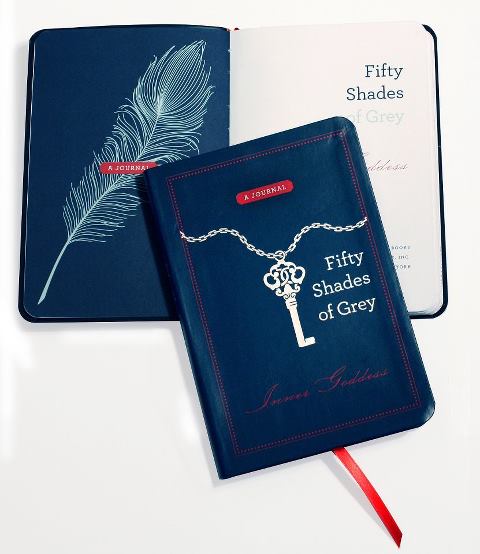
For a guy who writes mediocre poetry and has read one volume of Proust, I’ve always been pretty okay with capitalism. But the Fifty Shades of Grey Inner Goddess Journal (list price $16.99) is making me change my mind.
Before I saw the ad for this excellent product in The New York Times Book Review this morning, I regarded capitalism as not necessarily a good system, but the system which in practice has created the most wealth for the largest number of people so far.
Its dynamic of winners and losers was necessary to reward hard work, innovation, and risk-taking as well as to discourage free-riders (although I’m no free marketeer and I think the United States’ level of social protections is inadequate to ensure we get the most from all our people, not just those of privilege).
Capitalism certainly generates a large number of crappy products, but I’ve never been able to side with the critics who makes this point because (1) their definition of “crappy product” is “crap I don’t buy” and (2) they tend to talk as if they are the only ones who see through capitalism, while everyone else is its slave-drone-fool or an active participant in its malevolence.
But you know what. I was wrong.
It’s not just the breathtakingly cynical whoring after profit the Inner Goddess Journal represents that’s changed my mind because, honestly, you see whoring after profit going on all the time all over the place.
It’s that the Inner Goddess Journal includes “tips for writers” and plenty of blank pages for “aspiring writers” to “express their own Inner Goddess” according to the product description.
E.L. James offering tips for writers is like Genghis Khan handing out advice on how to live in peace with your neighbors.
Okay James wrote the books, and people liked them, and she made money, and everyone was happy. Fine. I’m okay with that. I read the first one. I thought it was hilariously awful. I moved on. It’s a free country. I’ll read the books I like. You read the books you like. God bless American. Amen.
But this. James wants to metastasize herself and Vintage Books is her enabler. Ladies, gentlemen, please. Write all the erotica you want. But don’t follow her advice. Because if you do, I’m going to have to move to a commune or see if the Pennsylvania Amish will take me in. And my wife won’t be very happy about that. I think.
The Beguines were trying to be modern women long before there were modern women.
Their communities appeared in the Low Countries during the early 1200s. The Beguines were expected to commit themselves to chastity, faith, and charitable service, although they were not nuns and took no vows. They were also expected to read, study, support themselves through profitable labor, and choose the rules they would follow in their communities.
The church and the men of the time didn’t like women outside their understanding or control, and sought to bring them under thumb, using tools that included prosecution for heresy and the stake.
So the Beguines were an early example of the great program of human freedom, agency, and independence which has been the work of the West, fitfully and all too imperfectly, for centuries as well as the inspiration for a typical opposition to that freedom.
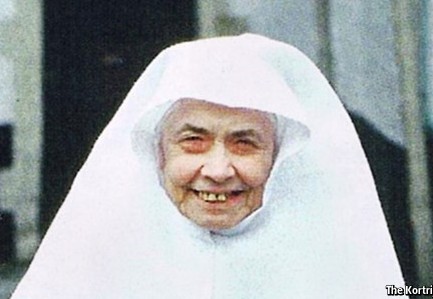
As a young woman, Marcella Pattyn wanted to devote herself to the service of her Christian god, but no order of nuns would take her because she was nearly blind and the first Beguine community she tried sent her home after a week. The Economist reports Marcella still wept over these rejections in her old age. Some wounds are so deep we carry them for life.
But Marcella did find a Beguine community that accepted her, and there she showed an irresistible determination to pray, to be useful, to comfort the sick (which she often did by playing the banjo and accordion), and to live with an exuberance that did not consult the tastes or expectations or opinions of the world.
It seems to me Marcella’s wounds and her exuberance were paired; that her pain and joy were equal blessings, and that they must be praised and embraced equally or not at all.
At the end of her life, she was alone — a condition both emblematic and universal — although she was celebrated by the town in which she lived for being the last of her kind. Now she’s gone and Marcella lives only in memory. When those memories die, too, what will become of Marcella then?
 If the perfect beach book (1) offers a likeable heroine (2) tells stories about problems you don’t have, (3) is smart but not taxing, and (4) contains enough sex to make up for the fact you can’t have any since you a sharing a motel room with your kids – then Charlaine Harris’ vampire novels, including the recently published Dead Ever After, are pretty good choices.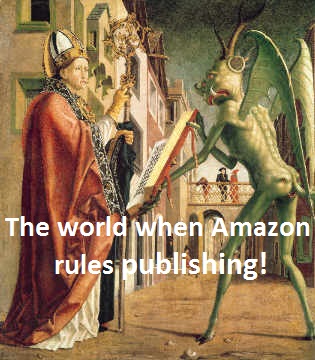




 Peter Galen Massey