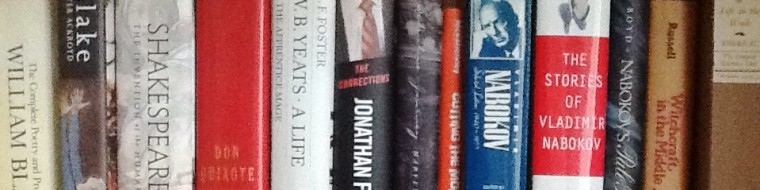
On Thursday, the journal Science published a study (Reading Literary Fiction Improves Theory of Mind) that found people scored better on tests measuring empathy, social perceptiveness, and emotional intelligence after they had read literary fiction than after they had read popular fiction or rigorous non-fiction.
This result cheered members of the literary community and confirmed an idea that I’ve long argued using anecdotal evidence, which is one of the most important functions of literature is to strengthen emotional intelligence.
This function also explains why literature is the only art included in core educational curriculums. The ability to accurately read the feelings of other people is perhaps the most essential skill for living in social groups, and living in well functioning social groups is one of our key adaptations as a species.
So all this is good news — which I greeted with considerable apprehension and unease.
Part of my unease comes from having observed that people who read literature don’t go about the business of becoming better people as often as they go about the business of bragging how they are better people because they read literature.
The Science study is likely to encourage the bragging folks to keep bragging about their exceptionalism; and exceptionalism is fundamentally at odds with the work of empathy, because exceptionalism encourages you to see yourself as different from others while empathy encourages you to see yourself as the same.
The Science study is also likely to reinforce certain class divisions that run right through the middle of literary reading, in which appreciation for literature is used to signal your membership in a high economic status group (ie, rich people read Shakespeare) or in a high social status group (ie, Bohemians read difficult or experimental fiction).
The use of literature as a signal of status is particularly pernicious because it actively works against the whole purpose of reading books, which is … reading books.
Instead, the status-signal readers are interested in reading “classes” of books. They read “literary” fiction not “genre” fiction or “popular” fiction, and so they look for books that conform in obvious and expected ways to these classes, in order to embrace them or reject them — even before they read them (if they ever read them).
In this world, “literary” is a synonym for “quality” and “genre” a synonym for “trash”. The problem with this is that a great deal of tedious, uninspired, self-important, plodding work is praised and a great deal of inspired, insightful, subversive work is ignored.
Now telling the difference between the two can be fiendishly difficult, especially because a truly original book is often indistinguishable from a hot mess on first encounter.
But it is the encounter that is essential: the active, engaged conversation between book and reader.
If the results of the Science study encourage more of this, all to the good. If the study just encourages more sniffing at cocktails parties, then the world will roll on much the same as before.
Less than a week after it was released, Grand Theft Auto 5 has earned more than $1 billion in sales and reignited the debate about its rampant violence. The news coverage of the game’s more appalling details strikes me — a person whose reaction to the typical video game controller is confusion and boredom — as disturbing.
But my bigger question is this: What makes the violence in Grand Theft Auto 5 different from the violence in other works of the imagination?
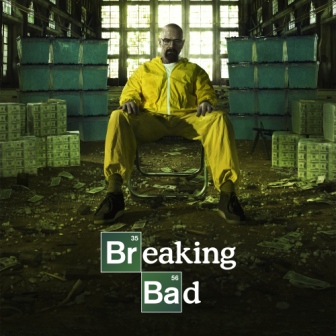
For example, Breaking Bad is a cultural phenomenon which has millions of Americans rooting for a man who cooks meth, manipulates his friends and family, kills adults as well as a child, and is in possession of a machine gun which is likely to figure in the show’s finale.
Macbeth is a monument of English literature which draws audiences of refinement and taste to watch the slaughter of kings, friends, innocent women and children, and soldiers while somehow persuading them to suspend judgment of the man who is the agent of all this slaughter.
I suppose the great difference among these works, if you can establish the difference, is that Grand Theft Auto 5 celebrates violence for the purposes of entertainment, while Breaking Bad and Macbeth explore the nature of violence to demonstrate its consequences.
The point of the video game is to be a criminal and win, or at least escape any consequences for your bad behavior. Macbeth, of course, doesn’t escape consequences in the Scottish play. And we are guessing that Walter White, who already exists in a self-created hell, is likely to suffer more before the show finishes at the end of the month.
But I’m not entirely persuaded by this argument I’ve just made. Part of my doubt is that I’m not sure you can demonstrate that the violence in Grand Theft Auto 5 is of a different kind than Shakespeare’s.
Defenders of the game claim that it is a satire, which would turn the game into social commentary, although social commentary on the level of Brett Ellis’ American Psycho perhaps.
At this point, then, we are required to decide if Grand Theft Auto 5 is a satire done in good faith (ie, “we’re serious about our message”) or bad faith (ie, “we’re pornographers looking to protect our revenue”). And making that judgment is about as slippery a task as a critic could assign himself or herself without helpful emails provided by Edward Snowden.
I’m also not persuaded because of this question: Would Grand Theft Auto 5 or Breaking Bad or Macbeth be as popular as they are WITHOUT violence?
For example, would you really want to watch a play in which Mr. and Mrs. Macbeth talk about their frustrations with their lives and careers, while playing the polite host to King Duncan and making sure he likes the brie and that his room is comfortable? Not really.
The violence is an essential part of Macbeth‘s appeal: appealing, I think, to the dark impulses the human race all feels but which we as social animals need to suppress. These impulses also need an outlet however, and imaginary violence is a much better outlet than actual violence. Grand Theft Auto 5 is a more direct outlet than Macbeth, but this only makes it different in degree. Not different in kind.
The twenty novels in Patrick O’Brian’s Aubrey-Maturin series are the greatest sustained work of English-language fiction written in the 20th century for the high craft of their characters, story lines, language, and themes, for the breadth of their erudition, and for the sheer stamina of O’Brian’s invention.
The series follows Jack Aubrey, a fighting captain in the British Navy, and his particular friend, Stephen Maturin, naturalist, naval surgeon, and intelligence officer, as they fight in the Napoleonic wars as well as the War of 1812.
The series begins with superlative novels that include the books in my best of O’Brian list below. Then, like the happiest of long-running marriages, the Aubrey-Maturin novels take a modest step down to the level of very good indeed; with my metaphorical marriage encompassing not only Jack and Stephen’s monumental friendship, but more importantly, the great devotion of O’Brian and his readers to each other.
I’ve listed my six personal favorites, ranked in order of admiration, with notes and some spoilers. (I’ve included a complete list of the Aubrey-Maturin novels below these reviews for convenience.)
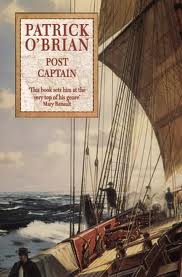
#1 Post Captain (1972)
Patrick O’Brian’s magnificent sophomore work is the crown jewel of the series. The novel begins with O’Brian in full Jane Austen mode, following a young Jack Aubrey with prize money in his pocket and time on his hands because of an unfortunate lull in the Napoleonic wars, as he pursues his eventual wife, Sophie Williams.
Soon, fighting breaks out again but more significantly, Jack and Stephen’s friendship breaks down over a second woman (Stephen’s eventual wife, Diana Villiers) and they challenge each other to a duel. This is the only time in the series when the enduring friendship between the Aubrey and Maturin is shaken, and it makes for some of the most difficult and moving reading in the novels.
In Post Captain, O’Brian’s skill at writing complex, lucid, and compelling battle scenes emerges in all its glory, as does his humor, most especially when Jack is forced to escape suddenly hostile French territory by disguising himself as a dancing bear.
Unlike many of the later novels in the Aubrey-Maturin series, which don’t end as much as they simply stop, Post Captain concludes with a bang.
O’Brian places Jack in command of one of the four British ships that famously captured a Spanish treasure fleet bringing gold back from the New World to finance Spain’s entry into the war against England. Stephen, in his emerging role as an indispensable intelligence officer for the British, gathers the information that makes the capture possible.
#2 HMS Surprise (1973)
In HMS Surprise, the pace is faster, the action more exciting, the stakes higher, and the plot architecture tighter than in Post Captain, which it immediately follows in the series’ sequence.
For my money, HMS Surprise features the best set-piece in the entire series: Jack’s brilliant and daring rescue of Stephen, who has been captured as a spy by the French and is being tortured in the town of Port Mahon on one of the Balearic Islands. This is also the moment when the friendship between Jack and Stephen becomes stronger than death, and so the great and enduring heart of the Aubrey-Maturin novels begins to beat.
In HMS Surprise, both Jack and Stephen face down significant rivals. For Jack, it is the French Admiral Linois, who defeated him in the series’ first book, Master and Commander. For Stephen, it is a new contender for Diana’s affections, who he challenges to a duel that leads to another of the series’ most famous sequences, in which Stephen performs surgery on himself.
Finally, HMS Surprise launches two more of the novels’ great elements. The first is the theme of marriage’s problematic nature, as Jack looks forward to bliss with Sophie in the book’s final lines (Jack predicts the future will be “pure paradise”). The second is exotic locales. India features prominently in HMS Surprise, and future novels will take Jack and Stephen all around the world.
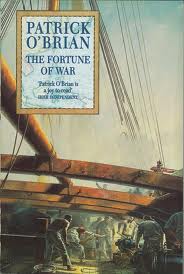
#3 The Fortune of War (1979)
Jack and Stephen are equal as friends, but Jack is more often the agent of action in the novels, partially because he is the captain of the frigates on which Stephen serves and partially because his appalling bad judgment in nearly every aspect of his life except as frigate captain is always getting him into trouble.
The Fortune of War is the single book in the Aubrey-Maturin series that truly belongs to Stephen. In it, he and Jack have been captured by the Americans during the war of 1812. Both are taken to Boston, where a severely wounded Jack is held prisoner, but Stephen walks about with considerable freedom, since the Americans believe him to be just a naval surgeon rather than a British agent.
French agents, also in Boston, know better however, and they engage Stephen in a deadly game of cat and mouse which transforms The Fortune of War into the series’ only true spy-thriller. Thrown in the mix are Diana Villiers, that brilliant complicator of Stephen’s life, and a hair’s breadth escape that wraps up the novel nicely.
Also in The Fortune of War, O’Brian brings the double nature of Stephen Maturin into sharp focus. In the novels to this point, we’ve known Stephen as an accomplished naturalist, a committed physician, and a talented spy – but only had hints of his deadly ruthlessness. Here, Stephen kills without hesitation or regret when driven by circumstances, and O’Brian creates another contrast with his great friend, Jack Aubrey.
Jack as a naval officer is personally responsible for far more deaths than Stephen, but Jack cheerfully regards war as the world’s greatest professional sport. The rewards are immense, the rules complicated and subtle, losing often deadly, but the players feel little actual animosity for their opponents as long as they adhere to the laws of the game. In Stephen’s war, there are no rules, the killing is vicious and personal, and grudges extend beyond declarations of peace. Another way to say it, of the two men, it is Stephen who has the soul of a killer.
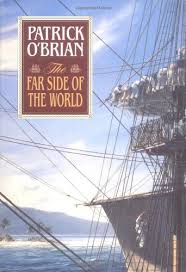
#4 The Far Side of the World (1984)
As the Aubrey-Maturin series progresses, the plots of the books become less discrete and the arcs of the stories flatten; so the novels transform into one continuous narrative that blossoms with asides, digressions, false starts, storms and accidents, sudden reversals, changes of mission caused by the whims of Jack’s superiors or shifting geopolitics, and the messy complexity of the characters most of all.
The Far Side of the World is a particularly rich example of these qualities. In the novel, Jack is sent in the HMS Surprise to prevent an American frigate from attacking British whalers in the South Seas, and almost nothing goes right. He is significantly delayed by a lightning storm off the coast of Brazil that damages his ship and requires significant repairs, which allows the Americans to slip into the Pacific and strike the whalers. Later, a typhoon nearly wreaks Jack’s frigate and destroys the American ship for him. The crew is unhappy with an aging, incompetent midshipman who they believe is back luck. Stephen is entangled in political intrigue while reveling in his opportunities to collect scientific specimens. And much more.
There is something existential in all this chaos, and without suggesting that O’Brian intended to write a philosophical novel – he has entirely too much sense and talent as an artist to bother with such stuff – the total vision of The Far Side of the World delivers exactly that.
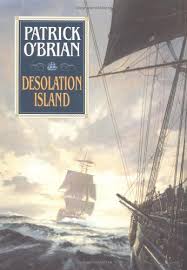
#5 Desolation Island (1978)
If The Far Side of the World flirted with existentialism, Desolation Islands walks right up to this dreary philosophy and gives it a big wet kiss.
Jack accepts the command of the Leopard, an aging ship barely fit to navigate the English Channel, in a mission to transport prisoners to Australia. These prisoners attack and murder some of their guards. The ship is stuck in the doldrums and battered by storms. An epidemic kills most of the prisoners and much of the crew. The Leopard is chased and nearly destroyed by a vastly more powerful Dutch ship of the line. An iceberg damages the Leopard so severely that Jack makes a desperate landing on Desolation Island (one of many in the world at that time) where they are at risk of being marooned permanently.
DesolationIsland contains two of my favorite extended set pieces. The first is the Dutch ship’s pursuit of the Leopard, which takes place in the Roaring Forties, where the waves are mountainous and O’Brian’s powers of description are superb. The second is the crew’s extended stay on the cold, bleak island of the novel’s title – which Stephen regards as a natural philosopher’s paradise he is in no hurry to leave. This is an example of O’Brian’s humor, of course. But it also suggests that joy and wonder can be found any place, if you just know how to look for it.
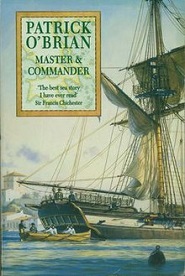
#6 Master and Commander (1970)
Master and Commander is a fine introduction to the series – especially for readers coming new to the books – a solidly constructed and well written story, and a remarkable demonstration of how fully formed O’Brian’s fictional vision was from its first pages.
We meet Aubrey and Maturin as they meet for the first time, both destitute on shore in Port Mahon and looking to go to sea for different reasons. We follow them through a set of missions as Aubrey takes advantage of his opportunities to attack French ships in actions that might earn him promotion and fill his pockets with prize money. At the same time, we are introduced to a wide range of characters O’Brian brings to convincing and vivid life, and to the world of the British Navy during the Napoleonic wars, which he makes equally vivid and convincing. Master and Commander has a clear narrative arc and a satisfying conclusion, in contrast to many of the series’ later novels.
The book reveals the depth and breadth of O’Brian’s interests, including in history, music, natural philosophy, the complexities of human beings and human societies, and the enormous practical difficulties of sailing and fighting naval ships during the early 1800s which O’Brian describes in detail, based on the Admiralty papers of the Public Records Office and other sources. One of the great pleasures of the series is this practical detail. O’Brian is an extraordinary procedural novelist, whose only English-language rival in the twentieth century is John Le Carre. Both elevate their genre novels into the realm of literature, which is what most great writers do.
Complete List of the 20 Aubrey-Maturin Novels in Order
Master and Commander (1970)
Post Captain (1972)
HMS Surprise (1973)
The Mauritius Command (1977)
Desolation Island (1978)
The Fortune of War (1979)
The Surgeon’s Mate (1980)
The Ionian Mission (1981)
Treason’s Harbour (1983)
The Far Side of the World (1984)
The Reverse of the Medal (1986)
The Letter of Marque (1988)
The Thirteen Gun Salute (1989)
The Nutmeg of Consolation (1991)
Clarissa Oakes or The Truelove (1992)
The Wine-Dark Sea (1993)
The Commodore (1995)
The Yellow Admiral (1996)
The Hundred Days (1998)
Blue at the Mizzen (1999)
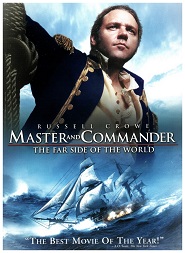
Master and Commander: The Far Side of the World (The Movie)
The film Master and Commander is a triumphant adaptation of Patrick O’Brian’s novels. It’s brilliantly co-written and directed by Peter Weir, who manages the story, action, and characters with equal skill. It features superb performances from Russell Crowe as Jack Aubrey and Paul Bettany as Stephen Maturin, with able support from a strong cast. The movie is filled with details from the novels without losing focus or momentum. Its cinematography, production design, and special effects are utterly convincing. Weir makes you believe in the characters and the world they inhabit. Viewers who know Weir’s other great war film, Gallipoli, will recognize how he looks at the costs and consequences of war in Master and Commander as he did in this earlier movie.
One criticism you could make of the movie is that it does not make concessions to viewers who have not read the books. The movie places general audiences within a fully realized world, filled with unfamiliar characters, situations, and elements, and requires them to work while they watch the film. I don’t expect this will be a problem for people who have found their way to this blog post, however.
Criticism of the movie from O’Brian fans is another matter and follows two themes. The first is that Weir does not see the characters, stories, or themes the way they see them (which is wrong). The second is that Weir did not film their favorite books or did not include their favorite characters or situations (which is also wrong).
Making a film based on a twenty-novel series requires selection. This is unavoidable and Weir tells us which novels he chose in the movie’s title. Weir emphasizes the action elements of the novels rather than Stephen’s work as a spy, or the relationships with Sophie and Diana, or the politics, intrigue, and bureaucracy of the Royal Navy, or significant historical events because – again – he has to choose, because cinema is well suited to action stories, and because it’s easier to get financing for an adventure film than a period drama.
That said, Master and Commander gives the unmistakable impression of being exactly the film Weir wanted to make. Those who disagree with his choices are free to make their own movies. I look forward to watching them when they do.
Glossary of Nautical Terms
The Gunroom of the HMS Surprise site has a good glossary of nautical terms that come from the “Dictionary of Sea Terms” by R.H. Dana Jr., author of “Two Years Before the Mast.” These are particularly useful to new readers of the O’Brian series but helpful to everyone.
Nautical Terms That Have Become Idiomatic
Idioms are phrases whose “figurative meaning is different from the literal meaning,” as the The Oxford companion to the English language nicely puts it. The OED online says idioms are “a group of words established by usage as having a meaning not deducible from those of the individual words (e.g. over the moon, see the light).”
Once you start reading Patrick O’Brian, you begin to realize just how may idioms in English derive from sailing ships. For example, a “loose cannon” is a wild unpredictable person liable to cause harm. This idiom comes from the guns of sailing ships which were mounted on wheeled carriages that absorbed the recoil and allowed the gun to be drawn inside the vessel for reloading. The guns and their carriages could easily weigh 3,000 pounds, and they were secured by heavy ropes. When a gun and its carriage got loose from its ropes, it could roll all over the deck from the motion of the ship injuring or killing men. Worse, the gun could plunge down a hatch and straight through the bottom of the hull, causing the ship to rapidly sink. The CrewSeekers website has an excellent list of idioms that come from sailing ships.
Tacking and Wearing a Sailing Ship
O’Brian describes the mechanics of sailing his ships in detail. This video of the Star of India shows what’s involved in tacking and wearing a sailing ship. In both tacking and wearing, the crew puts the ship about so the wind is shifted from one side of the vessel to the other. In tacking, the bow of the ship is turned through the wind. In wearing, the stern of the ship is turned. Tacking is the more difficult maneuver because the crew is turning the ship into the wind while wearing involves turning the ship downwind.
There are two fundamental questions for contemporary readers of Dante’s Inferno translated into English. The first is “What should we make of the story?” assuming we don’t want to pull on our scholar’s togs and get all 1300 CE. The second is “How should we judge our experience of the language?” considering Dante is famously difficult to translate.
I’ll address both questions within the context of Clive James’ new translation of Inferno published as part of The Divine Comedy earlier this year.
What the Hell is Up with Hell?
As you doubtless know if you bothered to click through to this post, the Inferno follows Dante Alighieri, a Florentine Italian born in the 13th century who has lost his way in middle age as he travels through hell accompanied by the poet Virgil in search of (ultimately) God’s love or, as it may be, the hottest platonic one-night stand in all of literary history with his dead and now angelic crush-for-eternity, Beatrice.
Dante’s excellent adventure will take him through Purgatory and finally to Heaven, but first he has to get past hell; and hell is a horrible place to live, although it is unbeatable as a destination if you are tourist, which is essentially what Dante is.
As a fictitious world – and since I am a liberal Christian, I am going to posit hell does not exist – Dante’s Inferno is an unparalleled feat of imagination. Hogwarts may be more fey and witty, Middle Earth may be more thoroughly worked out (though maybe not since Dante drags all of Italy and much of 1300 Europe into his poem). But for sheer originality and ummph-um-pa-pa, nothing comes close to Dante’s hell.
Nothing comes close to the Inferno in the category of high-class torture porn, either. And torture porn is something this monument of world literature doubtlessly is. Dante the poet, rather than Dante the character in the poem, revels in the sufferings he has dreamed up and canto after canto delivers stand-out horrifying and/or disgusting examples of the concept of “poetic justice”.
Hell is supposed to be the expression of divine retribution. Why then does it often feel closer to bloody-minded titillation? This question is probably familiar to anyone who has seen the frescos in medieval Italian churches or Albrecht Dürer‘s gorgeous engravings of the Inferno, but it is worth repeating.
Then there is the issue of just what kind of sins get you into hell and how much shit these sins get you into once you are there.
Dante’s hell starts off sensibly enough. We begin with the virtuous pagans: you were good guys, but you didn’t know Christ so sorry, you’re screwed. Then sins of appetite or emotion that follow along with many of the seven deadly ones: lust, gluttony, and wrath for example. Then heresy. We know medieval Christians were particular about people disagreeing with them, even on the small stuff, so okay fine, we’ll give Dante a pass on heresy. Then violence in the seventh circle – we’re right with you D, we definitely don’t like violence.
But then we get to the eighth circle of hell, where the fraudulent are punished, and here the head scratching of modern humanist readers begins.
Because the eighth circle is filled with panderers, flatterers, astrologists, simoniacs, corrupt politicians, thieves, counterfeiters – while Attila the Hun is rumored to be floating around a whole circle above.
How is it exactly that a guy who raped and killed his way across the Eastern and Western Roman Empires for twenty years is considered a little less bad than someone who made a living out of telling a dull king he was brilliant or proclaiming that since the moon was in the seventh house, now is a propitious moment to make the moves on your lady friend?
And speaking of rape, where are the rapists? Mixed in with the violent I guess, but they don’t merit a mention to all appearances. Where are those that hate? In the eighth circle, the only ones that truly deserve to be there by modern lights are the Sowers of Discord. Traitors are in the ninth and last circle, with Satan in the center of it all.
Dante Loves Him Some Dante
Another particular feature of the Inferno is just how highly Dante thinks of himself. It starts with the foundational premise of the whole Divine Comedy, namely that Beatrice in heaven has persuaded God to give Dante some special help.
Now I know God is all-knowing and all-powerful and his love has no bounds, etcetera; but there are plenty of people in heaven who have friends on earth, and God seems to have issued exactly one golden ticket for exactly one special tour of his magical damnation plus salvation factory, and that ticket went to you, Dante. And you didn’t even need to buy a Wonka Bar to get it.
Then there is the remarkable early canto where poets like Homer, Horace, and Ovid welcome Dante as a colleague and equal. Now I’m not saying they are wrong. Dante is their equal. But – dude – you write yourself into a scene where great dead poets of antiquity say you’re the bomb, and then you get all choked up and grateful about it? I ain’t buying.
It almost seems petty to note, beside these examples, that Dante the character also makes a habit in hell of telling various suffering souls he can make or break their reputations back on earth if they don’t play nice and answer his questions. Apparently, being God’s special project and an immortal poet ain’t enough for D. He has to make sure people know he’s the world’s best PR flak, too.
There’s also the whole Dante-Virgil bromance, or maybe it’s more accurate to call it a major man-crush Dante has on Virgil; and also the Dante getting to decide who goes to hell thing; but I will let these slide because other commentators have noted them and because I believe I might now be trying your patience with this line of criticism. If not my flipness.
The Clive James’ Translation of Dante’s Inferno
I should say before I go forward, offering small praise for great achievements, that Dante consistently writes scenes that are convincingly felt; that many of these scenes are compelling without understanding the background of the characters involved (but not always); and that the Inferno has incredible momentum – it reads fast and short, even with the volume of detail and people it contains.
This is especially remarkable considering that James’ translation of the Inferno is substantially longer than the original because he has woven into his work many explanations about characters and stories which Dante’s readers would not have required and which other translators typically place in footnotes.
I find this an odd choice because it is for just such information that God first invented footnotes and more recently, the tablet computer. I can’t blame James for ignoring this second invention, since he says he began work long before the iPad and Kindle Fire were invented; but these devices render the need for extensive notes obsolete. Honestly, most folks who are going to buy a copy of The Divine Comedy likely own mobile computers and can sit comfortably in bed with both James’ book and their tablet. I did. Worked beautifully.
As for James’ translation, I think it is as good as you can expect from the impossible task of translating Dante into English.
It’s not simply Dante’s famous ABA BCB terza rima that makes him difficult. English translators with any sense at all avoid it, and James uses an ABAB scheme and iambic pentameter with an AA rhyme at the end of each canto instead.
It’s also that Dante is justly celebrated for the vividness, precision, compactness, and music of his poetry. The little time I spent with a side by side translation of Dante makes me admire anyone brave enough to try it.
James is brave enough and often succeeds beautifully. You’ll find many sequences of lines where you’ll forget you are reading a translation or rhyming poetry at all.
But then, inevitably, you’ll also find lines where syntax or word choice (and so sense) are distorted to fit the poem’s scheme as well as filler words, stuck in to keep the pentameter or jury-rig a rhyme. This pops up during moments when, for example, Dante might ask a question and Virgil says before answering it, “You ask me so I’ll tell you.”
But I’ll apologize to James because these feel like quibbles, and offer what I hope is a compliment instead: your Inferno was so good it made me eager to read Purgatorio. I’ll let you all know how it went when I’m done.
Since I am perpetually behind all trends in popular culture, I am just now discovering that Vince Gilligan’s Breaking Bad is as purely addictive as the crystal meth his anti-hero Walter White cooks on the show.
I’m also just discovering how Breaking Bad has so magnificently balanced its “entertaining” and “serious” elements, which is another way of saying – broadly – that it has succeeded as a narrative built on character and situation as well as a narrative based on plot.
Before I get around to solving the problem of how I’m going to watch Season Six when I don’t have cable, let me throw a few semi-organized thoughts at you.
Breaking Bad Season Five: Addicted to Story
All stories are driven by conflict. And to vastly over-simplify matters, these conflicts fall into two broad categories: interior conflicts, which tend to emphasize character, and exterior conflicts, which tend to emphasize plot.
In its early seasons, Breaking Bad placed greater emphasis on internal conflict. Walt is a high school chemistry teacher driven to cook crystal meth because he fears he will die of lung cancer and leave his family penniless; and while the mechanics of working in the drug business are explored, more time is devoted to the conflicts Walt’s illness and the lies he tells to hid his business cause in his family, and then to conflicts Walt’s wife’s discovery of his profession cause in their marriage.
This balance begins to shift in Season 3 as Walt’s involvement in the drug business deepens, and he is increasingly threatened by other criminals and by law enforcement agents. The latter half of season four delivers a rush of pure narrative delight as Walt scrambles to kill his former business partner, before he kills Walt and his family; and the story barrels into the shows of Season Five with Walt declaring he wants to build his own drug “empire”.
It would be hard to over-praise Breaking Bad for how beautifully it manages its story, like a thoroughbred running the best race of its life, hitting all the beats, managing the minor cliffhangers of a commercial break and the larger cliffhangers of each episode’s conclusion.
Add to this “the mob meets MacGyver” elements, as Walt applies his Mr. Science skills to eliminate one threat after another. And top it off with a question: how does Vince Gilligan make story lines that sound ridiculous when you describe them to your wife so convincing and affecting on screen?
Walter White: Lured by Vanity, Enthralled by Winning
One answer is Bryan Cranston’s Walter White, who Vince Gilligan describes as a person who begins as Mr. Chips and who ends as Scarface, but who I think is much more interesting than Scarface.
Walt doesn’t really want money, although he begins cooking meth as a way to pay his medical bills and provide money for his family after his death. What Walt really wants is agency and recognition.
This becomes evident fairly early in the show, because Walt quickly makes enough money to take care of his family, but he is more concerned about his image as a nice but feckless and impoverished cancer-stricken dweeb than by the practical problem of how he is going to launder a half million dollars in cash.
Walt craves success then, and even more importantly, the recognition and respect that come with success. This is one of the reasons he keeps getting lured back into the drug business, because only there is his success – as the well-paid maker of the world’s best crystal meth – recognized.
It is also in this world that Walt’s intelligence and (as it turns out) decisiveness is acknowledged. He’s driven in part by desperation. He has to kill his business associates before they kill him. He has to elude the DEA. But the more often he wins, the more he likes it and the more he doesn’t stop to count the bodies that are piling up on route to his next victory.
Only when his wife shows him the pile of money he’s amassed, literally as big as a Mini Cooper, that he retires – right at the end of season five. What was Walt chasing? What were all those deaths worth?
We’ve Been Seduced by the Monster Who Is Walter White
This is a popular opinion and it’s true. Walt is a monster. The list of murders he’s committed prove it. So why are we on his side?
Part of the answer is that Walt wants what most people want: to be self-sufficient and respected. Part is that we humans are social animals who chaff at the restraints our societies put on us even as we embrace them, and stories about criminals or seducers or other people who break the rules are a safe way to dream away our frustrations with society’s restraints.
But a greater part of the answer is perhaps the loveliest fact in all narrative art. The social purpose of story and character, the moral purpose of literature – regardless of medium – is to teaches us empathy.
Story asks us to inhabit the lives and experiences of the characters on which it turns its powers, and to understand them, even if we don’t like them – even if in the end we are right to condemn them. Macbeth, Milton’s Satan, Humbert Humbert, Walter White.
It’s a great paradox of narrative art that rooting for bad guys can make us better people. But it can. At least when the bad guys are creations as brilliant as Walter White.
If the perfect beach book (1) offers a likeable heroine (2) tells stories about problems you don’t have, (3) is smart but not taxing, and (4) contains enough sex to make up for the fact you can’t have any since you a sharing a motel room with your kids – then CharlaineHarris’ vampire novels, including the recently published Dead Ever After, are pretty good choices.
Certainly, Ms. Harris has earned her success with the character of Sookie Stackhouse, a telepathic barmaid living among vampires, werewolves, witches, fairies, and just-folks humans in the small Northern Louisiana town of Bon Temps.
Much of Sookie’s appeal comes from the fact that she is a normal person. Every day, she gets up and works an unglamorous job. She shops for food, buys gas, cleans her house, and watches TV. At night, she says her prayers. On Sunday mornings, she goes to the local Methodist church. Sookie tries to look after her hard-working but sexually reckless brother. Most of the time, she wonders if she’s done right or not.
Sookie is also appealing because her strength comes from her character, not her paranormal abilities. In almost every fight with a supernatural being – and with many normal humans – Sookie is overmatched, but she will fight all the same if forced, rather than surrender. Sookie also has great courage. She will put herself in danger to help a friend or a person to whom she feels obligated. She will act on principle when it’s against her own self-interest. And she can make hard decisions when her good sense tells her she has to make them.
Another quality of CharlaineHarris’ vampire novels is their social commentary. The books are occupied with how society treats people who are different, and you don’t have to look hard to see the parallels between the vampires in Harris’ novel and homosexuals (and others outside sexual, gender, and lifestyle norms) in our own.
The supernatural can also be seen as the outward manifestation of interior psychology in the novels. Sookie dates vampires and werewolves, which is another way of saying she goes out with no-good men who are blood-suckers and animals, while ignoring the romantic possibilities with her dependable boss Sam, a shape shifter who likes to take the form of a collie.
Sookie’s mind-reading power functions in a similar way. Her telepathy is really the magical extension of her natural intelligence and perceptiveness, qualities that can make a woman living in a small town “different” or “odd” to many of the people around her.
None of these parallels should be taken too far. Harris does not invest every character or story with a deeper meaning. Or put another way, with a nod toward Freud’s famous observation, sometimes a vampire is just a vampire in the Sookie Stackhouse books.
Charlaine Harris is not a great prose stylist, but her writing demonstrates craft, and Harris conveys the sound of Sookie’s voice – and particularly her sense of humor – very effectively.
Her plot architecture is another matter, however. Many of the books are constructed around a series of loosely related incidents, rather than a unified story that has an arc and momentum. The mystery elements of her stories are often thin and feel perfunctory. Her plots seldom twist. And as the series has stretched on, it has become more and more of a soap opera.
This is not such a bad thing for beach books, however, and it means that you can read the series in any order. So try a couple if you discover you just can’t read Woolf’s The Waves while the ocean crashes and the seagulls cry and your neighbors the next umbrella over are blasting Bon Jovi. I couldn’t.
When a federal judge ruled that Apple was guilty of conspiring to fix the price of eBooks last week, the lamentations began.
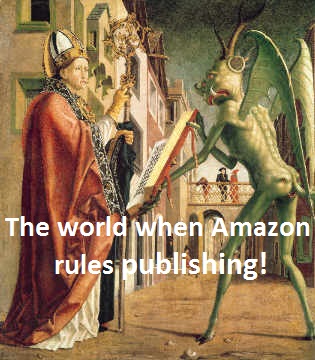
Commentators declared this would lead to the destruction of the traditional publishers and the ascendance of Amazon as a monopolistic hegemon, which would use its vast market powers to homogenize and commoditize our reading culture. Also, frogs would rain down from the sky.
But I don’t think any such thing will happen. (Well, the frogs might.) Here’s why.
The Traditional Publishing Model Is Not Essential to Reading Culture
The traditional publishers think they are essential to reading culture because they were essential in the past and because (I’m quite sure) they are sincerely devoted to their craft.
But the only two actors who are essential to reading culture are writers and readers. Publishers are … or were … a necessary intermediary between the writer and reader, back when printing books and getting them into the hands of readers were complicated, expensive operations.
Now these tasks aren’t necessarily complicated or expensive. There are plenty of new ways, many more than before, for writers and readers to connect. And as long as you have writers and readers, you’ll have a reading culture. Before I discuss why, however, let me make a semi-related point.
Good Books Have Always Been Bad Business
This is not to say you can’t make money from serious books or serious literature. You can. The problem is you can’t make enough money consistently to turn the proposition into a sustainable business.
This leaves publishers with two choices. The first is you have a huge company in which the blockbusters in popular genres subsidize the “serious” books. For publically traded companies, this is the only option because they will be punished by the markets if they lose money.
The second is you have a small company, privately held, in which the owners see themselves as patrons of and missionaries for writers as much as they see themselves as business people, and their financial goals don’t extend too much beyond avoiding bankruptcy.
The recent obituary for Arthur Rosenthal of Basic Books described this dynamic nicely when it said he “let his taste in nonfiction and his quasi indifference to profit margins guide him as a publisher”.
Now Amazon is making the lives of people who work within the huge company model a living hell. But it is making the small company model so easy that anyone with a computer and internet access can become a publisher.
Writers of Serious Books Are Adapting. Amazon Is Helping Them Do It
One of the assumptions in much of the recent wailing over Amazon’s victory is that only serious books are real books and only serious publishers are real publishers.
No one was fretting that the Dan Browns of the world would disappear because they knew they wouldn’t. A hegemon Amazon would still publish Dan Brown because he makes a lot of money.
The commentators did worry that a hegemon Amazon would ignore the serious, unprofitable books. Well, maybe. But maybe not. Amazon has demonstrated an almost pathological indifference to earning a profit over the years. This would make them a perfect publisher for the Virginia Woolfs of the world. And perhaps they would like the prestige of a having such writers under their imprint?
But if not, Amazon has given writers the tools to directly publish and promote their own books. Amazon’s print-on-demand model allows small publishing companies to produce print books with very low overhead costs. Kindle Direct allows people to publish eBooks at basically no cost.
Everyone has a chance. Including the serious writers and important voices who are getting overlooked right now by those old gatekeepers of the reading culture, the traditional publishers.
The Government Doesn’t Just Punish Price Fixing. It Also Punishes Monopolies
Finally, remember that it is not only illegal to fix prices. It’s also illegal — not to become a monopoly, as it turns out talking to my FTC lawyer friend — but to use monopoly power to stifle competition. And the government departments that are aiding Amazon by ruling against Apple, so some people claim, are the same departments that would force Amazon to change its business practices or break up if it did.
We can’t risk that harm, you say? Well, under the legal system of the United States, you generally can’t punish companies because you think they will break the law. You have to wait until they actually do.
In the meantime, I encourage everyone to seize the new opportunities. They’re good fun. And you might make some art, or some cash, too.
In the movie Before Midnight, the team of director Richard Linklater and actors Julie Delpy and Ethan Hawke set themselves the monumental task of portraying a single day in the life of a privileged Franco-American couple, while summarizing the last nine years of their relationship, and fall just short of creating a masterpiece.
Before Midnight is the third installment of a series that began with Before Sunrise (1995) and continued with Before Sunset (2004).
Each film portrays less than twenty-four hours in the lives of two characters, the French environmental activist Celine (Deply) and the American writer Jesse (Hawke), entirely through conversations.
All of the films are deeply committed to a realism that emphasizes the flow and rhythm of actual talk. So the movies allow Celine and Jesse’ words to jump wildly from point to point, and expose their characters’ thoughts and emotions in ways that are raw, immediate, sometimes uncensored, and sometimes painfully unflattering.
Which means the experience of the Before movies is much closer to the experience of living our lives than watching a typical movie, in which a controlling intelligence works hard to clean up the dialogue, make the characters look good (or chooses exactly how and how much they will look bad), and impose a structure on events that gives them an implicit sense of purpose and meaning.
These choices are particularly effective in Before Midnight because you no longer have the pleasure of watching Delpy and Hawke meeting or re-meeting cute, with an unknown happy future in front of them, but rather seeing them living the reality of that future in which their romance, their jobs, and the work of raising their children have become highly specific and in many ways, unsolvable problems.
Before Midnight is also powerful because the movies gets so deeply into the characters of Celine and Jesse that whether we as the audience like them or don’t like them, or whether Linklater-Delpy-Hawke care if we like them or not, is irrelevant.
The questions are whether Celine and Jesse can like themselves, or each other, or find a way to preserve the mystery of the love between them – now that the persuasion of its first blossoming is long past – or find happiness from lives in which it seems clear no transcendence will emerge.
Both Hawke and Delpy should get medals for acting courage in Before Midnight, but Deply in particular deserves praise. Her Celine is in a state of greater crisis than Jesse, and she holds nothing back. She looks and feels her age in a way women in movies rarely look or feel.
My only quibble is a technical one. Because Before Midnight has nine years to cover in the life of Celine and Jesse, it sometimes feels over-packed and over-busy.
For example, during a long argument in a hotel room, Celine brings up a whole basketful of problems she’s had with their relationship, and the realism of the conversation slips into the feeling that Linklater-Delpy-Hawke are trying to shove a summary of their last nine years into a single take.
An even bigger problem here is that they are asking us to believe that Celine kept many of these problems to herself all this time, and Celine is a character who the films have conclusively demonstrated keeps NOTHING to herself.
But these are small flaws compared to what the movie achieves. Few films hold a mirror up to its audience as relentlessly and unflinchingly and persuasively as Before Midnight. Go see it.
Other Massey Movie Reviews – kinda random as selections go, but what the hey
What’s the difference between an innovation and a gimmick in literature? An innovation expands the author’s vision while a gimmick tries to hide his lack of one. You’ll find excellent examples of both in George Saunders’ recent short story collection, Tenth of December.
When Saunders is good in this volume, he is very good indeed, and the elements he uses frequently throughout Tenth of December work well together to create resonant stories. These elements include …
language that is faulty or inadequate, usually because the narrative voice belongs to a person with whom Saunders has not shared his gifts as a writer.
characters who are teetering on the edge of economic / social / psychological / personal failure confronting other characters who enjoy extraordinary success (no one seems to occupy the middle ground).
the motif of fictional pharmaceuticals that can regulate every human characteristic.
strong satiric impulses balanced by great empathy for his characters.
One of the best stories in Tenth of December is “Escape from Spiderhead” in which Saunders slowly reveals to us that the narrator is being used as an unwilling test subject for powerful drugs because he has been convicted of murder. Here words are deformed by bureaucrats and scientists, who use technical language to obscure the horror of their actions, and Saunders deploys his innovative premise to deliver a knock-out meditation on free will, regret, and redemption.
Another excellent story is “Victory Lap” which tells the anxiety-provoking tale of a high school girl, the middle-aged man who attempts to kidnap her, and a high school boy who intervenes. Saunders nails the voices of all three characters. The kidnapper narrates the pathetic execution of his pathetic fantasy to perfection, but it is the teenagers who really shine. Their words grasp at ideas and emotions without quite seizing hold of them, and you get the sense in the end that Saunders intends the triteness of their language to be a deliberate defense against the fear they experienced.
In these examples, the innovations – the science-fiction premise of “Spiderhead”, the conspicuously stylized narration of “Victory Lap” – work with the other elements to create stories that capture your mind, your heart, and your gut. But that’s not the case for every story in Tenth of December.
For example, “Exhortation” is a staff memo composed of inept motivational business-speak wrapped around the message that the department will all be fired unless performance measures improve. “My Chivalric Fiasco” is mostly about what happens when a worker at a Renaissance-Fair business takes a drug that makes him a highly articulate speaker of ersatz medieval dialect.
Other than admiring Saunders prose, or nodding in automatic agreement at the obvious lessons (offices are insane places in “Exhortation” and sexual harassment is bad in “Fiasco”), there is little for the reader to do. The gimmick of the style doesn’t hide the thinness of the story.
The longest piece in this collection, and I think the weakest, is “The Semplica Girl Diaries”. The story is told through the diary of a man who plunges his family from serious money problems to desperate money problems by making an expensive, impulsive, and useless purchase.
This purchase happens to be (as is eventually revealed to us) four young girls from poor countries who hire themselves out as living lawn ornaments.
As a big honking obvious metaphor for the exploitation of third-world labor by Americans, you would be hard pressed to find a metaphor bigger or more honking or more obvious. Once Saunders shows the metaphor to you, however, there is not much left. You can enjoy the gyrations of the story. I didn’t. You can admire his prose style. I did. But virtuosity alone is never enough to satisfy me. It has to be in the service of something other than itself.
Don’t let this stop you from reading Tenth of December. The rewards outweigh the frustrations, and your effort will be entirely redeemed by its best and shortest story, “Sticks,” in which a man tries to connect with his family by decorating a metal pole in their yard with clothes and words. Here Saunders does more in two pages than many writers can do in one hundred. And that’s neither innovation or gimmick. That’s talent.
In his new film adaptation of Shakespeare’s Much Ado About Nothing, director Joss Whedon has made a movie which is both funny and affecting – but funnily enough, more affecting than funny.
A great deal of Whedon’s success comes from solid performances by most of the cast and his choice to have his actors read their lines “naturalistically” – i.e. as normal conversation rather than as the impossibly articulate prose or the poetry it actually is.
The result is that the dramatic elements in Much Ado About Nothing, which I usually find thin and forced, work pretty well in this movie.
Hero and Claudio, the young lovers who can easily come across as pretty blanks, are brought to moderately complex life and real pain by Jillian Morgese and Fran Kranz, enough that I was wiping away a tear or two during Act V and hoping my wife in the next seat didn’t notice.
Clark Gregg as Leonato and especially Reed Diamond as Don Pedro both express the easy humor and hard anger of men used to power. Sean Maher finds a convincing seam of quiet malevolence in the two-dimensional villain Don John. And let me give an enthusiastic shout out to the comic constable Dogberry, who is underplayed by Nathan Fillion to a perfection of sublime silliness.
The major problem in this Much Ado About Nothing comes exactly where the play is – and where I expected Whedon to be – strongest: the brilliant and beloved sparring between Beatrice and Benedick in the first two acts.
This is a result, in part, of the naturalistic line readings that I thought served the weaker elements of the text well. The difficulty is that these passages are performances by Beatrice and Benedict, for the people around them, for each other, and for themselves. Turn them into conversation and you leave the audience crying, “Where’s the sparkle? Where’s the snap?”
Some of the fault lies with the actors, however. Neither Amy Acker as Beatrice or Alexis Denisof as Benedick seem to have clicked with their roles in the early parts of Much Ado About Nothing. The good news is that Acker plays Beatrice transformed by love very well, and is strong during the rest of the film.
On the other hand, Denisof never does much better than muddle through. The idea behind his Benedick appears to be that the character has been made awkward and embarrassed by love. But I could never suppress the impression that it was Denisof playing Benedick awkwardly rather than playing Benedick as awkward.
Don’t let this dissuade you from seeing the movie, however. Overall, I think you’ll be pleased. Whedon filmed this Much Ado About Nothing in a luminous black and white that pleases the eyes. His smooth jazz soundtrack is somewhere between innocuous and fine. And the de rigueur celebration scene and kiss right before the credits will leave you smiling as you exit the theater.
 On Thursday, the journal Science published a study (Reading Literary Fiction Improves Theory of Mind) that found people scored better on tests measuring empathy, social perceptiveness, and emotional intelligence after they had read literary fiction than after they had read popular fiction or rigorous non-fiction.





 Peter Galen Massey