Archive for the ‘Fiction’ Category

I love Dr. Seuss’s ABC and read it to my kids all the time. But after several years, I realized I had to skip “Letter R”.  It all seemed innocuous at first.

“Letter R” wasn’t my favorite rhyme but I kinda dug
Rosy Robin Ross’  jodhpurs and riding crop.

I wondered what Rosy found so interesting
about the red rhinoceros.  He seemed like
a nice fellow, but nothing special.

Then one day it struck me. I took a real close look
at that nose of his and thought, “Uh oh.”

Read Full Post »

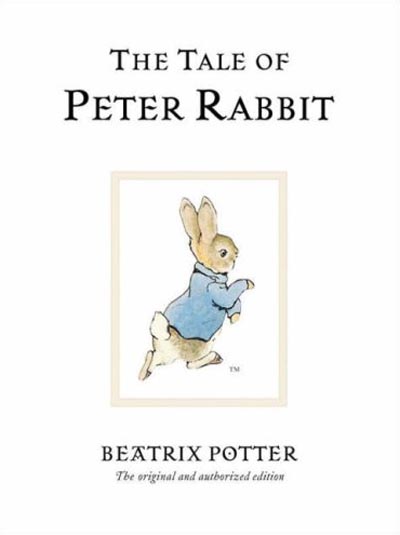
The Tale of Peter Rabbit by Beatrix PotterBefore Beatrix Potter became the author of children’s books such as The Tale of Peter Rabbit (1902), she was a gifted natural historian and scientist.

So it’s not a surprise that Ms. Potter’s illustrations closely resemble the animals on which her characters are based or that she writes unsentimental stories that display a strong understanding of human (rather than animal) psychology.

This is certainly the case with Beatrix Potter’s most famous character, Peter Rabbit, whose trauma in Mr. McGregor’s garden is so realistically portrayed that cheeky amateurs with access to the Diagnostic and Statistical Manual of Mental Disorders (DSM IV) could diagnose him with Acute Stress Disorder if they liked.

In The Tale of Peter Rabbit, Peter’s mother tells him not to go into Mr. McGregor’s garden because “your father had an accident there; he was put in a pie by Mrs. McGregor.”

This does not deter Peter, who runs straight to the garden and encounters Mr. McGregor. In the subsequent chase, Peter loses his shoes and coat and catches cold while hiding in a watering can. Peter escapes and his mother puts him to bed with a dose of camomile tea.

Trauma is a cause of Acute Stress Disorder, and I think this experience qualifies as a traumatic event according to the DSM-IV because Peter was both “confronted with an event that involved actual or threatened death” and responded with “intense fear [and] helplessness.”

We see the symptoms of Acute Stress Disorder in The Tale of Benjamin Bunny, which picks up Peter’s story the next day.

As the book opens, Peter’s cousin Benjamin finds him “sitting by himself” looking “poorly” and “dressed in a red cotton pocket-handkerchief.”

Benjamin leads his cousin away toward the McGregor’s garden without either agreement or resistance from Peter.

From this description, we can find in Peter (1) an absence of emotional responsiveness and a reduction in awareness of surroundings and (2) anhedonia or lack of interest in activities that used to bring enjoyment, both of which are characteristic of Acute Stress Disorder.

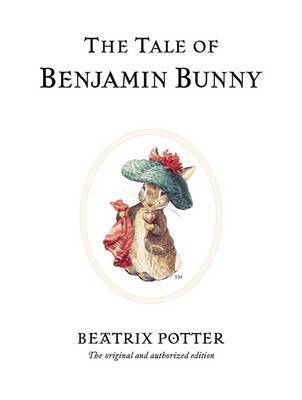
The Tale of Benjamin Bunny by Beatrix PotterOnce in the garden, Peter Rabbit displays three more important symptoms: (3) poor concentration, (4) marked symptoms of anxiety, and (5) increased arousal, hypervigilence, and an exaggerated startle response.

There are three instances of poor concentration in the tale. First, Peter falls “down head first” from the pear tree he and Benjamin are using to enter the garden. Peter and Benjamin pick onions as a present for Peter’s mother, but Peter drops half the onions at one point in the tale and drops the others a little later.

Peter is also clearly anxious and hypervigilent during his return visit to Mr. McGregor’s garden. While Benjamin is collecting the onions, Ms. Potter notes “Peter did not seem to be enjoying himself; he kept hearing noises.”

Peter also doesn’t join Benjamin in eating Mr. McGregor’s lettuces either, instead saying that “he should like to go home.” When the two rabbits walk among Mr. McGregor’s flowerpots, frames, and tubs, “Peter heard noises worse than ever, his eyes were as big as lolly-pops!”

It is in this emotional state that Peter and Benjamin are trapped under a basket by one of the McGregor’s cats for five hours. Ms. Potter writes it was “quite dark” and the “smell of onions was fearful” under the basket. Both Peter Rabbit and Benjamin Bunny cry.

The little rabbits are saved by Benjamin’s father, old Mr. Benjamin Bunny, who cuffs and kicks the cat into the greenhouse, then whips both Benjamin and Peter with a switch.

Peter returns home, where his mother forgives him because she “was so glad to see he had found his shoes and coat” and all seems to end well. The last drawing in the story shows Peter folding up the pocket-handkerchief with the help of one of his sisters.

But Peter’s trauma isn’t resolved as much as it is ignored, and the ambiguity of this resolution hangs over the end of the story. I suspect that the effects of Peter’s untreated trauma will linger for years, making it hard for Peter to find stable employment as an adult and perhaps leading to the self-medicating abuse of rabbit tobacco.

Peter Rabbit isn’t the only psychologically realistic character who experiences trauma in Beatrix Potter’s stories. Mr. Jeremy Fisher is nearly eaten by a trout and resolves never to go fishing again. Jemima Puddle-Duck’s eggs are saved from a fox by the collie dog Kep, only to be gobbled up by puppies before Kep can stop them.

Even Mrs. Tittlemouse, who is threatened by no more than a series of unwanted visitors in her sandy house, lives under the constraints imposed by her obsession with cleanliness and order.

Beatrix Potter’s dispassionate examination of life’s menace has earn her books readers for more than one hundred years. I have to ask, however: “Why do we let children read them?”

Read Full Post »

The Virgin Suicides by Jeffrey EugenidesIn The Virgin Suicides, Jeffrey Eugenides tells the story of the five Lisbon sisters who kill themselves over the course of a single year, and along the way writes a mash note to youth and innocence, age and disappointment, and the Detroit of the 1970s at the moment when the city’s wealth and vitality begin to rot away.

Eugenides’ story is twee, and fantastic, and too cute by half until the last twenty pages, when he slips his knife under your breastbone, cuts out your heart, and holds it up, beating and bleeding, with a silent question: “This is life. Can you endure it?”

Read Full Post »

"Juliet, Naked" by Nick HornbyIn Nick Hornby’s best books – High Fidelity and Fever Pitch – he manages to be a popular writer, a comic writer, and a serious writer all at the same time. Hornby equals the achievement of these books in his 2009 novel, Juliet, Naked.

Juliet, Naked tells the story of Annie and Duncan, an English couple slipping into middle age, and how they are affected when the reclusive ex-rock star, Tucker Crowe, enters their lives.

Annie and Duncan are exemplary Hornby-esque characters. They possess intelligence and some taste, but they are adrift in their work, and deeply uncertain of their feelings for each other. Duncan is also obsessed with Tucker Crowe and his most famous album, “Juliet”.

Annie tolerates this obsession until they disagree about a demo recording of the album’s songs – known as “Juliet, Naked” – that Crowe releases after twenty years of silence. The disagreement causes their relationship to fray. Annie attracts the attention of Tucker Crowe himself through a review of “Juliet, Naked” she posts online. And the story is off and running.

Hornby is a virtuoso of romantic ambivalence, and his talent is fully realized in Annie and Duncan. They are a portrait of all the dissatisfactions that develop when a relationship is based more on familiarity and convenience than on affection, and the scenes between them are funny, painful, and persuasive.

For example, here’s part of the scene in which Duncan tells Annie that he’s seeing another woman:

“Are you telling me you want out?” [Annie asked.]

“I don’t know. I did know. But now I don’t. It suddenly seems like a big thing to say.”

“And it didn’t earlier on?”

“Not … not as big as it should have done, no.”

“Who are you sleeping with?”

“It’s not … I wouldn’t use the present continuous. There’s been an incident. So ‘Who have you slept with?’ is probably the question. Or ‘With whom did this possibly one-off incident take place?’”

Annie was looking at him as if she might kill him with her cutlery.

“She’s a new colleague at work.”

“Right.”

Annie waited and he began to babble.

“She … Well, I was just very attracted to her immediately.”

Still nothing.

“It’s been a long time, in fact, since I’ve been as, as drawn to somebody as I am to her.”

Silence, but of a deeper and altogether more menacing quality.

“And she loved Naked. I played it to her last…”

“Oh, for Christ’s sake.”

Tucker Crowe is not as convincing in his role of former rock star as Annie and Duncan are in theirs. Hornby tells us that Crowe was a talented musician who’s famous for recording a poor-man’s version of “Blood on the Tracks” and for possessing a series of beautiful, angry ex-wives.

But Crowe doesn’t seem like a man who was ever passionate enough to have recorded a minor masterpiece or destroyed multiple relationships. Instead, he comes across as the kind of funny, feckless, and self-centered Hornby character that excels at doing nothing with his life.

There are other problems. In the middle of the book, you can hear the machine of Hornby’s plot going clang, clang, clang and he falls back on his considerable comic gifts to keep the story moving. This part of the novel is still funny, but the humor comes from Hornby’s efforts, rather than rising from the characters and situations, and so loses its depth of feeling.

The good news is that Hornby produces a satisfying ending to Juliet, Naked once he manages to maneuver Duncan, Annie, and Tucker into a position where they all can meet. Hornby also does a pretty job of resolving many – but not all – of the discrepancies between Tucker’s rock-star past and his current personality.

The final pages of Juliet, Naked do leave questions about the story unanswered, but it suits the characters perfectly. To them, life is something of a muddle and never complete. It’s fitting that the ending of the novel they inhabit shares those qualities.

Read Full Post »

1Q84 by Haruki Murakami In 1Q84, the Japanese writer Haruki Murakami tells the story of a freelance assassin and an aspiring writer as they slowly become entangled with a sinister religious cult and the mysterious supernatural beings the cult worships.

Murakami sets his book in a parallel world that resembles 1984 Tokyo, except for the presence of two moons in the sky. (The title of the novel is a reference to this other world, with a “Q” that stands for “question mark” replacing the “9”.)

1Q84 combines elements of fantasy, thriller, and detective stories with questions about the nature, function, and meaning of fiction. The English version, translated by Jay Rubin and Philip Gabriel, was published in the fall of 2011.

Murakami’s novel was widely expected to be a masterwork, but the reception among English speaking reviewers was mixed, with some hailing it as a major work of literature and others seeing it as a 1,200 page novel of no great substance.

I liked 1Q84 more than some of its critics, but I agree with those who think the novel is unlikely to find a permanent place among the world’s great books.

As an entertainment, I thought it was successful. I was never enthralled by the novel, but I did finish reading it, and I found its main actors, Aomame the assassin, and Tengo the writer, well drawn and appealing.

Only one character, however, a grotesque but finally sympathetic private detective name Ushikawa, burned with the convincing life that distinguishes great literary characters from their lesser brothers and sisters.

I also didn’t think all the references to artists, discussion of metaphysical ideas, or the novels-writing-reality and reality-writing-novels tricks (which are at least as old as Andre Gide’s 1895 Paludes), added up to very much.

They seemed more like the kind of fruits and nuts you might throw into a satisfying, but ultimately unremarkable cake, to make it tastier.

Finally, I thought 1Q84 lacked quiddity, lacked that strange and delicate alchemy which makes a novel deeply idiosyncratic on one hand and broadly universal on the other, and which distinguishes great books from merely good ones.

Fans of 1Q84 may offer two substantial objections to these opinions.

The first is that I don’t know if Rubin and Gabriel’s clear and workmanlike translation of 1Q84 reflects Murakami’s work or whether English readers have lost the rhythm and music of the original prose, not to mention the subtle resonances and associations which are particular to different words in different languages, but which are essential to writers of any talent.

To this I can only reply, true. That is a difficulty with any translation.

The second problem is the (reasonable assumption as it turns out) that I am largely unfamiliar with Japanese culture and society.

This means that if Murakami created a metaphorical history of Japan in 1Q84, or included large amounts of sociological comment, or has written significant elements of parody or satire into the novel, the chances are something better than 95% that I don’t get them.

To this I can only reply, also true. But it is a quality of literature that it transcends the time and place of its composition, and speaks powerfully to readers in other places and other times. That 1Q84 falls short on this measure does not make it a bad book. But it doesn’t make it an important one, either.

Read Full Post »

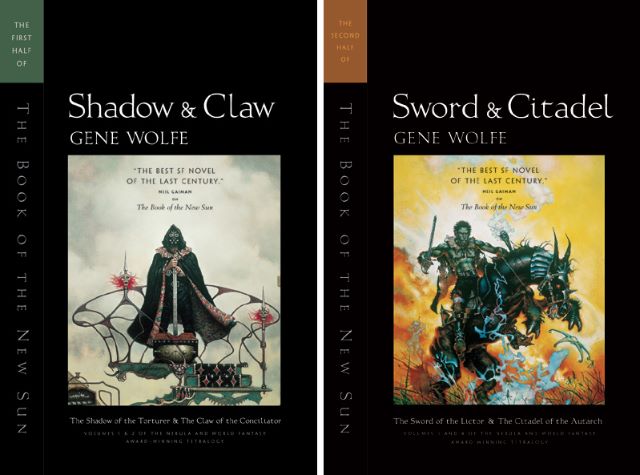
The Book of the New Sun by Gene Wolfe - book coversFans of science fiction, with two weeks of glorious vacation reading time before them, could do much worse than pick up The Book of the New Sun by Gene Wolfe.

This four-novel series follows Severian, an exile from the guild of The Seekers of Truth and Penitence (ie, torturers and executioners) as he pursues his picaresque and ultimately momentous destiny on an earth so far in the future the sun is burning out.

Severian’s adventures keep the reader cheerfully turning pages, and Wolfe seeds the novel with enough time-bending, past-is-future plot twists and vague mythological-theological themes to feed late-night bull sessions in college dorm rooms everywhere, but the real delight – and the major accomplishment – is in the details.

The plants, animals, machines, buildings, cities, humans, and aliens of The Book of the New Sun consistently enchant with their originality and strangeness. And by creating a decaying medieval society, mostly forgotten and abandoned by other humans who fled to the stars long ago, Wolfe smoothly unites fantasy and science fiction. Excellent, guilt-free reading for August.

Read Full Post »


In Bring Up the Bodies, Hilary Mantel continues her speculation on the life of Thomas Cromwell – Master Secretary and consigliere to King Henry VIII of England – as he works to remove Anne Boleyn from the throne of England because Anne has failed to produce a male heir for the king and, more essentially, because Henry has grown tired of her.

Mantel delivers a brilliant synthesis of the genre and literary novels, offering action, intrigue, sex, and blood as well as masterful writing, sharp-edged dialogue, finely drawn characters, and acute psychological insights. More impressively, she takes absolute possession of Cromwell’s mind and then offers readers a prime seat in it.  Bring Up the Bodies is the sequel to Mantel’s Man Booker Prize-winning novel, Wolf Hall.

Read Full Post »

Ayn Rand talks fantasy football

In our previous installment of Made-Up Truth, we were pleased to present a transcript of The Football Circus show featuring special guest commentator, Barack Obama, discussing fantasy football.

This week, Made-Up Truth is delighted to offer a transcript of TFC’s all-time most popular segment, featuring iconic author Ayn Rand. Let’s get it going!

[Lights come up. Lively music plays. TFC appears sitting at a desk with a distinguished looking older woman. She wears a severe expression and is dressed in a formless grey shroud. The woman’s skin seems both pearly and translucent.]

TFC: I’m happy to introduce our guest commentator this week. Please welcome novelist, pseudo-philosopher, and Tea Party inspiration Ayn Rand. Give her a hand folks!”

[Lively applause from the audience.]

RAND: Thanks, TFC. It’s great to be here.

TFC: It’s great to have you. So, I guess there’s an after-life after all. What’s it like?

[RAND fixes TFC with a cold, angry stare.]

RAND: Have you heard Aaron Rodgers is a big fan?

TFC: How nice for you. Moving right along. First game this week is …

TEAM BARBECUE at FUBOOZERS. What do you think, Ayn?

RAND: Adrian Peterson is a better running back than Maurice Jones-Drew, so Fuboozers will win.

TFC: Okay, I agree Peterson is better. But what about Kitna versus Brady? Brady’s the better quarterback, but Kitna has a good match-up versus Detroit. And the BBQs have a stronger team overall. Both these guys are living in the cellar, but I’d put my money on the Barbecues.

RAND: Peterson is a better running back than Jones-Drew, so Fuboozers will win.

TFC: Right, I heard that. But there are seven other players. I gave you reasons why I think the BBQs will win. Let’s have a conversation!

RAND: Peterson is a better running back than Jones-Drew, so Fuboozers will win. I am thinking and you are not.

TFC: You can’t ignore all the players except Peterson and Jones-Drew.

RAND: I am thinking and you are not.

TFC: Look, that’s not an argument. You told my producer you would offer startling insights and persuasively reasoned opinions. We flew you in Business Class from frickin’ Limbo. We put you up at the Four Seasons. You ate all the Chex Mix in the Green Room. We have the right to expect better.

RAND: I am thinking and you are not.

TFC: You’re not going to make me give up by being a mono-maniacal bitch about this.

RAND: I am thinking and you are not.

TFC: You make…

RAND: I am thinking and you are not.

TFC: Jesus! Okay, fine. Fuboozers will win. Happy?

RAND: Now you’re beginning to think!

TFC: Next up, we’ve got…

KICK-ASS FLOWER KIDS at THE MIGHTY MUSKRATS

RAND: The Flower Kids are naked hippies rolling around in the mud doomed to die with all the other naked hippies rolling around in the mud doomed to die. Naked hippies covered in mud doomed to die can never win a fantasy football game. Ever.

TFC: The Flower Kids won the AWFL Cup a few years ago.

RAND: I am thinking …

TFC: … and I am not. All righty. And the Muskrats have been scoring a million points lately, too. Now, let’s look at…

THE PEACH STATE REBELS at TEAM BIG GOVERNMENT

RAND: Bah! Government lawyer! Team Big Government is a moocher, parasite, looter, bloodsucker. He wants to enslave true, powerful, good, productive, and creative minds. He hates and envies those who can think because he cannot. He steals the wealth of corporations and their heroic chief executives. If he is not stopped, America will crash into ruins within the next six months. I do love his world-famous turkey burgers, though.

TFC: Let’s hear it for those turkey burgers. I take it you think the Rebels will win?

RAND: Duh.

TFC: How about we keep it moving, folks. Here’s one.

FOUR ACES at THE EVIL PETES 

RAND: Evil doesn’t exist. Evil is what the weak, the stupid, the venal, and the thieving call the achievements of society’s geniuses. Because The Petes are weak, stupid, venal, and thieving, they are Evil. Because they are Evil, they do not exist. It is impossible for a team that does not exist to win a fantasy football game. The Four Aces do exist. Therefore, they win by forfeit. You cannot fault by logic.

TFC: And we wouldn’t even try. Okay, our next game is …

ROLLING THUNDER at THE HANDSOME GUYS

Ah, the Handsome Guys. They remind me of Nathaniel Branden. Nice boy. Little slow on the up-take. It took a while for Nathaniel and his wife to see the logic of Natty becoming my lover. But once he did, mmm-mmm. Yes, they are much alike. I can’t wait to sample their succulent man-flesh. On your knees and get busy, bitches!

TFC: Are you talking to me or the Handsome Guys?

RAND: The Handsome Guys, of course. Who else?

TFC: Just checking. So we can assume the Handsome Guys are going to score a lot this week?

RAND: Oh yes!

TFC: Good luck to the Handsome Guys with that. Here is our game of the week:

RED HOT CHILLY WILLYS at DARTH VADER RAIDERS

RAND: This is what happens when you put the good of others above your own happiness! Anakin Skywalker was a genius. He could have been John Galt’s son. What did those socialist Jedi do to him? They made him feel guilty for wanting to be himself. The result? The universe plunged into tyranny and darkness! Billions dead. Mindless Bolshevik clones running everything! If I could get my hands on that little green freak, Yoda…

TFC: Woah, hey, calm down. Fiction. Completely made up. No relationship to reality at all. Just a story.

RAND: It is? Really?

TFC: Yes, I promise. Do you think The Willys have any chance this week?

RAND: With the way The Raiders have been playing? Honestly, no.

TFC: Let’s finish with …

THE CHIP CHOMPERS at THE LONE STAR WRANGLERS

RAND: Excuse me. I have to take this. Alan Greenspan is asking me a question on his Ouija board.

[For several minutes, RAND stares straight ahead and mutters. Some phrases are audible, including “Deny everything” and “Issue counter-accusations” and “On your knees, bitches!”]

RAND: I’m back. Sorry to make you wait. Old friend.

TFC: No problem. What do you think about the Chompers?

RAND: This is a tough game, but I think the Chompers will pull it out. You have to like Rodgers over Schaub the way Houston is playing. I think Ricky Williams will have a better game than predicted with no one at quarterback in Miami to throw the ball. The Wranglers have got Cowboys and I see a let-down coming after their big win against the Giants last week. You know, football is a funny game. You can look at all the numbers, but still … any given Sunday. Well, I’m picking the Chompers.

TFC: Hey, you know, that was pretty good. I’m going with the Chompers too.

RAND: Thanks TFC. This has been fun. Can I come back next week?

TFC: No.

More great fantasy football humor can be found at “The Football Circus” blog!

Read Full Post »

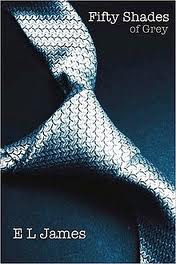
Holy cow, he’s rich and handsome. Holy crap, he makes me horny. Holy Moses, he’s got a sex dungeon. Holy f*ck, he can f*ck. Holy sh*t, I have to sign this contract? Holy crap, he’s mysterious and tortured. Ouch! he’s spanking me. Oh, I like it. Holy cow, he loves me for me? Hey! he tied me up. Huh, I like it. Holy crap, I’m meeting his mother. Holy f*ck, he can f*ck. Holy sh*t, shocking personal revelations! Glider. IHOP. Flogger. Handcuffs. Holy crap, he plays the piano too. Such a nice boy. Holy cow, the love of a brave woman should fix any broken man. Ah … aah … aaahh … aaaahhh! … aaaaahhhh!!AAAAAAHHHHH!! 

Read Full Post »

In Bring Up the Bodies, Hilary Mantel continues her brilliant speculation on the life of Thomas Cromwell – Master Secretary and all-around fixer for King Henry VIII of England – which she began in her Man Booker Prize-winning novel, Wolf Hall.

A major reason Mantel is enjoying success with these novels is because she persuades us to take the side of a man who – looked at objectively – enriches himself working as a merciless administrator of state-sanctioned murder.

This is a pretty neat trick and I think there are several reasons Mantel pulls it off. Here they are:

Thomas Cromwell as Compromised Corporate “Warrior” but Man of Private Virtue

One reason readers sympathize with Thomas Cromwell is because he is an idealized version of modern business professionals, who are sometimes required by corporate structures or profit pressures to compromise their principles, but who work hard to retain their personal integrity.

Consider: Thomas Cromwell is a man of ambition and ability who wants to enjoy career success and earn a good living for his family. But the institutions in which Cromwell can gain this success are all corrupt. Worse, they are run by self-dealing, dangerous, and arbitrary men. And the most dangerous of all is Cromwell’s boss: King Henry VIII.

Cromwell thrives by focusing only on getting Henry what he wants and making Henry believe that what he wants is right and proper. Cromwell doesn’t think about whether what he does is moral, partially because ultimate responsibility for his actions lies with the king – Henry decides what will happen, Cromwell only figures out how – and partially because arguing with or failing Henry will cost Cromwell his job, if not his head.

In the areas of his life he can control, Thomas Cromwell acts with integrity. He has not come to wealth from greed although he has accumulated great wealth. He does not strike from malice, although he will defend himself and he will avenge his friends. He nurtures talented young men of low birth and gives them chances to advance. He loves his family and cares for his household.

This is how men and women who have succeeded in today’s capitalist societies see themselves (many times correctly), and these men and women are a large part of Hilary Mantel’s readership. So it’s not a surprise they like Thomas Cromwell.

Thomas Cromwell as a Horatio Alger’s Hero

Thomas Cromwell’s life story is a classic “up by your bootstraps” narrative. He is the son of a physically abusive blacksmith who ran away from home as a young man, survived as a common soldier on foreign battlefields, succeeded by virtue of his talents, and came home to be the “local boy who made it big”.

This story appeals to modern capitalists everywhere, and it should. The fact that Cromwell rises in a world where success is almost always determined by noble birth makes it even more appealing.

Thomas Cromwell as a “Particular but Persuasive” First-Person Narrator

First-person storytelling naturally encourages readers to side with the narrator (unless he is astonishingly and relentlessly loathsome), but Cromwell’s first-person earns benefits beyond the normal advantage. And the key is that Cromwell uses the word “he” instead of “I” when he talks about himself.

Some reviews have regarded this as a tick or affectation on Mantel’s part. But I think it’s astute. First, Cromwell is the ultimate dispassionate observer, and thus manipulator, of Henry and the court. He never allows vanity or greed or hatred or fear or revenge to interfere with his judgment or make him act before he’s ready and before he’s certain. The “he” fits Cromwell.

More importantly, the “he” in Cromwell’s narration makes you feel that Cromwell is showing you the objective truth, not giving you his version of events. Cromwell is not selling you a line. He’s not trying to talk you over into his point of view. He’s giving you the facts, Mantel is saying, and Cromwell in those facts looks pretty good.

Read Full Post »

« Newer Posts - Older Posts »