Posts Tagged ‘Literature’

Fans of Patrick O’Brian’s Aubrey-Maturin novels value the scenes where Jack and Stephen are playing music in the great cabin of a ship or having particular conversations, like this one which considers the feathers of a paradise bird:

Stephen said, ‘Have you every contemplated upon sex, my dear?’

‘Never,’ Jack said. ‘Sex has never entered my mind, at any time.’

‘The burden of sex, I mean. This bird, for example, is very heavily burdened; almost weighed down. He can scarcely fly or pursue his common daily round with any pleasure to himself, encumbered by a yard of tail and all this top-hamper. All these extravagant plumes have but one function – to induce the hen to yield to his importunities. How the poor cock must glow and burn, if these are, as they must be, an index of his ardour.’

‘That is a solemn thought.’

H.M.S Surprise, pg.259, Norton paperback edition, 1991
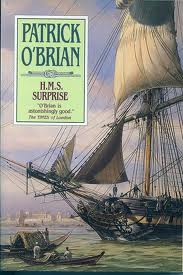
HMS Surprise by Patrick O'BrianIt seems strange, at first, that this should be so. The Aubrey-Maturin novels recount the adventures of Jack Aubrey, a British naval captain, and Stephen Maturin, an Irish-Catalan naval surgeon, naturalist, and intelligence agent, during the Napoleonic wars.

The series is full of battles, storms, shipwrecks, spycraft, political intrigue, the scientific discovery of new species, social manners, and problematic relationships between men and women.

And yet, both O’Brian and his fans always return to the quiet scenes between Jack and Stephen playing music or talking, as they are in the passage above. Why?

The reason has to do, I think, with the consolations literature offers us.

Good books have many uses. They are a pleasure and a comfort. They offer a hedge against loneliness. For centuries, readers have found their own thoughts and feelings in literature, and in finding these have been reassured that they are not alone and unknowable in this world.

And good books console us by offering a permanence to characters we love that we cannot find in the lives of the people we love outside of books.

Not all literature offers this consolation. It is no relief to know that Lear is always at the British camp near Dover, howling with the lifeless Cordelia in his arms, or that Antigone is always hanging in the cell to which Creon condemned her, dead by her own hand. Tragic works of literature offer us many things, but consolation is not one of them.

For consolation, a book must offer us characters who are convincingly human, not simply credible or familiar, and who engage our sympathies through both their virtues and their faults.

The book must also give these characters moments if not of happiness, then of peace and ease, because this is what we wish for ourselves. Among all our troubles and suffering, I think we all want – and believe we deserve – moments of at least modest contentment.

But we cannot stay in these moments or keep the people we love with us in them. Time moves. Circumstance and age separate us, further and further, until death makes the separation final and our only hope becomes reunion in another world; which many of us picture as being much like this one, except that hunger and violence and suffering and disease and death are banished.

Which makes heaven or the Summerlands or the after-life (or even reincarnation in the Indian religions) very much like the passages in the books we love.

Elizabeth Bennet will always be sparkling after dinner in the drawing-room at Netherfield, getting the best of and bettering Mr. Darcy, as alive today as the first moment she was written. Timofrey Pnin will always be playing croquet on the lawn at Al and Susan Cook’s summer house or discovering that Victor’s beautiful glass bowl is not broken after all. Jack Aubrey and Stephen Maturin will always be playing music while the wake of the Surprise stretches away behind them.

In this world, that is consolation indeed. Perhaps not enough. But I’ll take it.


Read Full Post »

Henry V by William ShakespeareIn Henry V, Shakespeare finds his “muse of fire” and she blinds us with her dazzling light.

Henry V is a play of almost ridiculous dramatic richness in which the scrappy, underdog Harry wins the battle of Agincourt, seizes his rightful French throne, and gets the King’s daughter. Hooray!

Except the war is justified by dubious arguments and provoked by the English clergy, who are eager to distract Henry from confiscating their wealth. Henry captures the French town of Harfleur after threatening genocide. He orders the slaughter of prisoners and leaves 10,000 French knights and soldiers dead on the field. Every friend of his youth, except one, is gone. They die in the battle, by execution after Henry’s judgment, or in the case of Falstaff, cold in bed with a wandering mind and a heart broken by the king.

In the end, it all comes to naught. The last lines of the play tell us Henry dies young, leaving England to be misruled by his infant son and a group of nobles who lose all that Henry won and spill more blood. But it was still worth it and Henry is still a hero. Right?

Read Full Post »

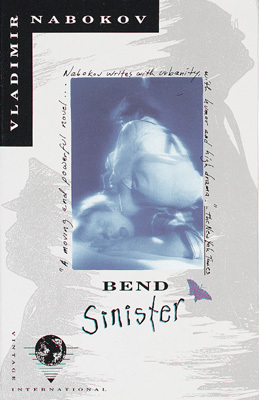
Bend Sinister Vladimir NabokovFor most of his life, Vladimir Nabokov declared himself indifferent to politics and expressed his satisfaction with never having joined any group or participated in any organized human activity.

Nabokov insisted that there were no “messages” in his work. He expressed contempt for literature that discussed general ideas, offered social commentary, dealt with everyday “reality” (a word Nabokov frequently put in quotes), or promised human interest.

Instead, Nabokov said he valued books that were grounded in the imagination and talent of the specific writer, and which offered aesthetic bliss which he recognized by a thrill in his spine.

Nabokov’s books seemingly confirm these principles. They are deeply idiosyncratic; full of dense word play, complex patterns, and recondite references; and deliver a great deal of what looks like misanthropy.

All of this argues you won’t find a trace of politics in Nabokov’s work just as he claimed. But here’s the thing. I don’t believe him. And neither should you.

The first reason you shouldn’t believe Nabokov is he knew from personal experience that indifference to politics does not stop politics from affecting you.

Nabokov and his family escaped the Russian Revolution in 1917. His liberal politician father was assassinated by Russian fascists in 1922. Nabokov fled Nazi Germany in 1933 and soon to be Nazi-conquered France in 1940 to protect his family and in particular his wife, Vera, who was Jewish. His brother Sergey died in a German concentration camp, where he was sent after speaking out against the Nazis.

The second reason you shouldn’t believe Nabokov is that while he may have bragged about never having joined any group, he also took great pride in his adopted country of the United States.

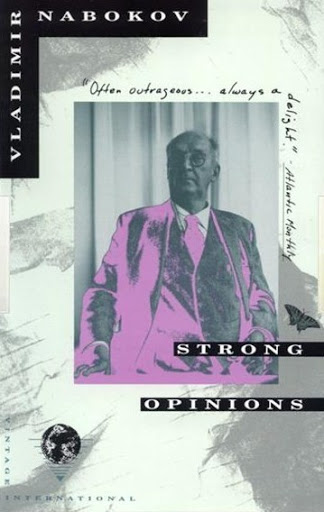
Strong Opinions Vladimir NabokovNabokov described himself as “American as April in Arizona” and said he felt a “suffusion of warm, light-hearted pride” when he showed his American passport at European borders (Strong Opinions, p. 98). He kept his US citizenship, and continued to pay American taxes, even after he and Vera moved to Switzerland.

By contrast, Nabokov was outspoken and unrelenting in his contempt for the leaders of the Soviet Union and the vast harm they had done to the Russian nation. Nabokov also had no problem arguing with the American liberals who continued to embraced Soviet propaganda long after they should have known better.

The third reason you shouldn’t believe Nabokov is that he consistently stated that the worst act a human being could commit was an act of cruelty. He believed that cruelty was the essence of all tyrants, and it is cruelty that he condemned in all his major novels.

This condemnation of cruelty can be hard to see because of Nabokov’s techniques as a writer, however.

Nabokov never wavered in his dislike of plainly written novels with obvious messages, and this dislike was reinforced by his observation that bad writers and bad leaders were much alike.

Nabokov saw bad writers and bad leaders as equally trite, vulgar, and stupid. They both thought and wrote and spoke in a debased language of general ideas, and both believed that human beings can be reduced to a few general “types” that are easily defined by commonplace characteristics.

Nabokov expresses this idea most succinctly in his short story, Tyrants Destroyed, when he wrote, “the real human being is a poet and [the tyrant] is the incarnate negation of a poet” (The Stories of Vladimir Nabokov, p. 446).

Nabokov also seems to have understood that the bad writer, especially the bad writer with a good reputation, actually legitimized the propaganda of a dictatorship’s officially sanctioned authors. If Balzac or Lawrence or Camus were first-rate artists, rather than second-rate scribblers, then the novels of approved Soviet writers could also be great works of art rather than tools of manipulation and misinformation.

So Nabokov responded by creating a highly personal – sometimes, stubbornly personal – body of work that emphasized the uniqueness of his characters and the originality of his imagination.

This approach, in itself, was an attack on authoritarian states like the Soviet Union, which insisted that the group was more important than the individual and which were threatened by any work that didn’t enthusiastically celebrate the state’s manifold virtues in a manner easily understood by the average person.

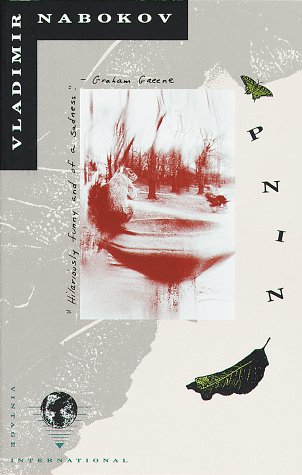
Pnin Vladimir NabokovNabokov’s work was also a relentless assault on cruelty. Nabokov didn’t usually link cruelty directly to a dictator, although the tyrant Paduk in the novel Bend Sinister is an exception. Instead, Nabokov created brilliant, charismatic monsters who blinded readers to their viciousness, monsters such as Humbert Humbert in Lolita, Kinbote in Pale Fire, and to a lesser degree Van Veen in Ada.

Nabokov could also take the side of those who suffered cruelty, most obviously in the characters of Professor Timofrey Pnin (a refuge from Soviet Russia like Nabokov) and  the philosophy professor Adam Krug from Bend Sinister who is helpless to stop the bungling thugs of that book’s tyrant from murdering his only child. I also believe he is quietly on the side of Lolita and Lucette Veen in Ada, and not the dazzling beasts who abuse them.

As usual, Nabokov expressed it best. In October 1971, when Nabokov was 72 and had finished writing all his major works, he said this to the interviewer Kurt Hoffman (Strong Opinions, p. 193):

“I believe that one day a reappraiser will come and declare that, far from having been a frivolous firebird, I was a rigid moralist kicking sin, cuffing stupidity, ridiculing the vulgar and the cruel – and assigning sovereign power to tenderness, talent, and pride.”

Read Full Post »

Our luck may fail; our powers forsake us; our place on the boards be taken by better and younger mimes — the chance of life roll away and leave us shattered and stranded. Then men will walk across the road when they meet you — or, worse still, hold you out a couple of fingers and patronize you in a pitying way — then you will know, as soon as your back is turned, that your friend begins with a ‘Poor Devil, what imprudences he has committed, what chances that chap has thrown away!’ Well, well — a carriage and three thousand a year is not the summit of the reward nor the end of God’s judgment of men. If quacks prosper as often as they go to the wall — if zanies succeed and knaves arrive at fortune, and vice versa, sharing ill-luck and prosperity for all the world like the ablest and most honest amongst us — I say, brother, the gifts and pleasures of Vanity Fair cannot be held of any great account.

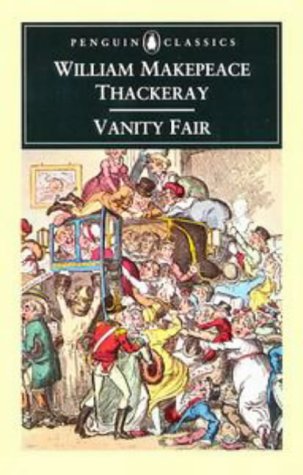
"Vanity Fair" by William Makepeace ThackerayThis quote has always seemed to me to be the heart of Vanity Fair, although it quivers with a sympathy — a sense of gentleness and mercy — that the sour Thackeray can’t quite summon for the characters he creates.

They are, for the most part, zanies and knaves or men and women of substance corrupted by their vanities. There is only one character Thackeray would likely describe as “ablest and most honest” — William Dobbin — and even Dobbin Thackeray mocks for pursuing and finally marrying a woman who Dobbin knows is not equal to and does not deserve his love.

The phrase “our place on the boards … taken by better and younger mimes” nods at one of Thackeray’s principal conceits in Vanity Fair: that his characters are “puppets” and he is the “Manager of the Performance”. But I also think the phrase gestures at something more profound, that Thackeray thinks we are all puppets, too, hack players in a foolish play.

“Well, well,” as Thackeray said. Maybe. But the vitality Thackeray invests in this nearly 800-page novel argues differently. And his opinion that “the gifts and pleasures of Vanity Fair cannot be held of any great account” perhaps suggests there are other gifts that are of “great account”. What these gifts might be, however, Thackeray doesn’t say.

Read Full Post »

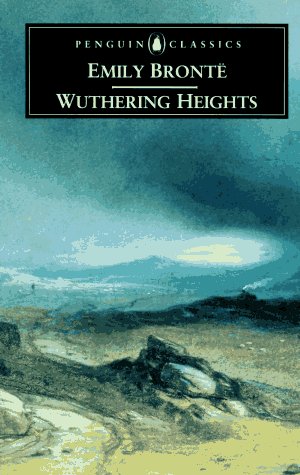
Bronte Wuthering HeightsHalloween is an excellent time to read a scary book, but you don’t have to read dreadful trash written by semi-literate hacks – although honestly, that can be pretty fun too.

So I’ve chosen my favorite works of “horror” from famous writers for this personal “best of” list, and treated each to my 100 Word Review format. Hope you find something in here you like!

Emily Bronte: Wuthering Heights (1847). Heathcliff and Cathy’s fierce love survives betrayal and lives on beyond death in this superb novel. Wuthering Heights tests the reader’s patience through its long middle section, but rewards this patience in the end, when Heathcliff either embraces an ecstatic vision or succumbs to insanity.

Cormac McCarthy: Blood Meridian (1985). Sam Peckinpah meets the Old Testament in this nightmare Western by the author of No Country for Old Men. Although the story follows a young boy through the Indian wars of the 1850s, its central figure is “the judge,” who seems to be neither man, demon, nor god, but the embodiment of the endless violence fixed deep in the human soul.

Henry James: The Turn of The Screw (1898). A country house, two small children, a young governess, and the appearance of menacing apparitions. You’ve seen this set-up before. But James is a master storyteller, and the ambiguity at the center of his tale – whether the children are haunted by the ghosts of former servants or by their governess’ furious delusions – make this work particularly effective and frightening.

Bram Stoker: Dracula (1897). Stoker’s novel makes the list because it’s a vampire novel actually worth reading. Dracula is a predator, not a seducer, and Stoker’s work surprises by resembling a detective novel as much as it does a horror story.

William Shakespeare: MacBeth (1606). An obvious choice, but it bears repeating that a play featuring regicide (among other murders), witches, ghosts, sleepwalking, suicide, a severed head, and blood everywhere and continuous, is a good choice for Halloween.

Nikolai Gogol: The Nose (1836). In this Russian short story, a minor civil servant wakes up one morning to discover his nose has been replaced by blank skin as flat as a “freshly cooked pancake”. The missing nose is an embarrassment, an inconvenience, an annoyance, a source of curiosity or indifference, but never the cause of wonder or fear. Similar in many ways to The Metamorphosis, Gogol wrote this story nearly 80 years before the appearance of Kafka’s famous beetle.

Shirley Jackson: The Lottery (1948). Jackson’s much-anthologized short story packs a wallop with its renowned gimmick ending. Whether it’s anything more than Children of the Corn for the Proust set is another matter.

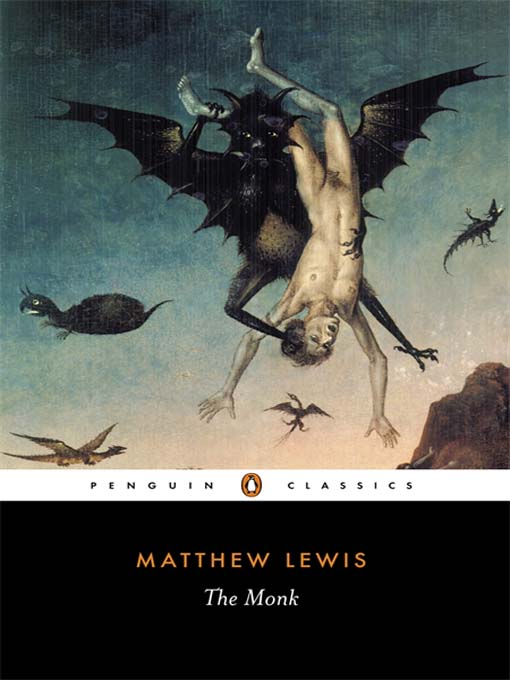
Matthew Lewis The MonkMatthew Gregory Lewis: The Monk (1796). For lurid trash with a pedigree, it’s hard to beat The Monk. The novel tells the story of a pious Capuchin who succumbs to lust and features black magic, rape, incest, torture, murder, and behind it all, the machinations of the Devil himself. The Monk is one of the key novels of the Gothic genre. It is also an urtext for the mass-market bestseller, in which a book that lacks coherent plot, internal logic, human insight, or a glimmer of writerly craft can become wildly popular by sheer force of sensationalism.

Read Full Post »

I am thinking of aurochs and angels, the secret of durable pigments, prophetic sonnets, the refuge of art. And this is the only immortality you and I may share, my Lolita.

Lolita by Vladimir Nabokov

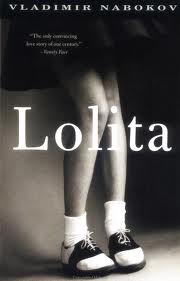
Nabokov’s masterpiece is frightening story of abuse, a Gogolish road-trip through post-war America, a funhouse of unreliable mirrors, and a tale of selfish vice vanquished (but not excused) by love. After Humbert Humbert destroys his doppelgänger in the fairy-tale mansion on Grimm Road, he and Nabokov make a furious last dash to preserve Dolores Haze from time and death. They succeed.


Read Full Post »

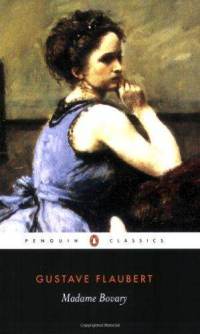
Madame Bovary by Gustave Flaubert - Penguin editionEmma Bovary should have stayed on the farm.

Instead, she marries an oafish health officer and rises into the middle class of a country town, where she finds boredom, loneliness, empty promises from romance novels and religion, and fury at the cages in which 19th-century France placed women.

Flaubert’s universe is barren of virtue. There is no tenderness or compassion, no understanding or true friendship, no curiosity or wonder in Madame Bovary. No love either, despite all the talking of it.

Everyone is crass and venal, foolish, pompous, scheming and self-serving, craven, dastardly. Words fail the characters – even Flaubert’s words. The novel’s people are surrounded by his exquisite descriptions of wedding revelry, bustling towns, the beauty of nature, but Flaubert’s words make no impression and bring no consolation.

All anyone sees in Emma Bovary is her beauty, her clothes, and her body. So perhaps it makes sense that when Emma tries to solve the problem of her life – a problem she feels but can’t articulate – she turns to sex and shopping. They lead her to misery and destruction, of course.

I don’t think Emma could see other choices. Who is at fault? Emma Bovary herself? The society in which she lived? Or the world Flaubert made for her? Probably all three.

Read Full Post »

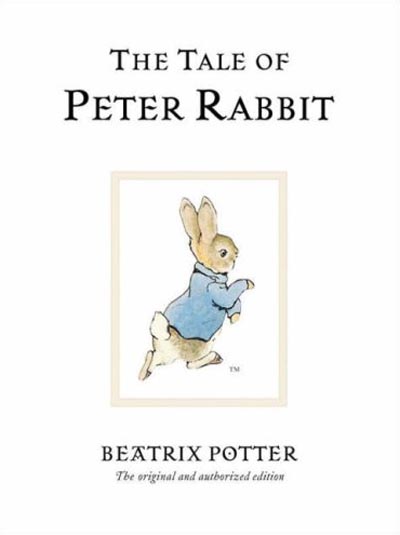
The Tale of Peter Rabbit by Beatrix PotterBefore Beatrix Potter became the author of children’s books such as The Tale of Peter Rabbit (1902), she was a gifted natural historian and scientist.

So it’s not a surprise that Ms. Potter’s illustrations closely resemble the animals on which her characters are based or that she writes unsentimental stories that display a strong understanding of human (rather than animal) psychology.

This is certainly the case with Beatrix Potter’s most famous character, Peter Rabbit, whose trauma in Mr. McGregor’s garden is so realistically portrayed that cheeky amateurs with access to the Diagnostic and Statistical Manual of Mental Disorders (DSM IV) could diagnose him with Acute Stress Disorder if they liked.

In The Tale of Peter Rabbit, Peter’s mother tells him not to go into Mr. McGregor’s garden because “your father had an accident there; he was put in a pie by Mrs. McGregor.”

This does not deter Peter, who runs straight to the garden and encounters Mr. McGregor. In the subsequent chase, Peter loses his shoes and coat and catches cold while hiding in a watering can. Peter escapes and his mother puts him to bed with a dose of camomile tea.

Trauma is a cause of Acute Stress Disorder, and I think this experience qualifies as a traumatic event according to the DSM-IV because Peter was both “confronted with an event that involved actual or threatened death” and responded with “intense fear [and] helplessness.”

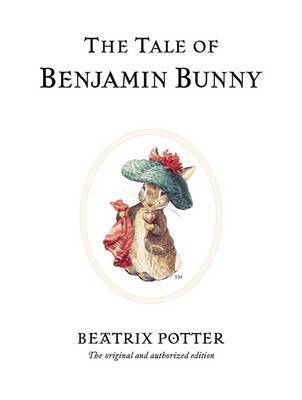
We see the symptoms of Acute Stress Disorder in The Tale of Benjamin Bunny, which picks up Peter’s story the next day.

As the book opens, Peter’s cousin Benjamin finds him “sitting by himself” looking “poorly” and “dressed in a red cotton pocket-handkerchief.”

Benjamin leads his cousin away toward the McGregor’s garden without either agreement or resistance from Peter.

From this description, we can find in Peter (1) an absence of emotional responsiveness and a reduction in awareness of surroundings and (2) anhedonia or lack of interest in activities that used to bring enjoyment, both of which are characteristic of Acute Stress Disorder.

The Tale of Benjamin Bunny by Beatrix PotterOnce in the garden, Peter Rabbit displays three more important symptoms: (3) poor concentration, (4) marked symptoms of anxiety, and (5) increased arousal, hypervigilence, and an exaggerated startle response.

There are three instances of poor concentration in the tale. First, Peter falls “down head first” from the pear tree he and Benjamin are using to enter the garden. Peter and Benjamin pick onions as a present for Peter’s mother, but Peter drops half the onions at one point in the tale and drops the others a little later.

Peter is also clearly anxious and hypervigilent during his return visit to Mr. McGregor’s garden. While Benjamin is collecting the onions, Ms. Potter notes “Peter did not seem to be enjoying himself; he kept hearing noises.”

Peter also doesn’t join Benjamin in eating Mr. McGregor’s lettuces either, instead saying that “he should like to go home.” When the two rabbits walk among Mr. McGregor’s flowerpots, frames, and tubs, “Peter heard noises worse than ever, his eyes were as big as lolly-pops!”

It is in this emotional state that Peter and Benjamin are trapped under a basket by one of the McGregor’s cats for five hours. Ms. Potter writes it was “quite dark” and the “smell of onions was fearful” under the basket. Both Peter Rabbit and Benjamin Bunny cry.

The little rabbits are saved by Benjamin’s father, old Mr. Benjamin Bunny, who cuffs and kicks the cat into the greenhouse, then whips both Benjamin and Peter with a switch.

Peter returns home, where his mother forgives him because she “was so glad to see he had found his shoes and coat” and all seems to end well. The last drawing in the story shows Peter folding up the pocket-handkerchief with the help of one of his sisters.

But Peter’s trauma isn’t resolved as much as it is ignored, and the ambiguity of this resolution hangs over the end of the story. I suspect that the effects of Peter’s untreated trauma will linger for years, making it hard for Peter to find stable employment as an adult and perhaps leading to the self-medicating abuse of rabbit tobacco.

Peter Rabbit isn’t the only psychologically realistic character who experiences trauma in Beatrix Potter’s stories. Mr. Jeremy Fisher is nearly eaten by a trout and resolves never to go fishing again. Jemima Puddle-Duck’s eggs are saved from a fox by the collie dog Kep, only to be gobbled up by puppies before Kep can stop them.

Even Mrs. Tittlemouse, who is threatened by no more than a series of unwanted visitors in her sandy house, lives under the constraints imposed by her obsession with cleanliness and order.

Beatrix Potter’s dispassionate examination of life’s menace has earn her books readers for more than one hundred years. I have to ask, however: “Why do we let children read them?”

Read Full Post »

I had a long slow argument with Henry James while reading The Wings of the Dove. Was he an immortal genius? Or a purveyor of pretentious soap operas? Here’s who won the argument:

“On that especial issue, Peter made something like a near approach, taking into account his great reasons, the particulars and nuances and complexities, they being, of course, more important than the main point, they being really fine, and grand, and ravishing, and although he hung fire on his answer, and really, who might blame him, before committing himself, as it were, to a more definite position, which if stated plainly, might fall a little flat, might seem a little thin, might reveal too baldly a poverty of thought and a desolation of feeling, conveniently concealed in a thicket of syntax, great flashes of brilliance aside, yet he did half commit himself, in the end, all of which is to say, perhaps, he wouldn’t decide James wasn’t coming out something more ahead than not.”

Read Full Post »

Hermann Hesse, author of books such as Siddhartha and winner of the 1946 Nobel Prize in Literature, is the perfect writer for teenagers. His novels are painfully earnest, full of sensitive characters who are struggling against the soul-destroying conventions of society and searching for transcendence.

This description certainly fits Harry Haller, the central character in Hesse’ most famous book, Steppenwolf. And it’s not hard to see why Harry would appeal to adolescent readers (despite the fact he’s nearly 50 years old). Harry is grumpy, gloomy, brilliant, artistic, misunderstood, rejected, spends a lot of time alone in his room brooding, and is – turns out – pretty horny. This exactly describes the kind of teenager who would bother picking up Steppenwolf in the first place.

The question is, for those of us who read Steppenwolf twenty or thirty years ago, Should we bother reading it again?

The answer is “sorta”.

Steppenwolf is still utterly humorless and Harry is still gloomy, misunderstood, brooding. What stands out now is how dull Harry Haller is. Hesse keeps telling us how fine a soul Harry has: how intelligent is he, how artistically refined, and how much he suffers.

But the only evidence we have of Harry’s genius is Hesse’ say-so. Nothing in Steppenwolf persuades us that Harry is as remarkable as Hesse claims, and without any tangible signs of brilliance, Harry is rather uninteresting, except for when he’s being petulant.

Steppenwolf also displays that vanity particular to the aging male animal, which is the magical belief that beautiful young women find us attractive.

In the real world, young women don’t fall for decaying misanthropes unless they have a sum of money and Harry doesn’t. But Hesse asserts that not one, but two gorgeous young girls are fascinated by Harry and that he is still capable of prodigious feats of physical love with them.

What saves Steppenwolf is how thoroughly Hesse destroys any sense of value we might have for Harry’s genius. Hesse still sees Harry as a unique soul – but a unique soul leading a useless existence.  Harry is a man who has forgotten how to laugh or find pleasure in life.  He’s a fool who should be pitied, and scolded, and taken by the hand and pulled away from his stubborn loneliness and self-importance.

When this happens, Harry does become interesting. He begins to feel human. He engages our sympathy. And he makes the long hallucinatory sequence that forms the middle-end of Steppenwolf credible rather than ridiculous because Harry feels like a convincing person in it.

Finally, the last pages of the book work for readers of a certain age. Steppenwolf closes not with Harry triumphing over his old self, but rather with him discovering that he is the same person he always was despite his best efforts.

I suspect the young don’t much like this ending. The young believe they can be anybody they want to be (and they should believe this).

Unfortunately, for those of us who have been living with our adult selves for a couple decades, the ending of Hermann Hesse’ Steppenwolf bears an unhappy resemblance to the truth.

Read Full Post »

« Newer Posts - Older Posts »