The Alleghany Wildcats Fantasy League (AWFL) is one of the premier fantasy football organizations in the Northeastern United States.

Every week during its season, AWFL presents a fantasy football “preview” show broadcast on local cable from the commissioner’s basement in Shamokin, Pennsylvania.

The show is called “The Football Circus” (TFC) and features exciting guest commentators. (More great fantasy football humor can be found at “The Football Circus” blog!)

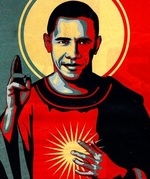
Made-Up Truth is pleased to announce we’ve acquired the rights to present transcripts of popular TFC segments from the past. Our first AWFL show broadcast last fall and featured President Barack Obama. Let us begin:

[As our splashy new graphics fade out, we see a fit African-American man in his shirt sleeves sitting with TFC. He smiles broadly, acknowledging the applause of the audience, then leans forward and folds his hand on the desk.]

TFC: I’m tremendously excited to introduce our AWFL League Week 1 guest commentator, President Barack Obama. Give him a warm AWFL welcome, folks!

[Obama opens his hands briefly, then folds them again.]

OBAMA: Thank you, TFC. It’s great to be here.

[A blinding light surrounds the president and an ethereal note rings out, like the transcendental voices of all heaven’s angels in an ecstasy of worship.]

TFC: What the f*** was that?

OBAMA: Don’t worry. Happens all the time.

TFC: Jesus. Okay. Let’s get started.

THE DARTH VADER RAIDERS at THE LONE STAR WRANGLERS

TFC: Mr. President, what strategy should the Raiders use to beat the Wranglers Week 1?

OBAMA: Hope.

TFC: Hope?

OBAMA: Yep.

TFC: Hope’s not a strategy. It’s a slogan. Care to elaborate?

OBAMA: Nope.

TFC: All righty. Insights abound. TFC doesn’t believe the expert projections and is going with the Wranglers. Let’s look at the next match up.

RED HOT PEGUINS at PEACH STATE REBELS

TFC: Here we have two good teams who have drafted strong players at every position rather than gambling big on a couple superstars. What do you think, Mr. President?

OBAMA: I look forward to having a vigorous debate on that question which will offer a clear choice to the AWFL League.

TFC: Sounds good! Let’s get it going.

OBAMA: It’s important that I tell the AWFL League where I stand on these important teams.

TFC: How about you tell us now?

OBAMA: We need to move beyond the normal Washington rhetoric, and start seriously discussing the questions that matter to the AWFL League.

TFC: Dude, anytime you want to start the discussing, we’re sitting here with our mouths closed and our ears open.

OBAMA: I’m planning on giving a major speech, sometime next month, at a wind turbine plant in Ohio, which will probably address the questions the AWFL League has about … ah … these two teams.

TFC: Oh never mind.

ROLLING THUNDER at TEAM BARBECUE

TFC: Here we’ve got the team with the highest projected points going up against the team with the lowest. Mr. President, what –

[Suddenly, a C-G-I monster with the heads of Barbra Streisand, Dennis Kucinich, and Cornel West lumbers into the TFC studio.]

SKW: Judas! You’re a Judas! Take your blood money, Judas!

[The Streisand-Kucinich-West monster tosses a small leather sack on the desk in front of the president and lumbers off. The bag lands with a loud clink. Obama looks inside and makes a quick count.]

OBAMA: Hey, wait. There’s only 38 in here.

TFC: What’s that?

OBAMA: Campaign contributions.

TFC: What do you think of this match up?

OBAMA: I think it’s going to be another long, painful season for Barbecue. Thunder wins.

MIGHTY MUSKRATS at TEAM BIG GOVERNMENT

TFC: I’m beginning to regret paying you good money to come on this show. So here are these guys.

OBAMA: This prediction is like my ideas on unemployment, the debt ceiling, the deficit, healthcare, China, the Israel-Palestinian conflict, education, infrastructure, Afghanistan, Iraq, the mortgage crisis, Gitmo, gay marriage, and the fact Michele is taller than me.

TFC: You mean, you’ve got no clue so you are going to play it safe, muddle around in the middle, not commit yourself, and hope nobody notices?

OBAMA: Exactly!

TFC: Let’s pretend I didn’t just notice. So … on this game … you’re picking both the Muskrats and Team Big Government to win? Or something?

OBAMA: Both to win or both to lose, I might do either.

CHIP CHOMPERS at EVIL PETES

TFC: This is a classic game between long-time rivals. What’s your take?

OBAMA: The Evil Petes should put Rodgers, Peterson, Colston, and Welker on the bench then offer the Chompers a tie.

TFC: What kind of stupid-a** plan for winning is that?

OBAMA: A good one. Clearly, I’m the only adult in the TFC studio.

TFC: Okay, the League will make the Evil Petes John-Boehner-pinkie-promise to bench Rodgers against the Chompers.

OBAMA: Those are words I know I can trust!

BELERGERENT BOVINES at FUBUZZBIE

OBAMA: Joe Biden is chairing a new group of Democrats and Republicans who will put on my desk a prediction for the Bovines and Fubuzzbie that I can sign. I’m expecting their report in November.

TFC: November is too late. Besides, TFC’s production company – Lovin’ Romo LTD – hired you to provide the commentary, not the legislature.

OBAMA: Once Congress does their job, I can do mine.

TFC: Okay AWFL League fans, that’s it. TFC promises to have a much better guest commentator next week, Texas Governor and presidential candidate Rick Perry! Sorry this one turned out to be such a bust.

OBAMA: What are you talking about? You’re stuck with me through the 2012 season, TFC

Which is the best Hamlet movie?  Here are my assessments of the film adaptations of Hamlet I’ve seen ranked in order of personal preference. I have also summarized the rankings of other critics from around the internet to give you more perspectives. “Have at you now!”

1. Richard Burton: Hamlet 1964.

Richard Burton wins the title “best Hamlet” with the range, insight, and power of his acting in this filmed stage production. Burton plays all of Hamlet’s emotions with extraordinary conviction: grief, fear, doubt, anger, indifference, easy acceptance. His transitions from line to line and emotion to emotion feel like the natural consequence of the previous idea and feeling. When he is funny, Burton is funny without the viciousness or condescension you often see in other performances. No Hamlet has ever sounded better. The sheer physical stamina of Burton’s work is impressive. And all this outweighs the serious limitations director John Gielgud faced filming a live performance in a Broadway theater as well as some less than stellar acting in the other roles.

Other rankings of Burton’s Hamlet. 7.6 out of 10 on IMDb.  74% Audience Score on Rotten Tomatoes.

2. Kenneth Branagh: Hamlet 1996.

Branagh’s performance swings wildly between Hamlet’s famous indecision and the Danish prince’s other signature (but often overlooked) characteristic: his recklessness. This choice creates a satisfying Hamlet and turns Branagh’s conspicuous habit of overacting into a virtue. Branagh films the whole text, and so includes the essential framing character of Fortinbras and allows us to fully see how Laertes and Ophelia together serve as a double for Hamlet. Some of Branagh’s directing is very fine (the two-way mirror in “To be, or not to be”) and some of it is not. The ghost scene in 1.5 is unwatchable, and Branagh stages the climactic duel in action-movie land.

Other rankings of Branagh’s Hamlet. 7.7 out of 10 on IMDb.  95% Tomatometer and 89% Audience Score on Rotten Tomatoes.

3. Laurence Olivier: Hamlet 1948.

Olivier is the better actor, and gives a better performance, but his concentration on Hamlet’s indecision makes less sense than Branagh’s choices. (Could an always-hesitating Hamlet improvise the murder of Rosencrantz and Guildenstern or jump into the middle of a battle with pirates?) Olivier edits the text so heavily that the story is unintelligible unless you know it. The way his camera stalks the corridors of dark, Freudian Elsinore castle hasn’t aged particularly well. And Olivier’s ditzy, hysterical Ophelia – played by Jean Simmons – not only offends contemporary tastes, but also begs the question, “What does Hamlet see in her?”

Other rankings of Olivier’s Hamlet. 7.6 out of 10 on IMDb. 95% Tomatometer and 80% Audience Score on Rotten Tomatoes.

4. Derek Jacobi: Hamlet 1980.

Derek Jacobi plays Hamlet as amazed by his weakness, rather than desperate for strength, and is one of the few Danish Princes who feels like he could actually be the son of a warrior king. Jacobi’s voice has an extraordinary range of emotional colors, and his acting is often supple and subtle. Unfortunately, the rest of the cast is uneven and in some scenes, dull. This version is filmed like the stodgy stage play it is with the occasional rough close-up, for which none of the actors except Jacobi seem prepared.

Other rankings of Jacobi’s Hamlet. 8.0 out of 10 on IMDb.

5. Benedict Cumberbatch: Hamlet 2015.

Cumberbatch’s superb Hamlet is marred by the choice of making his Danish prince entirely sane and pretty well adjusted. This makes Cumberbatch the most appealing and engaging Hamlet on my list, but it also robs his Hamlet of the philosophical transformation that powers the last third of the play, leaving the end feeling rushed and flat. Some clunker performances among the supporting cast and staging a bit heavy on gimmicky spectacle also knock this version down the list. My longer review of Cumberbatch’s Hamlet is here.

Other rankings of Cumberbatch’s Hamlet. 8.5 out of 10 on IMDb. 100% Audience Score on Rotten Tomatoes.

6. Mel Gibson: Hamlet 1990.

A “Mad Max” Hamlet is a piece of stunt casting, but Gibson climbs into the middle of the list by exceeding expectations. He’s really not bad. Gibson’s Hamlet is angry, wounded, and fearful, and he brings off the role well. There are strong actors throughout the supporting cast who are interesting in their roles. Zeffirelli substitutes his habitual spectacle for any fresh ideas about the play, however.

Other rankings of Gibson’s Hamlet. 6.7 out of 10 on IMDb. 76% Tomatometer and 59% Audience Score on Rotten Tomatoes.

7. Nicol Williamson: Hamlet 1969 and 8. Kevin Kline: Hamlet 1990.

Both of these performances are solid, intelligent, and affecting. But they are also familiar. With so many Hamlets on film, Williamson’s and Kline’s successes are less fun than the interesting failures below.

Other rankings of Williamson’s Hamlet. 7.0 out of 10 on IMDb. 70% Audience Score on Rotten Tomatoes. Other rankings of Kline’s Hamlet. 7.3 out of 10 on IMDb.

9. David Tennant: Hamlet 2009.

This 2009 Royal Shakespeare Production productively mines the play for maximum humor but comes up short on emotional punch. David Tennant nails Hamlet’s jokes, and his fear, but falls back on acting louder when he plays the Danish Prince’s anger and grief. Patrick Stewart’s Claudius is charismatic but doesn’t quite seem the fratricidal type. My longer review of Tennant’s Hamlet is here.

Other rankings of Tennant’s Hamlet. 8.1 out of 10 on IMDb. 100% Tomatometer and 91% Audience Score on Rotten Tomatoes.

10. Ethan Hawke: Hamlet 2000.

Much of the plot of Hamlet ceases to make sense when it is set in modern New York City, as this version is. But Ethan Hawke’s louche, slacker Hamlet is perfect for its time and his “To be, or not to be”” is superb.

Other rankings of Hawke’s Hamlet. 6.0 out of 10 on IMDb. 59% Tomatometer and 46% Audience Score on Rotten Tomatoes.

11. Campbell Scott: Hamlet 2000.

Most actors play Hamlet as unsteady but basically sane. Scott’s Hamlet is actually unhinged, which is what makes this performance from a good actor so intriguing. The problem is that a Hamlet who has actually suffered a mental breakdown would be unable to function in the play after Act 2. A supporting cast that is adequate at best doesn’t help matters.

Other rankings of Scott’s Hamlet. 6.3 out of 10 on IMDb. 70% Tomatometer on Rotten Tomatoes.

TBD. Innokenty Smoktunovsky: Hamlet 1964.

I need to track down a full version of this Russian language Hamlet before I can offer a capsule review. However, the clips available on the internet look promising as does the Shostakovich score. The production designer for Olivier’s film should demand royalty payments from the Russians, however.

Rankings of Smoktunovsky’s Hamlet. 8.3 out of 10 on IMDb. 100% Tomatometer and 92% Audience Score on Rotten Tomatoes.

12. Arnold Schwarzenegger: Hamlet 1993.

Arnold’s hilarious turn as the perfect anti-Hamlet in The Last Action Hero is not to be missed by fans of the Danish prince. Here’s the video from YouTube:

How Many Hamlet Movies Are There?

That depends on how you want to count them. Two recent film versions of HamletDavid Melville in 2010 and Bruce Ramsay in 2011, both cut the play to a running time of under 90 minutes. Iain Glen played Hamlet in scenes of the 1990 film version of Rosencrantz & Guildenstern Are Dead. There are many film adaptations “inspired” by Hamlet, from The Lion King to the just released Haider set in Kashmir. Wikipedia says there are more than 50 film adaptations of Hamlet. My counting criteria is more strict (a reasonably intact version of the original text) which is why Melville and Ramsay fall here. This criteria should exclude Schwarzenegger from the running too, of course, but Arnold was simply too funny to consign to a footnote.

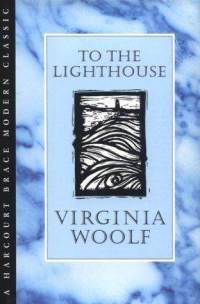
Modernists can have a high strike-out to home-run ratio – but Woolf knocks it clean out of the park with To the Lighthouse.

The novel is organized into three sections. The first and third describe two vacations, separated by ten years, the Ramsay family takes to their house in the Hebrides. The second describes that house during their ten-year absence, slowly decaying under the influence of weather and time, while out in the world, members of the Ramsay family die.

To the Lighthouse is conflict rich but plot poor. Woolf gives us vivid, fragmented portraits of her characters during two brief moments in their lives, then asks us to assemble the pieces to understand who they were, what they’ve become, and what has changed them.

Her writing throughout the novel is masterful — Virginia Woolf does with words what Vermeer does with paint — but the second section is simply astounding. There is no way the description of an empty house should be moving. And yet often enough I read it through tears.

In The Killer Angels, Michael Shaara tells the story of the Battle of Gettysburg during its three most consequential days: July 1 -3, 1863.

Although the novel features a large cast of Union and Confederate officers, The Killer Angels belongs to Robert E. Lee, who is about to make a fatal blunder by ordering Pickett’s Charge, and James Longstreet, Lee’s second in command, who sees the blunder coming but cannot persuade the Old Man to stop it.

Shaara is critical of the romanticism of the South’s gentleman warriors, yet engages in romanticism himself. He takes us into the minds of the commanders who act decisively, but ignores those who hesitate or stumble. Officers die quickly and neatly, or discretely off-stage, while the enlisted soldiers just die in masses, except for the occasional unnamed man who screams as blood and entrails pour from his wound.

Still, Shaara recreates the Battle of Gettysburg with clarity and economy, and with insight into the thoughts and emotions of successful fighting commanders. The Killer Angels won the Pulitzer Prize for Fiction in 1975.

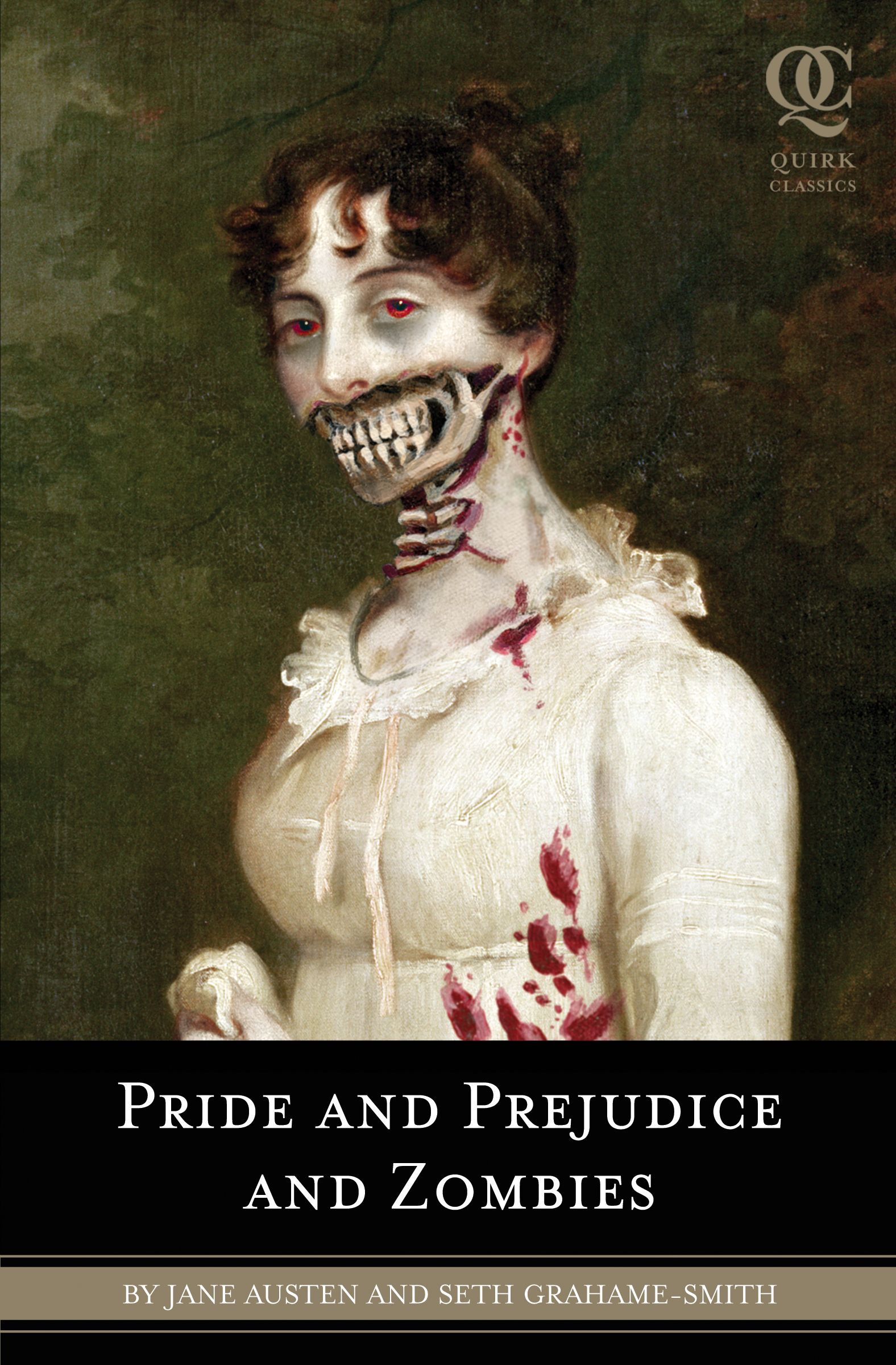
Pride and Prejudice and Zombies makes a tremendous first impression. It may actually be impossible to think of two works of imagination with less in common than a Jane Austen novel and a zombie movie. Putting them together is a stroke of comic inspiration.

The cover is a pitch-perfect spoof of paperback editions of literary classics. It features a painting of a pretty young woman in an empire-waist dress who would make a plausible Elizabeth Bennet if the flesh of the lower half of her face wasn’t ripped away and her clothes weren’t splattered with blood.

The idea is spectacular. The execution is flawless. That fact that the novel was actually published makes the whole thing funnier. But the book itself is a bore.

The problem is that Pride and Prejudice and Zombies contains one joke – that Elizabeth Bennet and other members of the English gentry are lethal zombie killers – and it tells this joke the same way each time. Further, Grahame-Smith doesn’t interact with Austen’s text most of the time. He just pastes in references to zombies where it’s convenient. As result, the humor of the book wears out the moment its novelty does.

This makes Pride and Prejudice and Zombies largely a wasted opportunity. So many of Austen’s characters might as well be zombies, as Grahame-Smith himself has noted, that it’s disappointing he didn’t take the final step and turn them into ones.

Lady Catherine de Bourgh would be perfect as the undead queen of England, but she is simply another deadly warrior in the novel. George Wickham would make an excellent vampire. He’s already a heartless, ruthless, selfish blood-sucker. “I should have finished you years ago!” Darcy could have cried, driving a stake into Wickham’s heart and saving Lydia from becoming nosferatu. Instead, we get pretty much the same story we already know.

If you read 20 or 30 pages of Pride and Prejudice and Zombies, you’ll get all the fun out of the book there is to be had. I recommend the last 30 pages, starting with the sword fight between Lizzy and Lady Catherine. The writing is less slapdash, which makes it more entertaining. For example, here is the passage in which Lizzy explains to Darcy why he first fell in love with her:

You were disgusted with the women who were always speaking, and looking, and thinking for your approbation alone. I roused, and interested you, because I was so unlike them. I knew the joy of standing over a vanquished foe; of painting my face and arms with their blood, yet warm, and screaming to the heavens—begging, nay, daring, God to send me more enemies to kill. The gentle ladies who so assiduously courted you knew nothing of this joy.

Also, don’t neglect to read the discussion guide. The questions are a hoot.

Although I can’t recommend reading Pride and Prejudice and Zombies, this doesn’t mean you shouldn’t own it. As an object, it is still extremely funny. Keep it on your book shelf. Show it to friends at parties. Or better yet, place it in the guest bathroom along with a few recent copies of The New Yorker. You’ll look witty and urbane and eclectic (although I suppose, at this juncture, slightly behind the times). Those aren’t such bad things to be.

Anne Tyler meets Michael Crichton in Ann Patchett’s 2011 novel, State of Wonder. Dr. Marina Singh, a 42-year-old pharmaceutical research scientist, is sent by her boss and sometimes lover deep into the Amazon to discover the circumstances of a colleague’s death and, much more importantly, measure the progress of the brilliant but difficult Dr. Annick Swenson’s work on a fertility drug with block-buster sales potential.

Patchett’s prose style is fluid, she draws her characters and settings in detail, and she keeps the wheels of the story turning nicely – but those wheels spin mostly in place. There is no mystery in the novel aside from its pleasing plot twists; and after all her adventures, Marina Singh is the same person she was at the beginning of State of Wonder. Which leaves the reader the same person, too.

I’ve seen a fair amount of commentary on how eBooks are a threat to the culture of reading (Jonathan Franzen’s reliably cranky remarks at the Hay festival, for example), and I’ve been puzzled by all of it.

eBooks may be a threat to traditional business models for publishing and selling books, but I don’t see how eBooks change the essence of reading, and eBooks actually seem to encourage people to read more.

I also think eBooks offer a net benefit to writers and readers, by providing more opportunities for writers, more choices for readers, and the potential for raising royalty payments for writers while lowering the price of books for readers.

All this is not to say eBooks don’t have their problems. But they are interesting new problems, which I think is another point in the eBook’s favor.

Now I have to explain my reasons for all these opinions. Here goes.

The Text is Essential, the Format is Irrelevant

I re-read Henry IV Part 2 recently, going back and forth between an old paperback and my iPad depending on which was more handy, and my experience of the text on each was the same.

I didn’t become a better reader when I was holding the book, or a worse reader when I was holding the iPad. I also didn’t find myself more distractible on the tablet. I looked up maps and historical background on the internet with the iPad, but I consulted the textual notes and essays frequently when I was reading the book.

Further, recent Pew research (“The Rise of E-Reading” published April 2012) find that people who own Kindles and tablets read MORE books than people who don’t own a reading device (24 books a year for e-readers versus 15 books for print readers), and that 88% of e-readers also read print books.

Looking at this data, and considering my own experience, it’s hard to think eBooks have done anything except strengthen book culture.

Now eBooks do change the aesthetics of reading. For people who love books as objects, the beauty of the cover design, the feel of the paper, the weight, a Kindle may not please. If you get satisfaction from looking at your personal library of print books – and I do – your tablet reader will make a poor substitute.

Additionally, the eBook does offer another existential threat to the local independent bookstore, which I care about, as well as the remaining chain retailer, which I don’t. If you want your local store to stick around, go spend your money in it. At the same time, bookstores will also need to work harder to keep their customers coming back.

The Traditional Publishing Model Was Good for Authors and Readers, Too

There were significant advantages to the traditional publishing model. For writers, it mitigated most of the financial risk of publishing. For readers, it offered some assurance of quality.

Both of these advantages grew out of the fact that paper books – especially before computers and the internet – were expensive to typeset, print, ship, distribute, sell, and advertise.

Most writers didn’t have the ready cash to publish their own books, and of those that did, most didn’t have the contacts with buyers and reviewers, much less the money for advertising, that was needed to sell them.

So writers typically surrendered 85 to 90% of the gross revenue from their books to agents, publishers, distributors, and retailers. In return, they risked little of their own money, got access to channels of distribution and promotion, paid someone else to manage the business behind their book, and shared in the profits.

Now companies that published, distributed, and sold books had significant incentives to choose books that would sell and avoid books that wouldn’t, because otherwise they would go out of business.

So all of these businesses became gatekeepers, making judgments on the quality of the books they selected, and only dealing with those they thought would make a profit or which they thought were particularly worthy of finding an audience.

This process gave reviewers and their editors assurance that a new book was worth the time to review; and good reviews gave readers assurance that a new book was worth buying and reading.

This worked for a long time. Everyone knew the deal. Everyone got their cut. Everyone was happy. And then Amazon crashed the party.

Amazon Sells Books: Low Prices Were a Problem; eBooks Are a Mortal Threat

Amazon started as a novelty source of incremental income for publishers. As it grew, it became a direct threat to distributors and bookstores, by making it easier, cheaper, and faster to buy books and music. (Consider the demise of Borders, for example.)

Amazon also squeezed the hell out of publishers margins as it grew, demanding bigger discounts – which are the difference between the list price of a book and the discounted price at which Amazon buys the book – and then selling the books they bought significantly under that list price, which reduced sales in more profitable channels like retail stores.

(How did Amazon do it? Volume, volume, volume! You can make a truck load of money by selling a lot of things for just a little bit more than they cost you.)

Still, no matter how much Amazon squeezed the publishers, it needed them. Someone had to acquire, typeset, design, and print the books. Someone had to advertise the books and make sure they were reviewed. And that someone was publishers because Amazon wasn’t in those businesses.

Until the Kindle.

eReaders like the Kindle, Nook, and tablet computer have all but eliminate the financial risks of publishing books. Writers can publish, distribute, and sell eBooks at virtually no cost directly to their readers, bypassing the traditional model entirely.

Now, the moment when the Stephen Kings and Jonathan Franzens of the world full disengage themselves from the traditional model has not yet come, and there is no absolute guarantee it will.

Only 19% of US adults own an eReader or tablet computer currently, according to Pew. That number needs to be substantially higher before the choice becomes obvious. But the percentage does not have to be anywhere close to 100% before it does.

With eBook royalty rates set at 70% compared to the ten to fifteen percent for print books, the moment when writers will make more money selling fewer eBooks for less money rather than selling more paper books for more money (sorry, you’ll have to read that part twice) will arrive before the eReader is as ubiquitous as television. At which point the eBook model will become self-sustaining.

The eBook Revolution Released a Crap Flood of Biblical Proportions

So, what happens when anyone with two thumbs and a computer can publish an eBook?

Everyone with two thumbs, a computer, and a really great idea for a vampire romance, Zombie apocalypse story, or free-love nudist adaptation of A Midsummer Night’s Dream (that would be me—check out Queen of the Nude) publishes an eBook.

This presents writers and readers with mirror-image problems.

For writers, it is how they make their good book (did I mention Queen of the Nude is a really good book?) stand out from the crap flood. For readers, it is how they pick out the good books from the crap flood.

These problems might make writers and readers think that traditional publishing, with its professional gatekeepers, isn’t such a bad thing after all.

But it is an open question whether the old gatekeepers were actually any better at spotting a book people would like than your average zoo monkey after three martinis. The anecdotal evidence for this success suggests they aren’t, considering how common “X book was rejected 19 times” stories are.

The gatekeepers also overlooked many writers that deserved to be read, and at least on occasion, used their power to promote their friends, relatives, children, lovers, business associates, colleagues, and people to whom they owe money.

With eBooks, every writer has a chance. And with the internet, every eBook has the chance to catch fire and go big. To make that happen, writers are going to have to hustle hard to build an audience and become their own gatekeepers by using blogs, social media, and other channels to provide (hopefully compelling) samples of their work.

Readers have to hustle, too, particularly by writing good reader reviews for each other. The internet often is criticized for releasing a tidal wave of stupidity and it has. But it has also released a tidal wave of intelligence, giving me exposure to smart people who have smart things to say about books I like, which I would have never read any other way.

Readers also have the advantage of eBooks having turned the world into one giant library. Most of the classics are available for free, in  versions desperately needing a proofreader I admit. And new books can be sold for as cheaply as $0.99, vastly reducing the risk to readers of trying a new writer or unknown title.

So there’s my take on the eBook revolution.  It hasn’t created a perfect world. We could argue whether it has created a better one. But eBooks have created a new world. I’m excited by it.

Warren Jeffs, the head of the Fundamentalist Church of Jesus Christ of Latter-Day Saints, was convicted of sexual assault in August 2011. During the trial, he made a motion for Judge Barbara Walther to recuse herself because God said she should.

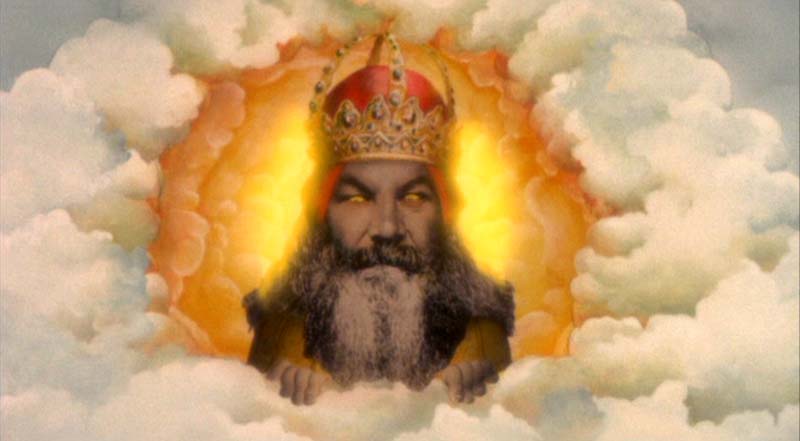
To support this motion, God showed up in the courtroom to testify. Here is the transcript:

TIPSTAFF: State your name.

GOD: God.

TIPSTAFF: Occupation?

GOD: Deity.

TIPSTAFF: Legal residence?

GOD: Everywhere.

JEFFS hisses: That’s Buddhism!

GOD: I beg your pardon. Heaven.

TIPSTAFF: Ah, put your hand on Yourself, I guess. Do you swear to tell the truth, the whole truth, and nothing but the truth, so help You … You?

GOD: I do.

JUROR screams out: Why did you give my Aunt Bertha cancer?

GOD: I never.

JEFFS: Woohoo! Mistrial!

JUDGE WALTHER: Sorry, Mr. Jeffs, no dice. Shall we continue. Mr. God, did you really tell Mr. Jeffs that I should recuse myself?

GOD: No. Why that bozo thinks I’m his lap dog is beyond me.

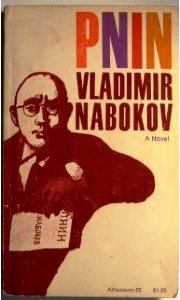
The one true moral responsibility of literature is to strengthen our imaginative sympathy for other people. Nabokov’s exploration of the deep humanity within the seemingly comic figure of Professor Timofrey Pnin is the most perfect example in English. The story is episodic, but the writing is flawless.

Nabokov’s books are full of arrogant misanthropes. So look here for Victor’s glass bowl and “the shining road” on which Pnin escapes into Pale Fire, where Nabokov makes him the head of a thriving Russian department.

Memorable characters in the persons of Jack Aubrey and Stephen Maturin; mastery of a sprawling 2,000 page narrative that is, by turns, sea-faring adventure, espionage thriller, tale of political intrigue, and novel of social manners; stuffed with historical, nautical, and scientific detail; and considering at least two great themes – how power corrupts and the problematic relations between men and women – Patrick O’Brian’s twenty-one novel series gives Trollope and Balzac a run for their money. A superb example of the pure pleasure reading can offer.