Madame Bovary by Gustave Flaubert - Penguin editionEmma Bovary should have stayed on the farm.

Instead, she marries an oafish health officer and rises into the middle class of a country town, where she finds boredom, loneliness, empty promises from romance novels and religion, and fury at the cages in which 19th-century France placed women.

Flaubert’s universe is barren of virtue. There is no tenderness or compassion, no understanding or true friendship, no curiosity or wonder in Madame Bovary. No love either, despite all the talking of it.

Everyone is crass and venal, foolish, pompous, scheming and self-serving, craven, dastardly. Words fail the characters – even Flaubert’s words. The novel’s people are surrounded by his exquisite descriptions of wedding revelry, bustling towns, the beauty of nature, but Flaubert’s words make no impression and bring no consolation.

All anyone sees in Emma Bovary is her beauty, her clothes, and her body. So perhaps it makes sense that when Emma tries to solve the problem of her life – a problem she feels but can’t articulate – she turns to sex and shopping. They lead her to misery and destruction, of course.

I don’t think Emma could see other choices. Who is at fault? Emma Bovary herself? The society in which she lived? Or the world Flaubert made for her? Probably all three.

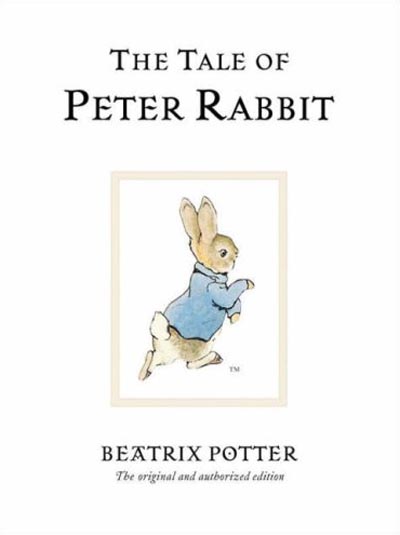
The Tale of Peter Rabbit by Beatrix PotterBefore Beatrix Potter became the author of children’s books such as The Tale of Peter Rabbit (1902), she was a gifted natural historian and scientist.

So it’s not a surprise that Ms. Potter’s illustrations closely resemble the animals on which her characters are based or that she writes unsentimental stories that display a strong understanding of human (rather than animal) psychology.

This is certainly the case with Beatrix Potter’s most famous character, Peter Rabbit, whose trauma in Mr. McGregor’s garden is so realistically portrayed that cheeky amateurs with access to the Diagnostic and Statistical Manual of Mental Disorders (DSM IV) could diagnose him with Acute Stress Disorder if they liked.

In The Tale of Peter Rabbit, Peter’s mother tells him not to go into Mr. McGregor’s garden because “your father had an accident there; he was put in a pie by Mrs. McGregor.”

This does not deter Peter, who runs straight to the garden and encounters Mr. McGregor. In the subsequent chase, Peter loses his shoes and coat and catches cold while hiding in a watering can. Peter escapes and his mother puts him to bed with a dose of camomile tea.

Trauma is a cause of Acute Stress Disorder, and I think this experience qualifies as a traumatic event according to the DSM-IV because Peter was both “confronted with an event that involved actual or threatened death” and responded with “intense fear [and] helplessness.”

We see the symptoms of Acute Stress Disorder in The Tale of Benjamin Bunny, which picks up Peter’s story the next day.

As the book opens, Peter’s cousin Benjamin finds him “sitting by himself” looking “poorly” and “dressed in a red cotton pocket-handkerchief.”

Benjamin leads his cousin away toward the McGregor’s garden without either agreement or resistance from Peter.

From this description, we can find in Peter (1) an absence of emotional responsiveness and a reduction in awareness of surroundings and (2) anhedonia or lack of interest in activities that used to bring enjoyment, both of which are characteristic of Acute Stress Disorder.

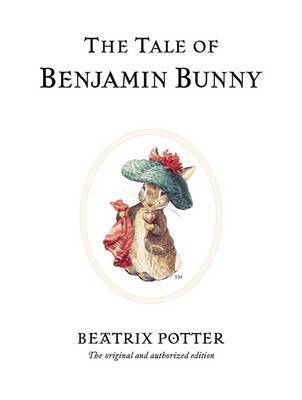
The Tale of Benjamin Bunny by Beatrix PotterOnce in the garden, Peter Rabbit displays three more important symptoms: (3) poor concentration, (4) marked symptoms of anxiety, and (5) increased arousal, hypervigilence, and an exaggerated startle response.

There are three instances of poor concentration in the tale. First, Peter falls “down head first” from the pear tree he and Benjamin are using to enter the garden. Peter and Benjamin pick onions as a present for Peter’s mother, but Peter drops half the onions at one point in the tale and drops the others a little later.

Peter is also clearly anxious and hypervigilent during his return visit to Mr. McGregor’s garden. While Benjamin is collecting the onions, Ms. Potter notes “Peter did not seem to be enjoying himself; he kept hearing noises.”

Peter also doesn’t join Benjamin in eating Mr. McGregor’s lettuces either, instead saying that “he should like to go home.” When the two rabbits walk among Mr. McGregor’s flowerpots, frames, and tubs, “Peter heard noises worse than ever, his eyes were as big as lolly-pops!”

It is in this emotional state that Peter and Benjamin are trapped under a basket by one of the McGregor’s cats for five hours. Ms. Potter writes it was “quite dark” and the “smell of onions was fearful” under the basket. Both Peter Rabbit and Benjamin Bunny cry.

The little rabbits are saved by Benjamin’s father, old Mr. Benjamin Bunny, who cuffs and kicks the cat into the greenhouse, then whips both Benjamin and Peter with a switch.

Peter returns home, where his mother forgives him because she “was so glad to see he had found his shoes and coat” and all seems to end well. The last drawing in the story shows Peter folding up the pocket-handkerchief with the help of one of his sisters.

But Peter’s trauma isn’t resolved as much as it is ignored, and the ambiguity of this resolution hangs over the end of the story. I suspect that the effects of Peter’s untreated trauma will linger for years, making it hard for Peter to find stable employment as an adult and perhaps leading to the self-medicating abuse of rabbit tobacco.

Peter Rabbit isn’t the only psychologically realistic character who experiences trauma in Beatrix Potter’s stories. Mr. Jeremy Fisher is nearly eaten by a trout and resolves never to go fishing again. Jemima Puddle-Duck’s eggs are saved from a fox by the collie dog Kep, only to be gobbled up by puppies before Kep can stop them.

Even Mrs. Tittlemouse, who is threatened by no more than a series of unwanted visitors in her sandy house, lives under the constraints imposed by her obsession with cleanliness and order.

Beatrix Potter’s dispassionate examination of life’s menace has earn her books readers for more than one hundred years. I have to ask, however: “Why do we let children read them?”

** I have a habit of including spoilers in my reviews. This one is littered with them. **

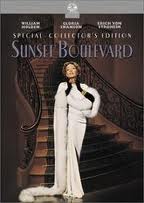
"Sunset Boulevard" by Billy WilderBilly Wilder is the greatest of all 20th century American film directors because he created masterpieces in two genres: the sublimely silly “Some Like It Hot” in comedy and the wrenching “Sunset Boulevard” in tragedy.

Now “Sunset Boulevard” is more often described as a combination of film noir and black comedy than a tragedy, with characters that shade toward caricature instead of complexity, and this is also true.

Both the deluded, forgotten silent-film star Norma Desmond, played by Gloria Swanson, and her creepy butler Max, played by Erich von Stroheim, sometimes behave as if they are in a horror movie. And the film’s main character, the thwarted writer turned boy-toy Joe Gillis, played by William Holden, narrates the story in a style that would make Sam Spade and Philip Marlowe smile with recognition.

But beneath the surface caricature of each of these characters are moving, complex human qualities that give “Sunset Boulevard” its force and its greatness. And the force of the movie begins with Norma Desmond.

Norma Desmond: A Woman Destroyed by Hollywood

Norma Desmond has been broken in that particular way Hollywood breaks people, by persuading them to trade their humanity for stardom. She was once worshipped by millions. As “Sunset Boulevard” opens, she has been forgotten for years and lives alone in a decaying mansion.

Norma Desmond has almost no identity left outside of her movies and the photographs of herself that are everywhere in her home. She is an example, as Cecile B. DeMille says in the film, of how “a dozen press agents working overtime can do terrible things to the human spirit.”

Norma seems incapable of forming a meaningful relationship with another human being, and almost hollowed out of humanity.

Almost, but not quite. Norma Desmond is imperious, deluded. She treats every interaction with another person as if it were a scene in a silent movie, with the grand exaggerated expressive gestures actresses used before sound came to film.

But Norma Desmond is still human enough to be desperately (even pathetically) lonely; still human enough in her despair to attempt suicide; still human enough to command the sympathy and devotion of the only two people who care about her at all: Joe Gillis and her butler, Max.

Max Von Mayerling: Sinister Servant, Selfless Friend

Max Von Mayerling may be the most intriguing character in “Sunset Boulevard” because, at first, he seems the most preposterous.

Wilder makes Max a horror movie sidekick, the “Igor” of “Sunset Boulevard” – going as far as to have him play Bach’s “Tocata and Fugue in D Minor” on the mansion’s organ . Wilder reinforces this idea by shooting Norma Desmond in a way that makes her look like the Bride of Frankenstein in several scenes.

Max becomes more preposterous when we learn his back story. He was the director who made Norma Desmond a star as a teenager and who became her first husband. He begged to return to her because life without her, as he tells Joe Gillis, was “unbearable”.

So by all the facts, we should see Max as a creepy stalker-ex-husband with twisted, selfish motives.

But I don’t think this true because I can’t answer one question: “What’s in it for Max?”

Max has turned himself into Norma Desmond’s servant and she treats him like one. He gets no affection or respect from her. Max works tirelessly to maintain Norma’s belief she is still a star. He delivers her every wish, including to help her trap Joe Gillis the way a spider traps a fly.

Max watches constantly over Norma to make sure she has neither the means nor opportunity to commit suicide. He has no visible life outside the mansion. If he is stealing Norma’s money, there isn’t a hint of it in the movie. If he gets pleasure from being mis-used, he never shows it.

The only explanation that makes sense to me is that Max Von Mayerling is in that empty mansion with Norma Desmond because he’s trying to help her, as best he can, and because there is no one else in the whole wide world who gives a two-cent damn about her. Until Joe Gillis comes along.

Joe Gillis is Not a Gigolo

This statement should be easy to refute. Norma Desmond is a rich once-beautiful woman of 50. Joe Gillis is a poor, handsome man of 27. Joe lives in Norma’s house, eats her food, drinks her champagne, wears the clothes she buys, and sports the jewelry she showers over him. And Joe has sex with Norma.

That, ladies and gentlemen of the jury, is proof Joe Gillis is a gigolo far beyond a reasonable doubt.

Except Joe Gillis is not a gigolo.

Joe Gillis is the main character in “Sunset Boulevard” and deserves to be because he is the movie’s most engaging and complicated person. Joe has been half-seduced by the promises of Hollywood – but only half.

He’s perfectly willing to sell his talent as a writer to earn a big paycheck. But Joe Gillis isn’t willing to sell his humanity, his essential decency, to live the Hollywood life. Joe is morally compromised. He isn’t, however, morally bankrupt.

This is demonstrated by all his interactions with Norma Desmond.

When Joe stumbles on Norma in her Hollywood palace, while trying to outrun the men who want to repossess his car, he doesn’t try to sweet-talk or seduce Norma. He makes fun of her.

It’s only when Norma mentions she’s written a movie about Salome that Joe sees an opportunity to take advantage of her. He offers to edit the screen play, for a fancy price, even though he doubts he can salvage anything good from Norma’s work.

Norma makes living in her mansion while he works a condition of the job, and with a few qualms, Joe makes himself comfortable, and manages (so he tells us) not to notice that Norma Desmond is trying to seduce him with fancy clothes, manly baubles, and a better room in her house.

Regardless, when Norma makes it clear that she wants Joe to be her lover – during a New Year’s Eve party at which he is the only guest – Joe rejects Norma and leaves. Then he calls Max from a friend’s apartment and asks him to pack up just his own old clothes and his typewriter.

Why would Joe Gillis leave with nothing, at the moment when he has snared Norma, at the moment of his triumph, if he were a gigolo? Why would he leave if what he wanted was to get Norma’s money?

During the phone call, Max tells Joe that Norma attempted suicide after he left the New Year’s Eve party. Joe rushes back to the house and refuses to leave until Norma promises not to try to kill herself again. Norma, distraught, says she will and Joe surrenders to her.

Like Max, Joe realizes Norma is alone and like Max, he can’t abandon her. Joe also sees the change in Norma his love causes. She becomes happy, even playful, and confident she can restart her career with her screenplay for Salome.

Everything slowly falls apart, of course. Joe can’t save Norma from the delusional and desperate belief that she’ll be a movie star again, and he can’t save Norma from her jealousy, and Joe can’t save Norma from his own unhappiness and self-disgust.

Again, he packs his old clothes and typewriter. He give her back her clothes and trinkets. He turns down her offer of money. And he leaves Norma’s mansion – or tries to leave, until Norma shoots him – with not a dollar more in his pocket than the day he meet her.

These are the human stories beneath the film noir and the black comedy, beneath the Hollywood stereotypes and the horror movie trappings. It is these human stories that make “Sunset Boulevard” superb. And it is the humanity beneath the caricatures that makes Norma’s madness, and Max’ failure to protect her, and Joe’s death, tragedies.

And I’ll go further and add an adjective to that noun: “Shakespearean”.
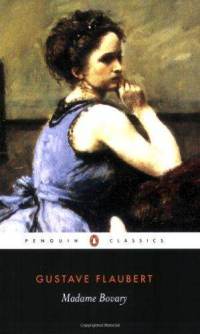
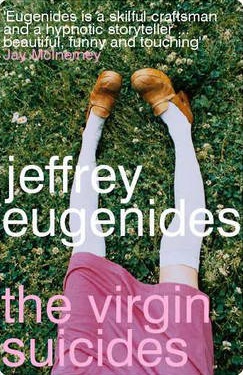
The Virgin Suicides by Jeffrey EugenidesIn The Virgin Suicides, Jeffrey Eugenides tells the story of the five Lisbon sisters who kill themselves over the course of a single year, and along the way writes a mash note to youth and innocence, age and disappointment, and the Detroit of the 1970s at the moment when the city’s wealth and vitality begin to rot away.

Eugenides’ story is twee, and fantastic, and too cute by half until the last twenty pages, when he slips his knife under your breastbone, cuts out your heart, and holds it up, beating and bleeding, with a silent question: “This is life. Can you endure it?”

"Juliet, Naked" by Nick HornbyIn Nick Hornby’s best books – High Fidelity and Fever Pitch – he manages to be a popular writer, a comic writer, and a serious writer all at the same time. Hornby equals the achievement of these books in his 2009 novel, Juliet, Naked.

Juliet, Naked tells the story of Annie and Duncan, an English couple slipping into middle age, and how they are affected when the reclusive ex-rock star, Tucker Crowe, enters their lives.

Annie and Duncan are exemplary Hornby-esque characters. They possess intelligence and some taste, but they are adrift in their work, and deeply uncertain of their feelings for each other. Duncan is also obsessed with Tucker Crowe and his most famous album, “Juliet”.

Annie tolerates this obsession until they disagree about a demo recording of the album’s songs – known as “Juliet, Naked” – that Crowe releases after twenty years of silence. The disagreement causes their relationship to fray. Annie attracts the attention of Tucker Crowe himself through a review of “Juliet, Naked” she posts online. And the story is off and running.

Hornby is a virtuoso of romantic ambivalence, and his talent is fully realized in Annie and Duncan. They are a portrait of all the dissatisfactions that develop when a relationship is based more on familiarity and convenience than on affection, and the scenes between them are funny, painful, and persuasive.

For example, here’s part of the scene in which Duncan tells Annie that he’s seeing another woman:

“Are you telling me you want out?” [Annie asked.]

“I don’t know. I did know. But now I don’t. It suddenly seems like a big thing to say.”

“And it didn’t earlier on?”

“Not … not as big as it should have done, no.”

“Who are you sleeping with?”

“It’s not … I wouldn’t use the present continuous. There’s been an incident. So ‘Who have you slept with?’ is probably the question. Or ‘With whom did this possibly one-off incident take place?’”

Annie was looking at him as if she might kill him with her cutlery.

“She’s a new colleague at work.”

“Right.”

Annie waited and he began to babble.

“She … Well, I was just very attracted to her immediately.”

Still nothing.

“It’s been a long time, in fact, since I’ve been as, as drawn to somebody as I am to her.”

Silence, but of a deeper and altogether more menacing quality.

“And she loved Naked. I played it to her last…”

“Oh, for Christ’s sake.”

Tucker Crowe is not as convincing in his role of former rock star as Annie and Duncan are in theirs. Hornby tells us that Crowe was a talented musician who’s famous for recording a poor-man’s version of “Blood on the Tracks” and for possessing a series of beautiful, angry ex-wives.

But Crowe doesn’t seem like a man who was ever passionate enough to have recorded a minor masterpiece or destroyed multiple relationships. Instead, he comes across as the kind of funny, feckless, and self-centered Hornby character that excels at doing nothing with his life.

There are other problems. In the middle of the book, you can hear the machine of Hornby’s plot going clang, clang, clang and he falls back on his considerable comic gifts to keep the story moving. This part of the novel is still funny, but the humor comes from Hornby’s efforts, rather than rising from the characters and situations, and so loses its depth of feeling.

The good news is that Hornby produces a satisfying ending to Juliet, Naked once he manages to maneuver Duncan, Annie, and Tucker into a position where they all can meet. Hornby also does a pretty job of resolving many – but not all – of the discrepancies between Tucker’s rock-star past and his current personality.

The final pages of Juliet, Naked do leave questions about the story unanswered, but it suits the characters perfectly. To them, life is something of a muddle and never complete. It’s fitting that the ending of the novel they inhabit shares those qualities.

1Q84 by Haruki Murakami In 1Q84, the Japanese writer Haruki Murakami tells the story of a freelance assassin and an aspiring writer as they slowly become entangled with a sinister religious cult and the mysterious supernatural beings the cult worships.

Murakami sets his book in a parallel world that resembles 1984 Tokyo, except for the presence of two moons in the sky. (The title of the novel is a reference to this other world, with a “Q” that stands for “question mark” replacing the “9”.)

1Q84 combines elements of fantasy, thriller, and detective stories with questions about the nature, function, and meaning of fiction. The English version, translated by Jay Rubin and Philip Gabriel, was published in the fall of 2011.

Murakami’s novel was widely expected to be a masterwork, but the reception among English speaking reviewers was mixed, with some hailing it as a major work of literature and others seeing it as a 1,200 page novel of no great substance.

I liked 1Q84 more than some of its critics, but I agree with those who think the novel is unlikely to find a permanent place among the world’s great books.

As an entertainment, I thought it was successful. I was never enthralled by the novel, but I did finish reading it, and I found its main actors, Aomame the assassin, and Tengo the writer, well drawn and appealing.

Only one character, however, a grotesque but finally sympathetic private detective name Ushikawa, burned with the convincing life that distinguishes great literary characters from their lesser brothers and sisters.

I also didn’t think all the references to artists, discussion of metaphysical ideas, or the novels-writing-reality and reality-writing-novels tricks (which are at least as old as Andre Gide’s 1895 Paludes), added up to very much.

They seemed more like the kind of fruits and nuts you might throw into a satisfying, but ultimately unremarkable cake, to make it tastier.

Finally, I thought 1Q84 lacked quiddity, lacked that strange and delicate alchemy which makes a novel deeply idiosyncratic on one hand and broadly universal on the other, and which distinguishes great books from merely good ones.

Fans of 1Q84 may offer two substantial objections to these opinions.

The first is that I don’t know if Rubin and Gabriel’s clear and workmanlike translation of 1Q84 reflects Murakami’s work or whether English readers have lost the rhythm and music of the original prose, not to mention the subtle resonances and associations which are particular to different words in different languages, but which are essential to writers of any talent.

To this I can only reply, true. That is a difficulty with any translation.

The second problem is the (reasonable assumption as it turns out) that I am largely unfamiliar with Japanese culture and society.

This means that if Murakami created a metaphorical history of Japan in 1Q84, or included large amounts of sociological comment, or has written significant elements of parody or satire into the novel, the chances are something better than 95% that I don’t get them.

To this I can only reply, also true. But it is a quality of literature that it transcends the time and place of its composition, and speaks powerfully to readers in other places and other times. That 1Q84 falls short on this measure does not make it a bad book. But it doesn’t make it an important one, either.

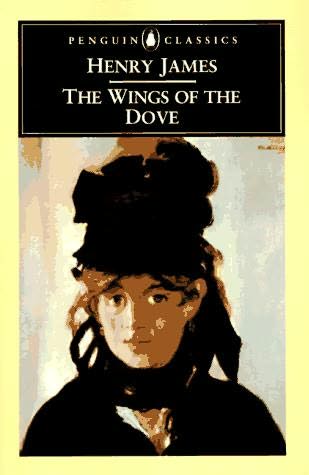
I had a long slow argument with Henry James while reading The Wings of the Dove. Was he an immortal genius? Or a purveyor of pretentious soap operas? Here’s who won the argument:

“On that especial issue, Peter made something like a near approach, taking into account his great reasons, the particulars and nuances and complexities, they being, of course, more important than the main point, they being really fine, and grand, and ravishing, and although he hung fire on his answer, and really, who might blame him, before committing himself, as it were, to a more definite position, which if stated plainly, might fall a little flat, might seem a little thin, might reveal too baldly a poverty of thought and a desolation of feeling, conveniently concealed in a thicket of syntax, great flashes of brilliance aside, yet he did half commit himself, in the end, all of which is to say, perhaps, he wouldn’t decide James wasn’t coming out something more ahead than not.”

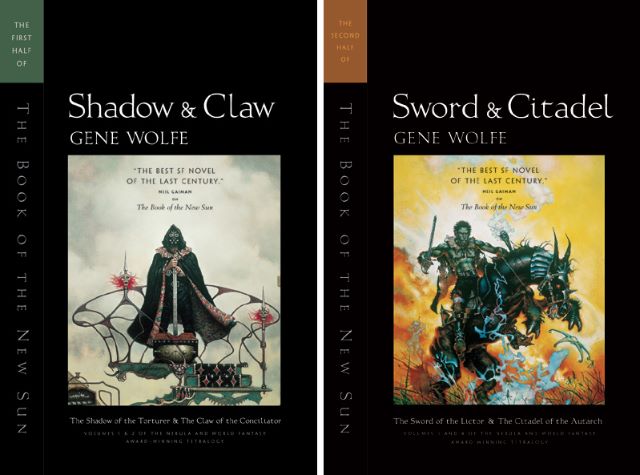
The Book of the New Sun by Gene Wolfe - book coversFans of science fiction, with two weeks of glorious vacation reading time before them, could do much worse than pick up The Book of the New Sun by Gene Wolfe.

This four-novel series follows Severian, an exile from the guild of The Seekers of Truth and Penitence (ie, torturers and executioners) as he pursues his picaresque and ultimately momentous destiny on an earth so far in the future the sun is burning out.

Severian’s adventures keep the reader cheerfully turning pages, and Wolfe seeds the novel with enough time-bending, past-is-future plot twists and vague mythological-theological themes to feed late-night bull sessions in college dorm rooms everywhere, but the real delight – and the major accomplishment – is in the details.

The plants, animals, machines, buildings, cities, humans, and aliens of The Book of the New Sun consistently enchant with their originality and strangeness. And by creating a decaying medieval society, mostly forgotten and abandoned by other humans who fled to the stars long ago, Wolfe smoothly unites fantasy and science fiction. Excellent, guilt-free reading for August.

Hermann Hesse, author of books such as Siddhartha and winner of the 1946 Nobel Prize in Literature, is the perfect writer for teenagers. His novels are painfully earnest, full of sensitive characters who are struggling against the soul-destroying conventions of society and searching for transcendence.

This description certainly fits Harry Haller, the central character in Hesse’ most famous book, Steppenwolf. And it’s not hard to see why Harry would appeal to adolescent readers (despite the fact he’s nearly 50 years old). Harry is grumpy, gloomy, brilliant, artistic, misunderstood, rejected, spends a lot of time alone in his room brooding, and is – turns out – pretty horny. This exactly describes the kind of teenager who would bother picking up Steppenwolf in the first place.

The question is, for those of us who read Steppenwolf twenty or thirty years ago, Should we bother reading it again?

The answer is “sorta”.

Steppenwolf is still utterly humorless and Harry is still gloomy, misunderstood, brooding. What stands out now is how dull Harry Haller is. Hesse keeps telling us how fine a soul Harry has: how intelligent is he, how artistically refined, and how much he suffers.

But the only evidence we have of Harry’s genius is Hesse’ say-so. Nothing in Steppenwolf persuades us that Harry is as remarkable as Hesse claims, and without any tangible signs of brilliance, Harry is rather uninteresting, except for when he’s being petulant.

Steppenwolf also displays that vanity particular to the aging male animal, which is the magical belief that beautiful young women find us attractive.

In the real world, young women don’t fall for decaying misanthropes unless they have a sum of money and Harry doesn’t. But Hesse asserts that not one, but two gorgeous young girls are fascinated by Harry and that he is still capable of prodigious feats of physical love with them.

What saves Steppenwolf is how thoroughly Hesse destroys any sense of value we might have for Harry’s genius. Hesse still sees Harry as a unique soul – but a unique soul leading a useless existence.  Harry is a man who has forgotten how to laugh or find pleasure in life.  He’s a fool who should be pitied, and scolded, and taken by the hand and pulled away from his stubborn loneliness and self-importance.

When this happens, Harry does become interesting. He begins to feel human. He engages our sympathy. And he makes the long hallucinatory sequence that forms the middle-end of Steppenwolf credible rather than ridiculous because Harry feels like a convincing person in it.

Finally, the last pages of the book work for readers of a certain age. Steppenwolf closes not with Harry triumphing over his old self, but rather with him discovering that he is the same person he always was despite his best efforts.

I suspect the young don’t much like this ending. The young believe they can be anybody they want to be (and they should believe this).

Unfortunately, for those of us who have been living with our adult selves for a couple decades, the ending of Hermann Hesse’ Steppenwolf bears an unhappy resemblance to the truth.

As You Like It - The New Cambridge Shakespeare book coverIn As You Like It, Shakespeare banishes all unhappiness, unless it springs from love.

The play follows a multitude of characters driven from a nobleman’s court to exile in the Forest of Arden, where they find refuge from the ambition, intrigue, envy, and striving of the world.

There a usurped Duke philosophizes on his new freedom; a lord tends his melancholy like a garden; and the clown Touchstone pursues his fooling to the edge of the sublime – but the show belongs to the misery and ecstasy of love and to the superlative Rosalind, mistress of all situations and persons except her own wild heart.

There are familiar Shakespearian tropes in As You Like It. The instantaneous and absolute way love conquers. The woman dressed as a man who hides from her love and is loved by the wrong person in turn. And the character who arranges events to create maximum drama, even as the audience is left wondering what motivates her manipulations.

No matter. The dialogue is superb. Rosalind bewitches men and women, on and off stage, in equal measure. And all ends happy in this most delicate of Shakespeare’s comedies.