(the dragons of poetry)
 my wild dark waters / my vast uncharted oceans / sail from the firm shore / to the world’s end and find there / the dragons of poetry
.
still life
 perfections of time / warmth of the provencal sun / on quiet tables / apples solid as mountains / pears as changeless as the sea
.
(stole time back from death)
 a flowing river / the moon over green mountains / the quiet of dusk / wild defiant stories of / how we stole time back from death
.
(bright silks)
 after your bright silks / have faded and your motors / have crumbled to rust / after your fine jewels are sold / my poems will still be here
.
bartram’s garden
.
how will the world end
with rust and poisoned water
or with new green leaves
some say doomsday is doomsday
and all ends in dust and deathbut i don’t think so
more potent than our machines
is potent nature
the meditations of time
and the patience of the earththese will puff away
cities and shopping plazas
turnpikes parking lots
strip mines factories and mills
like white dandelion seedsdrifting in the air
and garbage dumps will blossom
as fresh young edens
with new souls in new soft flesh
walking on the tender grasshere we find the proofs
where a daisy rises like
a defiant fist
to protest the oil tanks
beyond the screen of the treeswhere the seething throb
of the stalled diesel engine
on the trestle bridge
is drowned to extinction by
the riot of singing birdswhere green fields flourish
next to empty warehouses
and abandoned homes
where three feet of good soil
is a world all to itselfwe are mistaken
in time in scale in vastness
in our selfish lives
after the gasoline burns
there will be roses again
.
midsummer
 your sundress was green / and your skin smelled like cut grass / music was our food / and cold death was something that / happened to other people
.
february
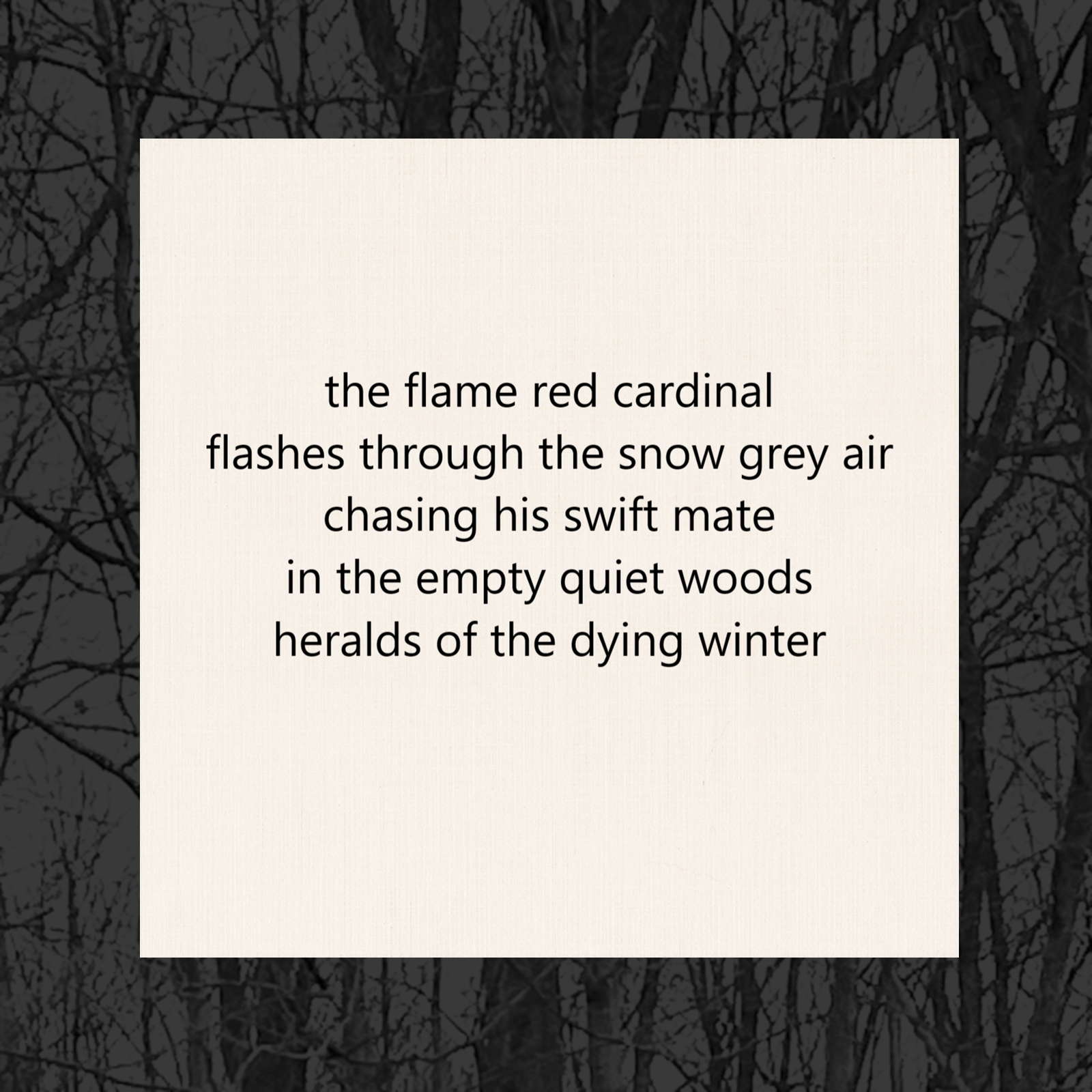 the flame red cardinal / flashes through the snow grey air / chasing his swift mate / in the empty quiet woods / heralds of the dying winter
.
garden district
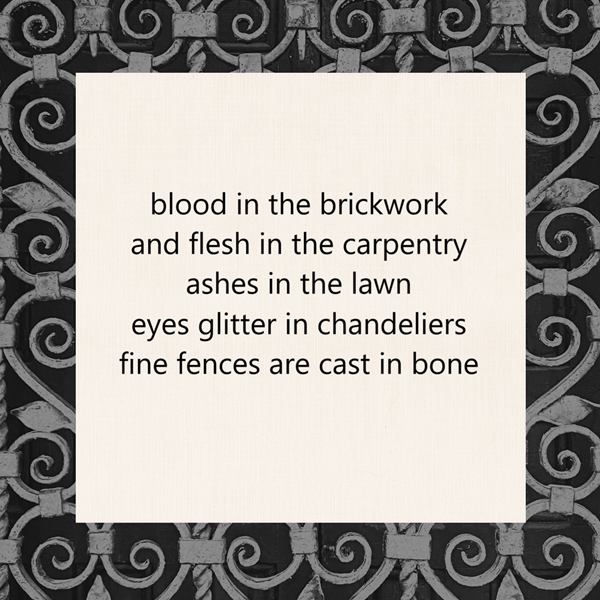 blood in the brickwork / and flesh in the carpentry / ashes in the lawn / eyes glitter in chandeliers / fine fences are cast in bone
.
(the girl in the blue air)
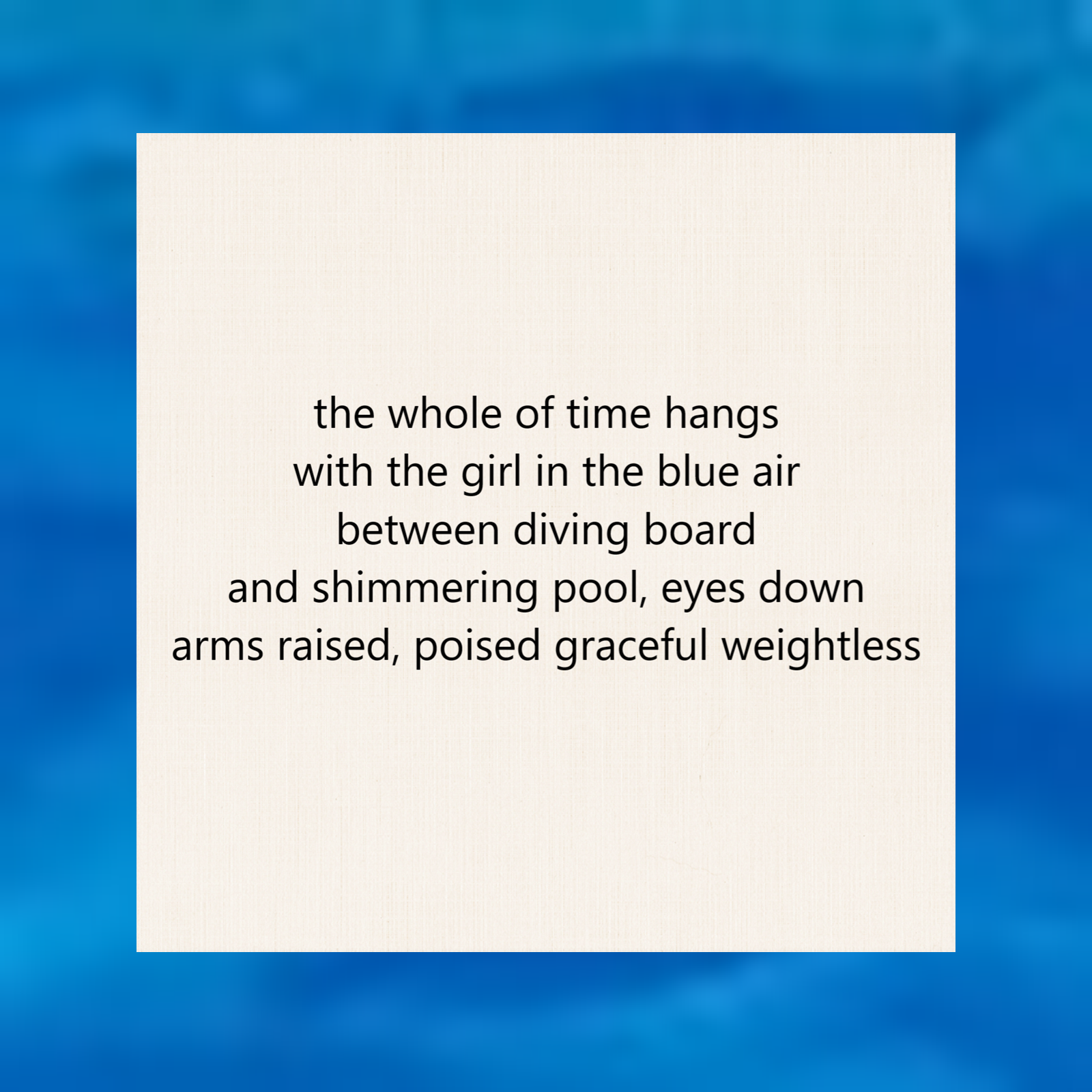 the whole of time hangs / with the girl in the blue air / between diving board / and shimmering pool, eyes down / arms raised, poised graceful weightless
.
Frequently Asked Questions
.
What Is a Tanka?
Tanka means “short song” in Japanese. They are one of the oldest forms of poetry in Japan, composed of 31 units of sound called mora that are organized into five unrhymed lines of five, seven, five, seven, and seven mora.
Tanka were often divided into the three upper lines and the two lower lines, with a shift or transition between them. For example, the upper lines might present a description or image and the lower lines the poet’s response to them.
Historically, tanka were a form of court poetry that lovers would write for each other. Tanka were also used for poetry contests. More recently, the form and subjects of these poems have been expanded by tanka poets.
The three upper lines of a tanka are the origin of haiku. Tanka are also related to renga, which are poems written in stanzas that alternate between three lives of five, seven, and five mora and two lines of seven mora each. Renga were often written by multiple poets who would take turns writing stanzas.
.
What Is the Format of Tanka in English?
In English, tanka are short unrhymed poems featuring five lines of five, seven, five, seven, and seven syllables. This 5-7-5-7-7 format approximates the tanka written in Japanese, which use units of sound called mora rather than syllables.
Otherwise, tanka in English have few rules. You could take the use of tanka to write love poems in Japanese history as permission to address your personal experience in your tanka – if you feel you need permission. You could also divide you tanka into upper and lower lines if you like.
Updated 16 July 2026


 Peter Galen Massey
Leave a comment