The best rule for how to write sex scenes is this one. Don’t.

This is good advice and I sincerely believe writers should take it. Not because sex is a bad or sex scenes are inherently bad. But because the written word is singularly well adapted to making the act of love sound ridiculous.

This advice applies to descriptions of sex acts only. The thoughts and emotional states of characters during sex scenes – arousal or attraction or doubt or embarrassment or worry or gratitude or relief or vanity or self-satisfaction, what have you – all these are fine, in fact they can be pretty darn interesting if they illuminate character or situation. It’s the who did what to who stuff that gets you in trouble.

Still think sex scenes can be sexy? I would at least encourage writers you know to follow these 7 rules for how to write sex scenes in novels.

1. Don’t include costumes, props, toys, food used for non-nutritive purposes, interior decoration, or multiple participants

If you can’t make the basics – two people, naked, bed, a little Barry White – compelling, then all this other stuff isn’t going to save you and just highlights your desperation.

2. Don’t include dialogue or phonetic transcriptions of love noises in sex scenes

This one is obvious and is an absolute prohibition, unless you’re playing the scene for comedy, in which case, pile on. Authors should avoid “Oh. Oh! Oooohh!”s for the same reason they avoid “Ha, ha, ha!”s. The effect of these words on the reader is the exact opposite of their meaning.

3. Don’t create orgies in mansions where everyone is wearing masks

What the heck is up with this? Maybe it is Arthur Schnitzler’s fault, or Leopold von Sacher-Masoch’s, or Anne Declos’, but whoever is responsible, it is far past time for the whole business to STOP.

4. Don’t drag the sex scene out

Quickies are definitely best. A few well chosen words beat long paragraphs every time. If you write too much, you’ll fall into cliché or you’ll start using complicated metaphors that will earn you a nomination for the annual Bad Sex in Fiction Award.
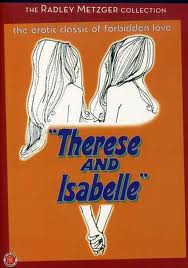
Don't write sex scenes like this one either5. Don’t give cute names to body parts

In the French lesbian erotic classic, Therese and Isabelle, the two young girls call each other’s clitorises “pearls”. This is pretty good once, but they keep doing it, and soon the repetition is so cloying it makes you want to shoot yourself (if the overly earnest tone of the novel doesn’t push you over the edge first).

6. Don’t write sex scenes if you’re an old man

This rule is important. Older male writers seem to write horny books, and the older they get, the hornier the books get. You suspect old men write these books to compensate for impotence. A little restraint will make readers believe the writer is still in his vigorous prime. I’m not going to name a lot of names here, but Philip Roth should think about it.

7. Don’t make it the greatest sex ever

Why is it that everyone in books always has mind-blowing sex? People do have transcendental sex on occasion, sure, but in between they have lots of okay sex. Or sex that isn’t working too well because they’re distracted by the strange noise the dishwasher is making. Or sex that plain just doesn’t work at all. (I understand this happens based on television commercials.) Want to make a real impression on your readers? Write about mediocre sex.

Persuasion is half a major Jane Austen novel, spoiled by death. The book starts splendidly, with Austen in full command of her peerless champagne and acid prose style, and serving up reasonably fresh variations on familiar characters and themes, including …

• The oppressive fools preoccupied with social position

• The charming scoundrel who first half-catches the heroines’ fancy

• The problematic suitor eventually revealed as Mr. Right

• The hard reckonings between love and money forced by the entailed estate

Best of all, Persuasion  features an intelligent, interesting heroine in Anne Elliot whose diffidence – like that of Fanny Price in Mansfield Park – creates compositional challenges for Austen by putting at the center of the novel a character who does not naturally command the center of the stage, and drive the plot, the way Elizabeth Bennet, Elinor Dashwood, and Emma Woodhouse all do, in their very different ways.

And yet, Austen handles the first half of Persuasion  beautifully. She keeps the drama low-key and the pacing steady. The story rises naturally from the characters and incidents. And each complication is managed with a light expert hand. As I read, I kept saying, “Wow, Austen is really on her game.”

And then, at what should have been the middle of the novel, Persuasion  slams into two enormous blocks of exposition, comes to a dead stop, and ends.

Exposition is an important tool for novelists and Austen knows how to use it, often at the beginning of a novel, where she is establishing the premise, and at the end, where she is tidying up loose ends and letting us know what happens to the characters after the major action is over.

The problem with the exposition is Persuasion is that it doesn’t supplement the action of the story. Instead, the exposition replaces the action of the story.

In the first instance, Austen dismisses the charming scoundrel through an endless discussion between Anne Elliot and an invalid friend, to whom the scoundrel just happened to have confessed every insulting opinion he ever held toward Anne’s family while he was also busy driving her friend’s husband to bankruptcy and early death.

So informed of the scoundrel’s scoundrelness, Anne Elliot drops him from her thoughts, and his role in the novel is done.

In the second instance, soon after the first, Austen contrives to have Anne Elliot overheard in a conversation about love by the problematic Mr. Right, who immediately sends a letter explaining himself, and re-proposing marriage, which Anne accepts, and which pretty much brings the novel to a close.

It was hard for me to think that a writer with Austen’s talent and experience could suddenly turn into such a duffer halfway through a book. Then my wife reminded me that Persuasion was published after Austen’s death.

Austen began writing Persuasion  in late 1815 and completed it in August 1816. In early 1816, she fell ill with a disease which progressively weakened her until she died in July 1817.

Someone with a better knowledge of Jane Austen’s life than me will have to say whether we can know if Austen felt she was racing death in 1816, although it is a pleasingly theatrical idea.

But we do know she was feeling the effects of poor health, which I think is a good explanation for the problems in Persuasion. I also find it a moving one.

All novels are deeply personal documents, even when the novelist reveals little or nothing about herself in the work, because of the intensity of energy required to write them.

That Persuasion was flawed by the final drama of Austen’s life gives the ending a power the words themselves don’t quite achieve.

William Makepeace Thackeray’s Vanity Fair is (I think) one of the best works of literature in the English language.

Lots of people will say: “Get serious.”

But I am serious. I know the consensus on Thackeray. He’s a “middle of the pack” novelist, better than Trollope, not as good as Dickens, whose best work still has significant problems.

Such as … Vanity Fair’s plot is flabby and rambling. Thackeray’s constant moralizing exhausts the patience of the reader long before the book comes to an end. And its cast of characters lack vivid life (except perhaps for the famous Becky Sharp) and are flattened by the novel’s satirical tone.

On the flabby and rambling plot charge, I think Thackeray is clearly guilty. No defense.

On the moralizing, I find that the range of emotional colors Thackeray brings to his comments enriches the novel rather than making it poorer. He is often satiric, scolding, caustic, angry, even cruel. But there are times when his voice is humorous, generous, almost warm – tolerant even forgiving of human weakness.

Thackeray’s approach to his characters is also complicated. They are, on first encounter, similar to Dickens’ people, who were inspired by popular stage melodramas: strongly drawn, not particularly well shaded.

But as Vanity Fair progresses, many of the characters start slipping sideways out of their defined roles. For example, the book’s two leading female characters, Becky Sharp and Amelia Sedley.

Becky Sharp is a classic “bad girl” – bohemian parents, no money, no connections – who is perfectly willing to use intelligence, wit, charm, and sex to find wealth and climb in society.

But there is something deeply persuasive about a character who simply refuses to accept the place and prospects that “respectable” people demand she take, and who has few illusions about herself even while she is manipulating everyone else’s picture of her.  And yet, Becky remains for all her persuasion, essential selfish and amoral.

Becky is paired in Vanity Fair with her girlhood friend, the sweet and virtuous Amelia Sedley, who possesses the money, family, and social standing (and naivety) Becky lacks.

Amelia looks all ready to play the “Victorian woman of admirable virtue” role – and she does play it – right into the ground.

Amelia, a perfectly lovely girl, marries a philandering scoundrel who gets her pregnant before dying at the battle of Waterloo.

For the next twenty years, she blights her life with a stubborn idiot celebration of his memory and her single-minded devotion to their son, until her youth and almost all chances of happiness, for both herself and the family friend who has patiently loved her, are gone.

Amelia does all this in the name of “virtue” but Thackeray doesn’t make this virtue look very appealing, just as he fails to make Becky’s “villainy” all that unappealing.  What he succeeds at doing — and deliberately, I think — is make characters who look simple, and easy to judge, become complicated and hard to judge.  Or, if you like, turn them into constructions that feel a lot like people.

The final quality that makes Vanity Fair great is Thackeray’s constant reminders of the novel’s artifice. Throughout the book, he continuously points out that it is a book, that he is an author controlling events, and that his characters aren’t real. (The last line of Vanity Fair is “Come children, let us shut up the box and the puppets, for our play is played out.”)

This is particular because our emotional engagement with art is dependent on our ability to ignore the fact it is art – the famous “willing suspension of disbelief” — and success for most authors depends on this engagement.

That Thackeray refuses to make this engagement easy — building it up and tearing it down, again and again — is one last tasty, tangled, problematic gift he gives to his readers.