Posts Tagged ‘Fiction’

In The Killer Angels, Michael Shaara tells the story of the Battle of Gettysburg during its three most consequential days: July 1 -3, 1863.

Although the novel features a large cast of Union and Confederate officers, The Killer Angels belongs to Robert E. Lee, who is about to make a fatal blunder by ordering Pickett’s Charge, and James Longstreet, Lee’s second in command, who sees the blunder coming but cannot persuade the Old Man to stop it.

Shaara is critical of the romanticism of the South’s gentleman warriors, yet engages in romanticism himself. He takes us into the minds of the commanders who act decisively, but ignores those who hesitate or stumble. Officers die quickly and neatly, or discretely off-stage, while the enlisted soldiers just die in masses, except for the occasional unnamed man who screams as blood and entrails pour from his wound.

Still, Shaara recreates the Battle of Gettysburg with clarity and economy, and with insight into the thoughts and emotions of successful fighting commanders. The Killer Angels won the Pulitzer Prize for Fiction in 1975.

Read Full Post »

Pride and Prejudice and Zombies makes a tremendous first impression. It may actually be impossible to think of two works of imagination with less in common than a Jane Austen novel and a zombie movie. Putting them together is a stroke of comic inspiration.

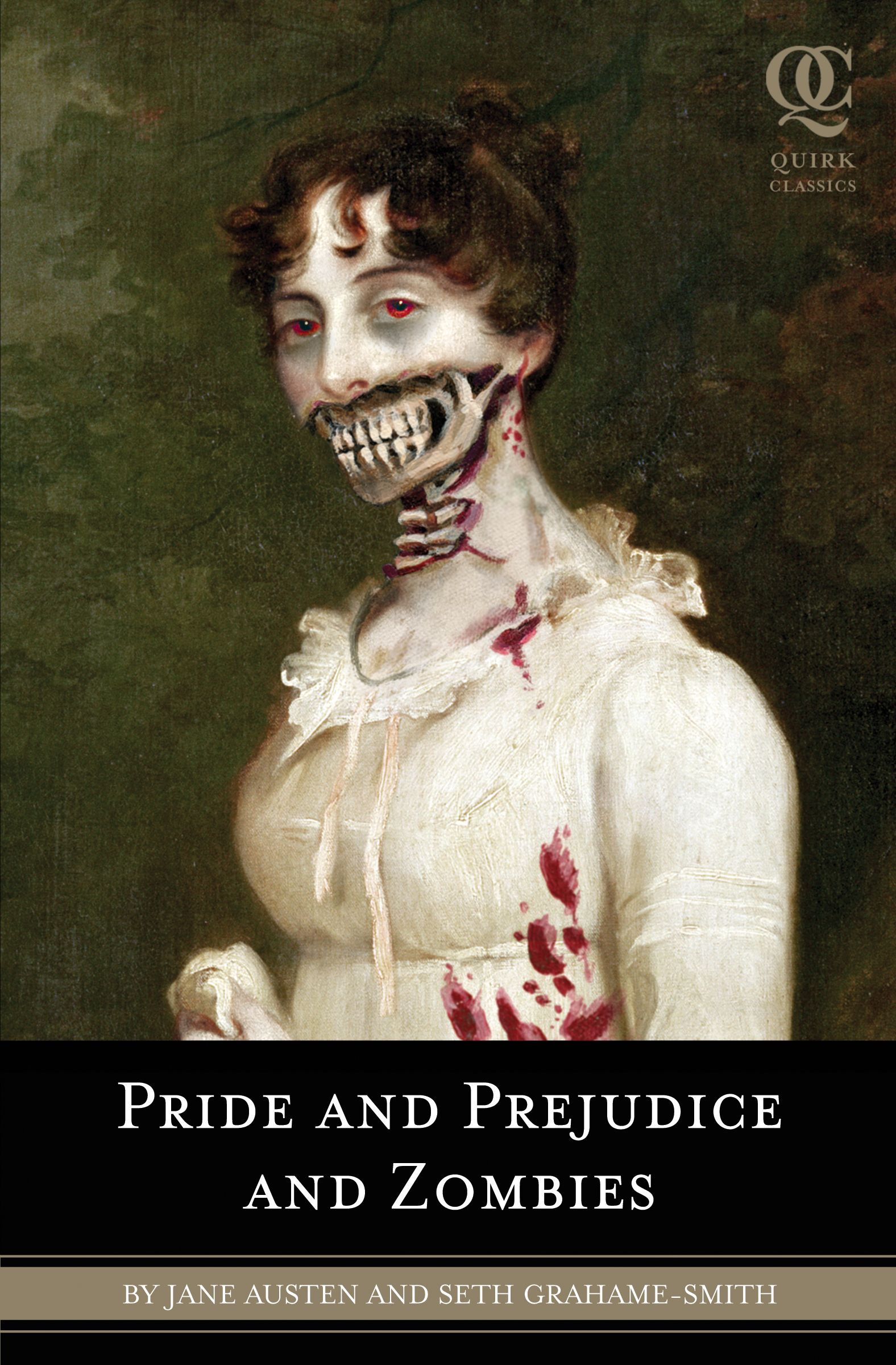
The cover is a pitch-perfect spoof of paperback editions of literary classics. It features a painting of a pretty young woman in an empire-waist dress who would make a plausible Elizabeth Bennet if the flesh of the lower half of her face wasn’t ripped away and her clothes weren’t splattered with blood.

The idea is spectacular. The execution is flawless. That fact that the novel was actually published makes the whole thing funnier. But the book itself is a bore.

The problem is that Pride and Prejudice and Zombies contains one joke – that Elizabeth Bennet and other members of the English gentry are lethal zombie killers – and it tells this joke the same way each time. Further, Grahame-Smith doesn’t interact with Austen’s text most of the time. He just pastes in references to zombies where it’s convenient. As result, the humor of the book wears out the moment its novelty does.

This makes Pride and Prejudice and Zombies largely a wasted opportunity. So many of Austen’s characters might as well be zombies, as Grahame-Smith himself has noted, that it’s disappointing he didn’t take the final step and turn them into ones.

Lady Catherine de Bourgh would be perfect as the undead queen of England, but she is simply another deadly warrior in the novel. George Wickham would make an excellent vampire. He’s already a heartless, ruthless, selfish blood-sucker. “I should have finished you years ago!” Darcy could have cried, driving a stake into Wickham’s heart and saving Lydia from becoming nosferatu. Instead, we get pretty much the same story we already know.

If you read 20 or 30 pages of Pride and Prejudice and Zombies, you’ll get all the fun out of the book there is to be had. I recommend the last 30 pages, starting with the sword fight between Lizzy and Lady Catherine. The writing is less slapdash, which makes it more entertaining. For example, here is the passage in which Lizzy explains to Darcy why he first fell in love with her:

You were disgusted with the women who were always speaking, and looking, and thinking for your approbation alone. I roused, and interested you, because I was so unlike them. I knew the joy of standing over a vanquished foe; of painting my face and arms with their blood, yet warm, and screaming to the heavens—begging, nay, daring, God to send me more enemies to kill. The gentle ladies who so assiduously courted you knew nothing of this joy.

Also, don’t neglect to read the discussion guide. The questions are a hoot.

Although I can’t recommend reading Pride and Prejudice and Zombies, this doesn’t mean you shouldn’t own it. As an object, it is still extremely funny. Keep it on your book shelf. Show it to friends at parties. Or better yet, place it in the guest bathroom along with a few recent copies of The New Yorker. You’ll look witty and urbane and eclectic (although I suppose, at this juncture, slightly behind the times). Those aren’t such bad things to be.

Read Full Post »

Anne Tyler meets Michael Crichton in Ann Patchett’s 2011 novel, State of Wonder. Dr. Marina Singh, a 42-year-old pharmaceutical research scientist, is sent by her boss and sometimes lover deep into the Amazon to discover the circumstances of a colleague’s death and, much more importantly, measure the progress of the brilliant but difficult Dr. Annick Swenson’s work on a fertility drug with block-buster sales potential.

Patchett’s prose style is fluid, she draws her characters and settings in detail, and she keeps the wheels of the story turning nicely – but those wheels spin mostly in place. There is no mystery in the novel aside from its pleasing plot twists; and after all her adventures, Marina Singh is the same person she was at the beginning of State of Wonder. Which leaves the reader the same person, too.

Read Full Post »

I’ve seen a fair amount of commentary on how eBooks are a threat to the culture of reading (Jonathan Franzen’s reliably cranky remarks at the Hay festival, for example), and I’ve been puzzled by all of it.

eBooks may be a threat to traditional business models for publishing and selling books, but I don’t see how eBooks change the essence of reading, and eBooks actually seem to encourage people to read more.

I also think eBooks offer a net benefit to writers and readers, by providing more opportunities for writers, more choices for readers, and the potential for raising royalty payments for writers while lowering the price of books for readers.

All this is not to say eBooks don’t have their problems. But they are interesting new problems, which I think is another point in the eBook’s favor.

Now I have to explain my reasons for all these opinions. Here goes.

The Text is Essential, the Format is Irrelevant

I re-read Henry IV Part 2 recently, going back and forth between an old paperback and my iPad depending on which was more handy, and my experience of the text on each was the same.

I didn’t become a better reader when I was holding the book, or a worse reader when I was holding the iPad. I also didn’t find myself more distractible on the tablet. I looked up maps and historical background on the internet with the iPad, but I consulted the textual notes and essays frequently when I was reading the book.

Further, recent Pew research (“The Rise of E-Reading” published April 2012) find that people who own Kindles and tablets read MORE books than people who don’t own a reading device (24 books a year for e-readers versus 15 books for print readers), and that 88% of e-readers also read print books.

Looking at this data, and considering my own experience, it’s hard to think eBooks have done anything except strengthen book culture.

Now eBooks do change the aesthetics of reading. For people who love books as objects, the beauty of the cover design, the feel of the paper, the weight, a Kindle may not please. If you get satisfaction from looking at your personal library of print books – and I do – your tablet reader will make a poor substitute.

Additionally, the eBook does offer another existential threat to the local independent bookstore, which I care about, as well as the remaining chain retailer, which I don’t. If you want your local store to stick around, go spend your money in it. At the same time, bookstores will also need to work harder to keep their customers coming back.

The Traditional Publishing Model Was Good for Authors and Readers, Too

There were significant advantages to the traditional publishing model. For writers, it mitigated most of the financial risk of publishing. For readers, it offered some assurance of quality.

Both of these advantages grew out of the fact that paper books – especially before computers and the internet – were expensive to typeset, print, ship, distribute, sell, and advertise.

Most writers didn’t have the ready cash to publish their own books, and of those that did, most didn’t have the contacts with buyers and reviewers, much less the money for advertising, that was needed to sell them.

So writers typically surrendered 85 to 90% of the gross revenue from their books to agents, publishers, distributors, and retailers. In return, they risked little of their own money, got access to channels of distribution and promotion, paid someone else to manage the business behind their book, and shared in the profits.

Now companies that published, distributed, and sold books had significant incentives to choose books that would sell and avoid books that wouldn’t, because otherwise they would go out of business.

So all of these businesses became gatekeepers, making judgments on the quality of the books they selected, and only dealing with those they thought would make a profit or which they thought were particularly worthy of finding an audience.

This process gave reviewers and their editors assurance that a new book was worth the time to review; and good reviews gave readers assurance that a new book was worth buying and reading.

This worked for a long time. Everyone knew the deal. Everyone got their cut. Everyone was happy. And then Amazon crashed the party.

Amazon Sells Books: Low Prices Were a Problem; eBooks Are a Mortal Threat

Amazon started as a novelty source of incremental income for publishers. As it grew, it became a direct threat to distributors and bookstores, by making it easier, cheaper, and faster to buy books and music. (Consider the demise of Borders, for example.)

Amazon also squeezed the hell out of publishers margins as it grew, demanding bigger discounts – which are the difference between the list price of a book and the discounted price at which Amazon buys the book – and then selling the books they bought significantly under that list price, which reduced sales in more profitable channels like retail stores.

(How did Amazon do it? Volume, volume, volume! You can make a truck load of money by selling a lot of things for just a little bit more than they cost you.)

Still, no matter how much Amazon squeezed the publishers, it needed them. Someone had to acquire, typeset, design, and print the books. Someone had to advertise the books and make sure they were reviewed. And that someone was publishers because Amazon wasn’t in those businesses.

Until the Kindle.

eReaders like the Kindle, Nook, and tablet computer have all but eliminate the financial risks of publishing books. Writers can publish, distribute, and sell eBooks at virtually no cost directly to their readers, bypassing the traditional model entirely.

Now, the moment when the Stephen Kings and Jonathan Franzens of the world full disengage themselves from the traditional model has not yet come, and there is no absolute guarantee it will.

Only 19% of US adults own an eReader or tablet computer currently, according to Pew. That number needs to be substantially higher before the choice becomes obvious. But the percentage does not have to be anywhere close to 100% before it does.

With eBook royalty rates set at 70% compared to the ten to fifteen percent for print books, the moment when writers will make more money selling fewer eBooks for less money rather than selling more paper books for more money (sorry, you’ll have to read that part twice) will arrive before the eReader is as ubiquitous as television. At which point the eBook model will become self-sustaining.

The eBook Revolution Released a Crap Flood of Biblical Proportions

So, what happens when anyone with two thumbs and a computer can publish an eBook?

Everyone with two thumbs, a computer, and a really great idea for a vampire romance, Zombie apocalypse story, or free-love nudist adaptation of A Midsummer Night’s Dream (that would be me—check out Queen of the Nude) publishes an eBook.

This presents writers and readers with mirror-image problems.

For writers, it is how they make their good book (did I mention Queen of the Nude is a really good book?) stand out from the crap flood. For readers, it is how they pick out the good books from the crap flood.

These problems might make writers and readers think that traditional publishing, with its professional gatekeepers, isn’t such a bad thing after all.

But it is an open question whether the old gatekeepers were actually any better at spotting a book people would like than your average zoo monkey after three martinis. The anecdotal evidence for this success suggests they aren’t, considering how common “X book was rejected 19 times” stories are.

The gatekeepers also overlooked many writers that deserved to be read, and at least on occasion, used their power to promote their friends, relatives, children, lovers, business associates, colleagues, and people to whom they owe money.

With eBooks, every writer has a chance. And with the internet, every eBook has the chance to catch fire and go big. To make that happen, writers are going to have to hustle hard to build an audience and become their own gatekeepers by using blogs, social media, and other channels to provide (hopefully compelling) samples of their work.

Readers have to hustle, too, particularly by writing good reader reviews for each other. The internet often is criticized for releasing a tidal wave of stupidity and it has. But it has also released a tidal wave of intelligence, giving me exposure to smart people who have smart things to say about books I like, which I would have never read any other way.

Readers also have the advantage of eBooks having turned the world into one giant library. Most of the classics are available for free, in  versions desperately needing a proofreader I admit. And new books can be sold for as cheaply as $0.99, vastly reducing the risk to readers of trying a new writer or unknown title.

So there’s my take on the eBook revolution.  It hasn’t created a perfect world. We could argue whether it has created a better one. But eBooks have created a new world. I’m excited by it.

Read Full Post »

Memorable characters in the persons of Jack Aubrey and Stephen Maturin; mastery of a sprawling 2,000 page narrative that is, by turns, sea-faring adventure, espionage thriller, tale of political intrigue, and novel of social manners; stuffed with historical, nautical, and scientific detail; and considering at least two great themes – how power corrupts and the problematic relations between men and women – Patrick O’Brian’s twenty-one novel series gives Trollope and Balzac a run for their money. A superb example of the pure pleasure reading can offer.

Read Full Post »

The purpose of this post isn’t – of course – to convince you these books are bad. Most of them actually aren’t. They just aren’t a good fit for my taste and convictions. Only one book is frankly bad (that would be the Hemingway — sorry Ernest). And the Roth novel is an absolute must-read. Here goes.

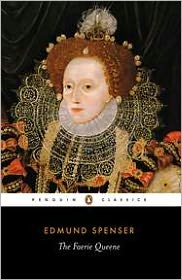
Spenser: The Faerie Queene. An allegorical, epic poem written to compliment Queen Elizabeth the First of England and flatter the aristocracy for their fine taste in the appreciation of “Capital A” art. Spenser’s great technical skill as a poet cannot save a work in which scarcely a single line of genuine inspiration or human feeling can be found.

Hemingway: The Green Hills of Africa. In this non-fiction account of a month on safari, Hemingway turns himself into a bad imitation of one of his own characters, and his prose follows suit. Painfully mannered and false from beginning to end.

Shakespeare: The Merry Wives of Windsor. The Bard dropped quite a few stinkers on the Elizabethan stage, and it can be hard to pick out the worst. I polled my group of advisors and Wives got the most votes. Coriolanus also made a strong showing, as did Titus Andronicus. (Pericles wasn’t on the ballot because the authorship is disputed.) None of these plays is really so bad that it deserves to be on a most-awful list. It’s their having fallen so far short of their father’s genius children that makes them infamous.

Joyce: Finnegan’s Wake. I may burn in hell for this one, and Finnegan’s Wake may actually be one of the best books every written, but it is just too much damn work. Finnegan’s Wake is like one of those monasteries at the top of a mountain, where after decades of constant study, hard work, self-denial, meditation, and no sex at all, you achieve total consciousness. Total consciousness sounds great, but I have kids to take to the park, and my wife is expecting me to cook dinner tonight, and I just don’t have the time. And, let’s be honest, I’m not smart enough to read this book, either.

Dante: Paradiso. Okay, I’m definitely going to burn in hell for this one, but that’s the problem. Hell is more fun. Inferno was a rockin’ good time. Purgatorio was pretty good, better in the beginning, then it got slow. But there’s simply no fun in heaven. What there is, instead, is Thomas Aquinas nattering on about Francis of Assisi and Peter Damian (I don’t even know who that is) chatting up Dante about predestination. And if you don’t read Italian, and I don’t, then you have to deal with the English translations, which do to Dante’s poetry what a cheap plastic transistor radio – that kind you could buy in 1973, with the little black wrist strap – does to Beethoven’s 9th symphony.

Stendhal: The Charterhouse of Parma. A thoroughly mediocre novel that engages the reader’s imagination on exactly one point: Why is this book considered a classic?

Lewis: Babbitt. A satire is supposed to make the targets of its ridicule look ridiculous, but Lewis’ satire is furious and implacable and, finally, a cheat. Lewis portrays George Babbitt as so vulgar and foolish that it’s impossible not to feel superior to him, which is the cheapest flattery a writer can offer a reader.

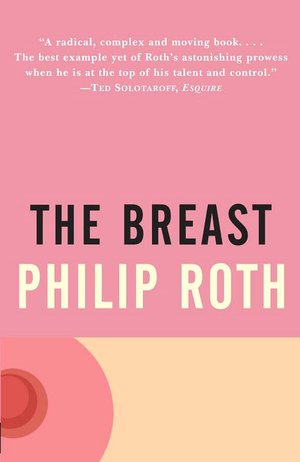
Roth: The Breast. Roth’s parody of Kafka’s Metamorphosis tells the story of a man who wakes up one day to discover that he’s turned into a giant breast. I’m not making this up! Perhaps no major writer has set out to intentionally write a bad book and succeeded so spectacularly. Transcendentally, fabulously awful!

Read Full Post »

Since I’m a slow reader and perpetually behind the times, I’ve just now caught up with Jennifer Egan’s A Visit from the Goon Squad which won the Pulitzer Prize for Fiction last year.

In the novel, Egan demonstrates her mastery of the essentials of fiction: character, story, structure, language, theme. And that’s precisely what’s wrong with Goon Squad.

I know this is a strange criticism and it sounds like a cheap shot. After all, most writers (including, let’s be honest, me) would kill to display the talent and skill Egan displays in the book.

The problem is that Egan has written herself into that Bermuda Triangle of Art where books of high craft that lack something – some quiddity or quirk, some inspiration or lucky accident or divine alchemy of personality and zeitgeist, some gimmick or obsession or passion – disappear.

For example, The Great Gatsby is a high-craft novel that clearly has an IT that gets the book through the Triangle. But what the heck is the IT?

Now, you might say that Goon Squad has the IT and I’ve missed it. To which I would reply, “Yes, possibly” because the novel has a number of qualities that are not a good match with my tastes and which make me wonder if the problem is me not Egan. Here are several:

Multiple First Person Narrators

There is nothing wrong with the multiple first person, but it tends to emphasize the isolation of the individual, while I think our lives gain meaning by our relationships with other people. Also, the human condition is defined by the single first person. There is only one “I” in each of our lives.

A Focus on Business and Public Relations

Again, nothing wrong with this choice, and fiction needs more business people as its characters – as opposed to, say, professors in small college towns struggling with adultery, malignant envy of more successful colleagues, and campus politics.

But business people spend a lot of time thinking about how to make money, and how you make money is not the most dramatic or emotionally gripping subject for me.

The “Prestigious Problem” Problem

Because, you know, no one living in New York City can just be ordinarily screwed up. No, they have to be extra-ordinarily screwed up.

Why have your PR business fail when you can have your PR business fail spectacularly by causing the single biggest disaster in the history of New York high society, and then have said business revived by rehabilitating a genocidal African dictator through clever manipulation of the press? (I’m not making this up.) Why suffer middle-age mediocrity and despair in private when you can at least earn infamy by sexually assaulting a famous actress in Central Park during the middle of the day? (Again, I’m not making this up.)

I admit, I’m a reverse snob. And also, there are many more characters that Egan handles with all the grace, delicacy, and compassion you could ask. So maybe I’m off base.

The “Satiric Characters in the Novel of Psychological Realism” Problem

Satire deals in caricature and exaggeration, and characters in satire are more mediums for commentary than the means to explore the deep mysteries of human nature.

The two characters mentioned above clearly have an element of satire in them, and you could argue that their satiric nature is their primary function in Good Squad.

But what are we to make of these characters when they exist in the same fictional world as characters such as Lou Kline, an amoral record producer who is given complex treatment and the dignity of a death scene that emphasizes his human frailty not his outsized faults?

I feel it suggests some characters are more human than others. And that’s a problem – not merely a quibble over aesthetics or philosophy – because the idea that some people are more human than others is the justification for pernicious bigotry and outrageous violence our race all too happily grabs.

I know this is a lot to lay on Egan, but it is ultimately an argument that art matters. Which means Goon Squad’s faults and virtues matter, too.

Read Full Post »

« Newer Posts