 black bible, black suit / coffin in the snow. crows call / through the empty air
 the knife found my hand / and the green park my footsteps / death found her. not me
 they are alone now / their bodies in a dim hall / waiting for nothing
 unseen and unknown / behind every face and door / what black worlds of pain
 tinker and tinker / the old machine mechanic / one day it wears out
 keep this in your heart / this glowing warm yellow day / when it is winter
 at a certain age / every goodbye starts to be / practice for the last
 feel her weight heavy / for the earth. this is a task / of the working day
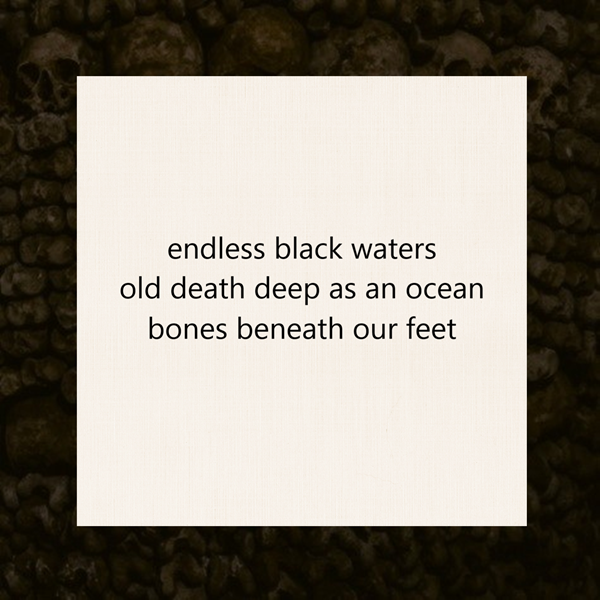 endless black waters / old death deep as an ocean / bones beneath our feet
Watch My Haiku About Rage and Despair Video
.
.
These are haiku about death or more accurately, poems about death, dying, time, and memory. Death is a common theme in haiku although traditional poets tend to deal with it implicitly through poems about nature and the seasons, which if you follow the stricter rules of haiku are the only allowable topics for this type of poetry.
For various reasons, I don’t follow these rules and that is particularly true in this collection of haiku. Perhaps the most important rule of haiku is that meaning is implied rather than stated and boy do I break that rule with a vengeance with these poems. They are all statements, except for the first one. I normally consider myself allergic to the “get out your pencils kids, this is the stuff that’s going to be on the test” school of poetry but there is no evidence of the allergy here.
That said, I’m fairly pleased with this collection. (I wouldn’t post it if I weren’t.) One of my goals when I write haiku is to find unpoetic subjects, which is one of the reasons it is fair to describe my work as modern haiku. The clearest example of this is the “knife found my hand” haiku, which is about a murder in a London park that happened a few hours after my wife and I walked through it. The killer was deranged and the poem which sits inside his head is deranged as a result. The “endless black waters” haiku was inspired by a visit to the Paris catacombs, which left me in a state of existential crisis that I needed to treat with several glasses of French wine. The last haiku is about my mother’s death and while I think it could have been written by thousands of other people too, it does accurately reflect my feelings so I have kept it on my publish list.
As a final note, the title of this post over-determines the meaning of several of the haiku. The “oh that this flesh” poem is about more than mortality. I don’t think about “black worlds” as just discussing dying. If reading these death poems have left you depressed, a good tonic could be my haiku about love.


 Peter Galen Massey
Leave a comment